
The latest
A major exhibition at Paris’s Grand Palais brings together more than 300 works from Henri Matisse’s final years, making the case that the period from 1941 to 1954 was not an afterword to his career, but one of its most inventive chapters, The Wall Street Journal wrote.
Details
• Final years: The exhibition begins in 1941, the year Matisse underwent major surgery for abdominal cancer and was recovering in Nice.
• Beyond cut-outs: The Journal argues that Matisse did not abandon painting, continuing to produce major oil-on-canvas works into the early 1950s.
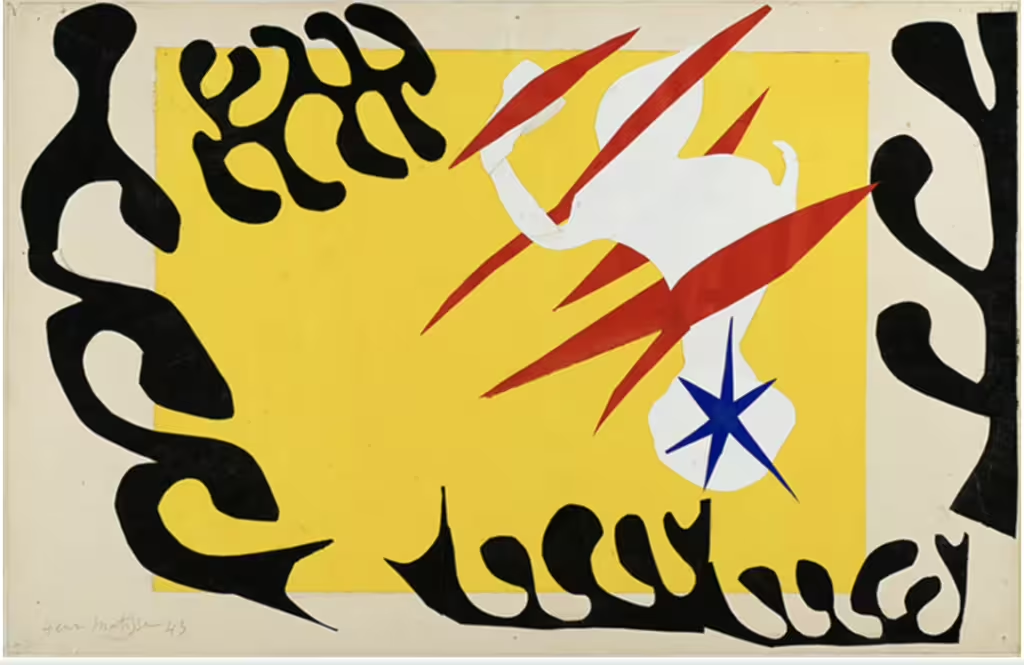
• New language: His cut-outs fused painting, drawing and sculpture, turning color and form into a single expressive force.
• Vence chapel: The show highlights his work for the chapel in Vence, near Nice, including stained-glass designs and liturgical vestments.
• Blue farewell: The exhibition closes with the four main Blue Nudes from 1952, brought together from separate museum collections.
Between the lines
The exhibition challenges the image of an aging master narrowing his range. Matisse, as presented at the Grand Palais, was doing the opposite: stripping art down to line, paper, color and light, then making those elements feel newly monumental.
What to watch
Matisse: 1941-1954 runs at the Grand Palais in Paris through July 26, as critical attention continues to shift toward the late work that helped elevate Matisse’s standing in modern art.