The latest
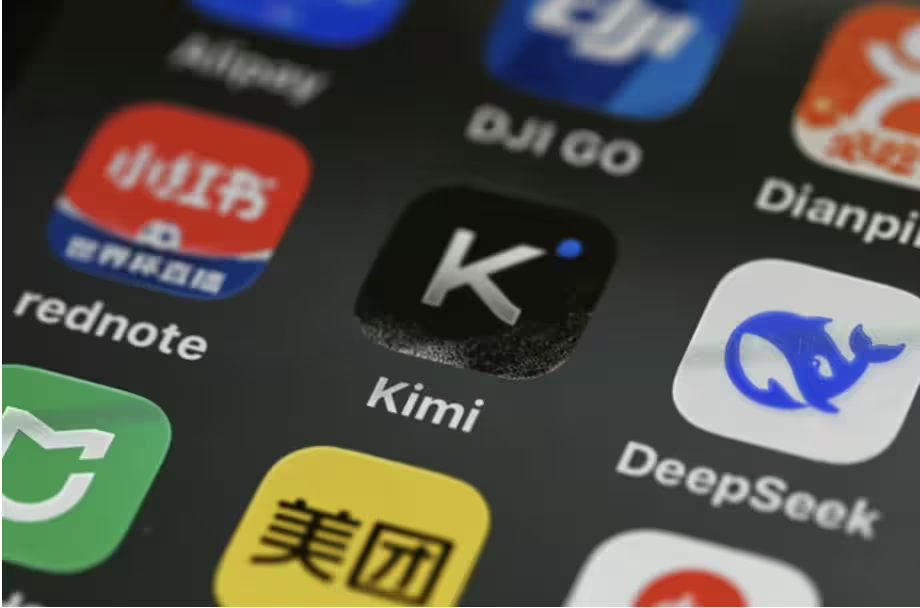
The surprise release of Kimi K3 forced markets to reconsider assumptions behind the technology rally. Moonshot says the model can compete with leading products from OpenAI and Anthropic at substantially lower cost. Comparisons with last year’s “DeepSeek moment” followed, while an analyst estimated that $314 billion had been erased from valuation estimates for the two privately held U.S. labs.
The model also challenged the belief that U.S. chip-export restrictions would significantly slow China’s AI progress. Chinese semiconductor shares rose as investors anticipated that intensifying competition among model developers would increase spending on domestic computing, networking and memory infrastructure.
At the same time, widely available open models threaten companies that rely on selling access to proprietary systems. They also weaken the argument that scarce demand for advanced processors will allow leading chipmakers to maintain premium prices indefinitely.
Details
- Model scale: Kimi K3 has 2.8 trillion parameters and supports a context window of up to one million tokens.
- Chinese chips: Semiconductor Manufacturing International shares rose as much as 5.4% in Shanghai.
- Memory winners: SK Hynix and Samsung could benefit from the model’s heavy memory requirements and the limited number of major suppliers.
- Cheaper applications: Lower-cost open models could accelerate AI-agent adoption across coding, customer service and industrial workflows.
- Developer pressure: Z.AI, previously viewed as China’s leading open-model developer, fell nearly 40% over two sessions.
- Adoption limits: U.S. companies and government agencies are unlikely to embrace Chinese models easily because of security and compliance concerns.
Between the lines
Cheaper models do not necessarily mean lower overall AI spending. They could broaden adoption and increase demand for memory and networking, while shifting value away from closed-model developers and toward infrastructure providers and software applications.
What to watch
Moonshot’s position will become clearer as competitors respond. Alibaba has unveiled a preview of Qwen3.8 Max, while MiniMax is preparing an updated M3 model. As releases accelerate, some systems risk losing their value before developers recover the cost of building them.