The latest
Washington is treating Baghdad like a minefield.
Not because Ali Zaidi’s government rejects the idea of bringing weapons under state control. The American question is sharper: can Baghdad move close to the militias without detonating the network of interests around them?
U.S. intelligence assessments are pushing the Trump administration to be cautious with Zaidi’s promises before his expected visit to Washington. Inside Baghdad, the file is being softened under a more evasive label: “unorganized weapons.”
The wording may lower the temperature. It does not bring the problem into the open.
Details
• Washington wants action before the White House photo: who hands over weapons, to whom, who gets integrated, where they go, and who remains outside the state.
• Iran’s lack of a clear public response does not mean Tehran is absent. Iraqi factions are part of its wider calculations with Washington, from the Strait of Hormuz to Lebanon — especially after the U.S.-Iran memorandum referred to “Iran and its allies.”
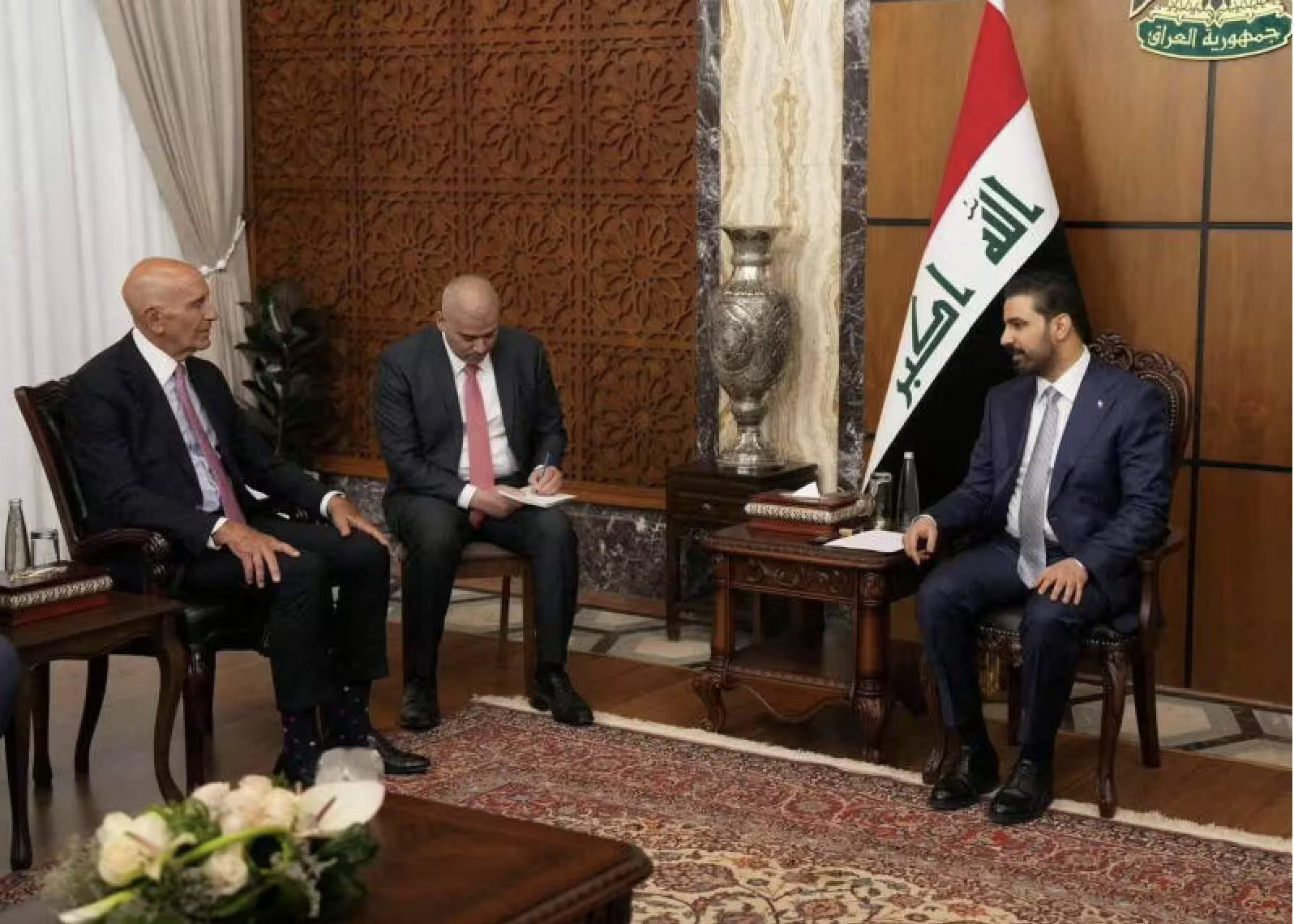
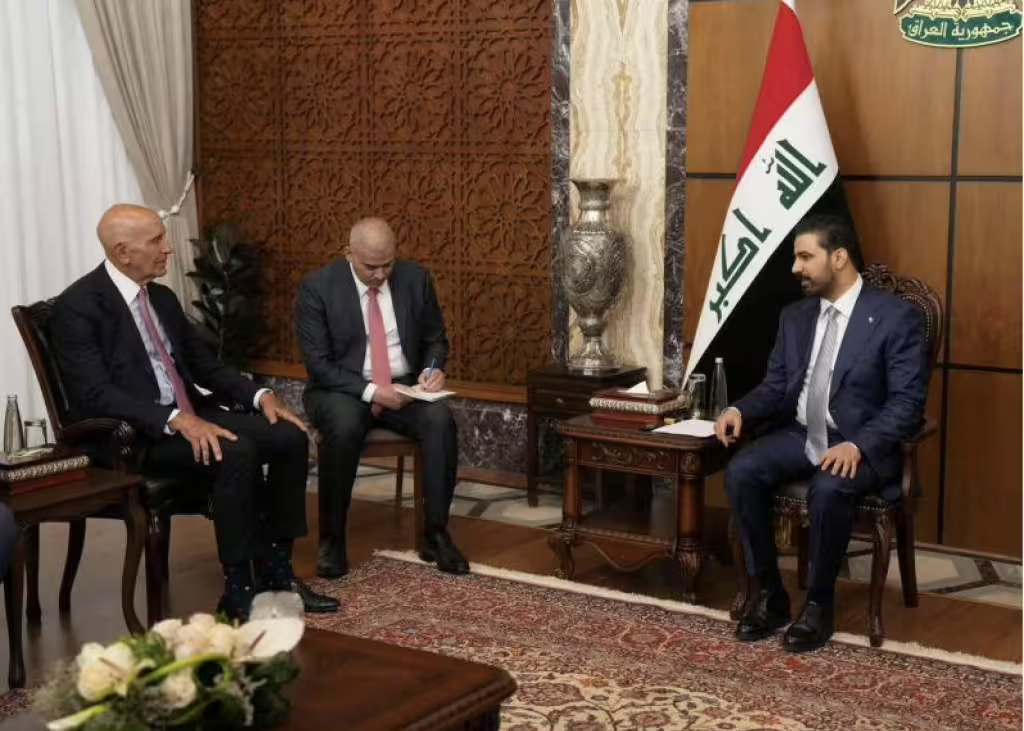
• Tom Barrack arrived in Baghdad less as a diplomat than as a promoter, according to an Iraqi adviser. His job was to pitch U.S. companies in a promising but unsafe market.
• Baghdad agreed to facilitate the work of five U.S. companies. The most important is Starlink, which could break the grip over internet access in a country where connectivity is treated as a security file.
• For Iran, Starlink is not just a tech service. It is an American window that could be difficult to control in a crisis.
• Energy is the second file. U.S. companies in oil, gas and electricity are entering a space Tehran has long used to pressure Baghdad.
• Gas projects in Basra and alternative electricity options target Iraq’s core vulnerability: chronic dependence on Iran.
• U.S. reports said some Iran-backed factions were ready to hand over weapons. But Washington knows the problem is not only whose shoulder carries the weapon. It is who controls the decision to use it.
• That makes the economy part of the security test. There is no strong state with armed factions, and no political independence when energy and communications remain under outside influence.
Behind the story
Washington is not offering Baghdad only an investment deal.
It is offering a test of loyalty to the state:
Control the weapons.
Open the closed sectors.
Reduce dependence on Iran.
Then come to the White House with real cards.
That is Zaidi’s difficult equation. He has limited experience in the hard intersection of economics and international politics.
Every step toward Washington will provoke networks close to Tehran. Every hesitation will make U.S. officials read his visit as a sign of weak domestic power being repackaged and sold again.
What to watch
The test is not announcing a Starlink license. It is whether Starlink actually operates.
It is not signing energy memorandums. It is protecting the companies and projects.
It is not renaming the militia file. It is changing the balance of power inside Iraq.
If Baghdad succeeds, Zaidi’s visit could become the start of a real U.S. opening. If it fails, the “promoter” will remain far from the product.