The latest
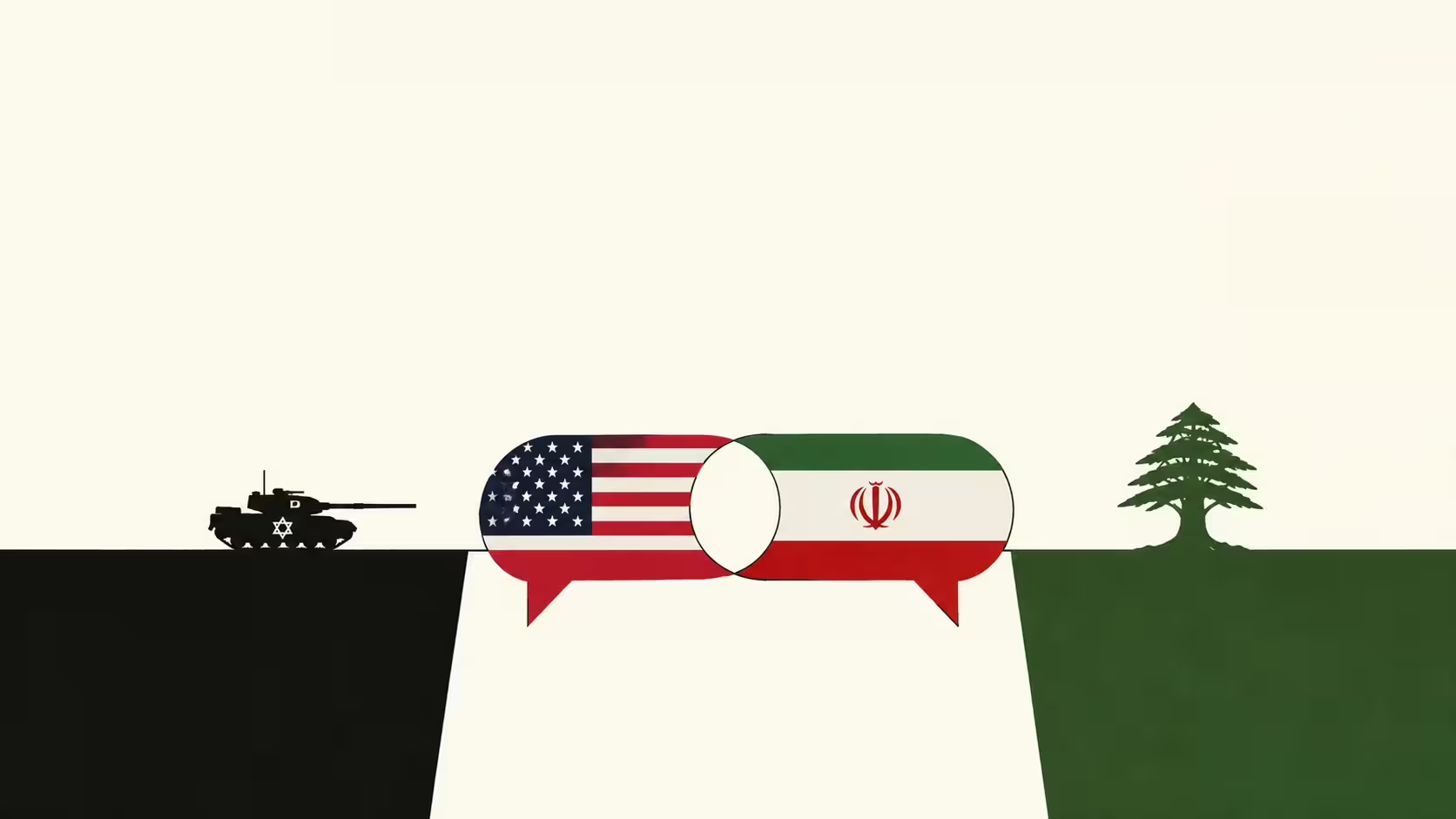
Talk of an emerging ceasefire agreement between Washington and Tehran has put Lebanon back in focus, with growing speculation over whether the country will be included in a memorandum of understanding that U.S. officials reportedly hope to finalize within days.
Iranian Foreign Minister Abbas Araghchi said ending the war in Lebanon would require “Israel’s withdrawal from occupied territories,” echoing statements from Iranian officials and Hezbollah figures who argue that Lebanon is part of any broader understanding between Iran and the United States.
Details
• Israeli sources say one version of the proposed agreement includes an end to hostilities across all fronts, including Lebanon.
• President Donald Trump dismissed reports published by Iranian state-linked media about the contents of the deal, calling them “false.” Despite that, Iranian officials and Hezbollah representatives continue to insist that Lebanon is covered by the arrangement.
• Israel rejects any withdrawal from areas under its control in southern Lebanon and says the Israeli military will continue dismantling Hezbollah’s infrastructure.
• Israeli Defense Minister Israel Katz said Israel would not withdraw from what he described as security zones in Lebanon, Syria, or Gaza, stressing that Israeli forces would continue protecting the country’s borders.
• Some analysts believe Iran could encourage Hezbollah to show greater flexibility if a sustained ceasefire serves Tehran’s interest in helping the group recover from the war.
• Israeli officials have repeatedly warned that any Hezbollah attack would trigger a direct response, rejecting what they describe as attempts to merge regional battlefronts under a single deterrence equation.
On the ground
Tensions remained high along the northern border on Friday night. The Israeli military reported several suspected aerial threats near the Lebanese frontier after warning sirens sounded in multiple border communities.
The military also said it had recently killed ten Hezbollah field commanders in different parts of Lebanon and claimed that more than 1,300 Hezbollah members had been killed since the ceasefire began.
Meanwhile, Hezbollah lawmaker Hussein Hajj Hassan told Al Jazeera that Iran had informed the group that Lebanon was included in the ceasefire arrangement and that Israel would eventually withdraw from Lebanese territory under the agreement. He said Hezbollah would not accept a continued Israeli presence in those areas.
What to watch
The key question is whether a U.S.-Iran agreement will remain focused on nuclear and regional de-escalation issues, or evolve into a broader framework that includes Lebanon. The answer could shape future U.S.-Israeli relations and determine whether the fragile calm on the northern border holds.