The latest
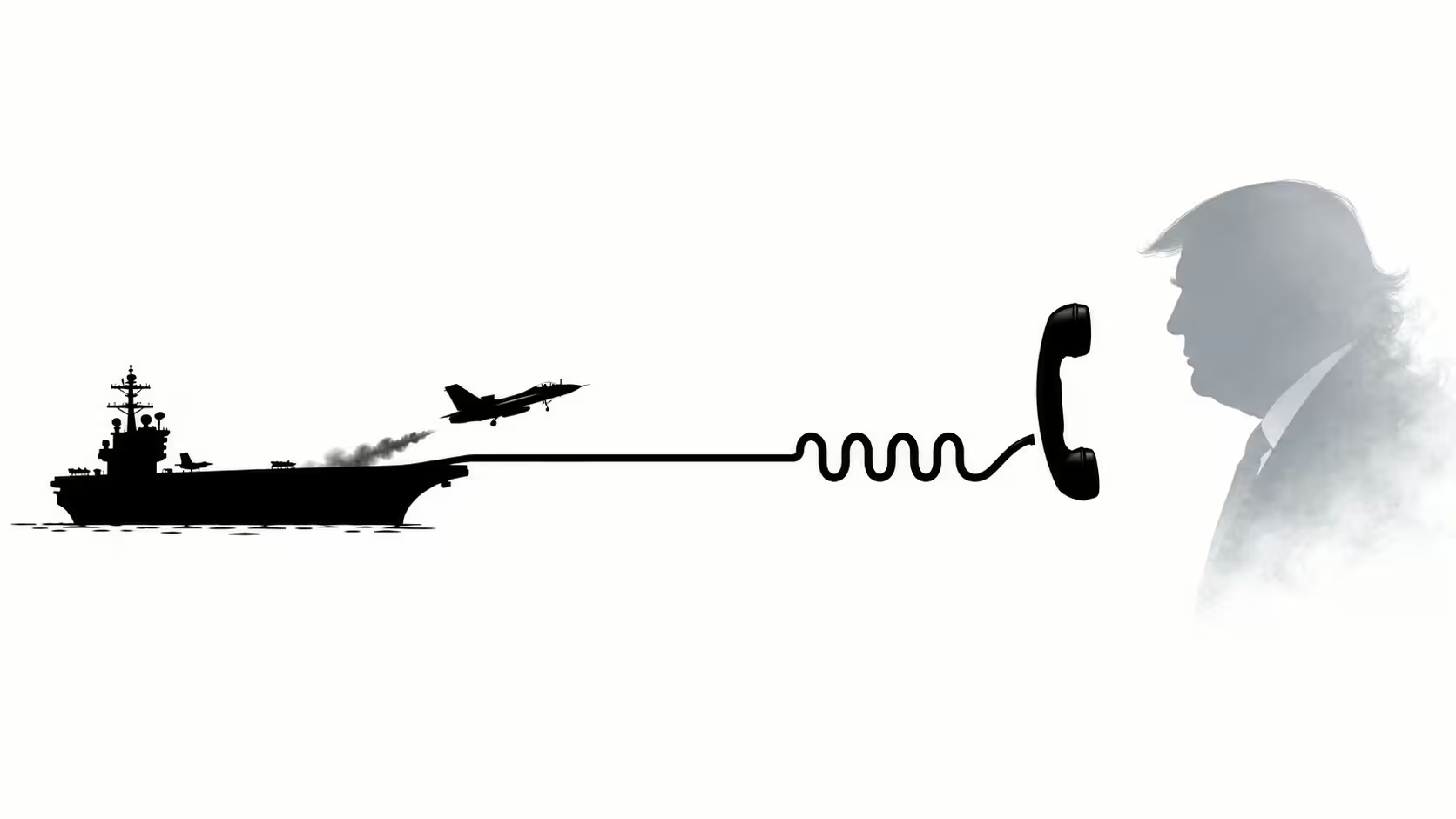
A new night of U.S. bombing against Iran nearly began with a Trump post.
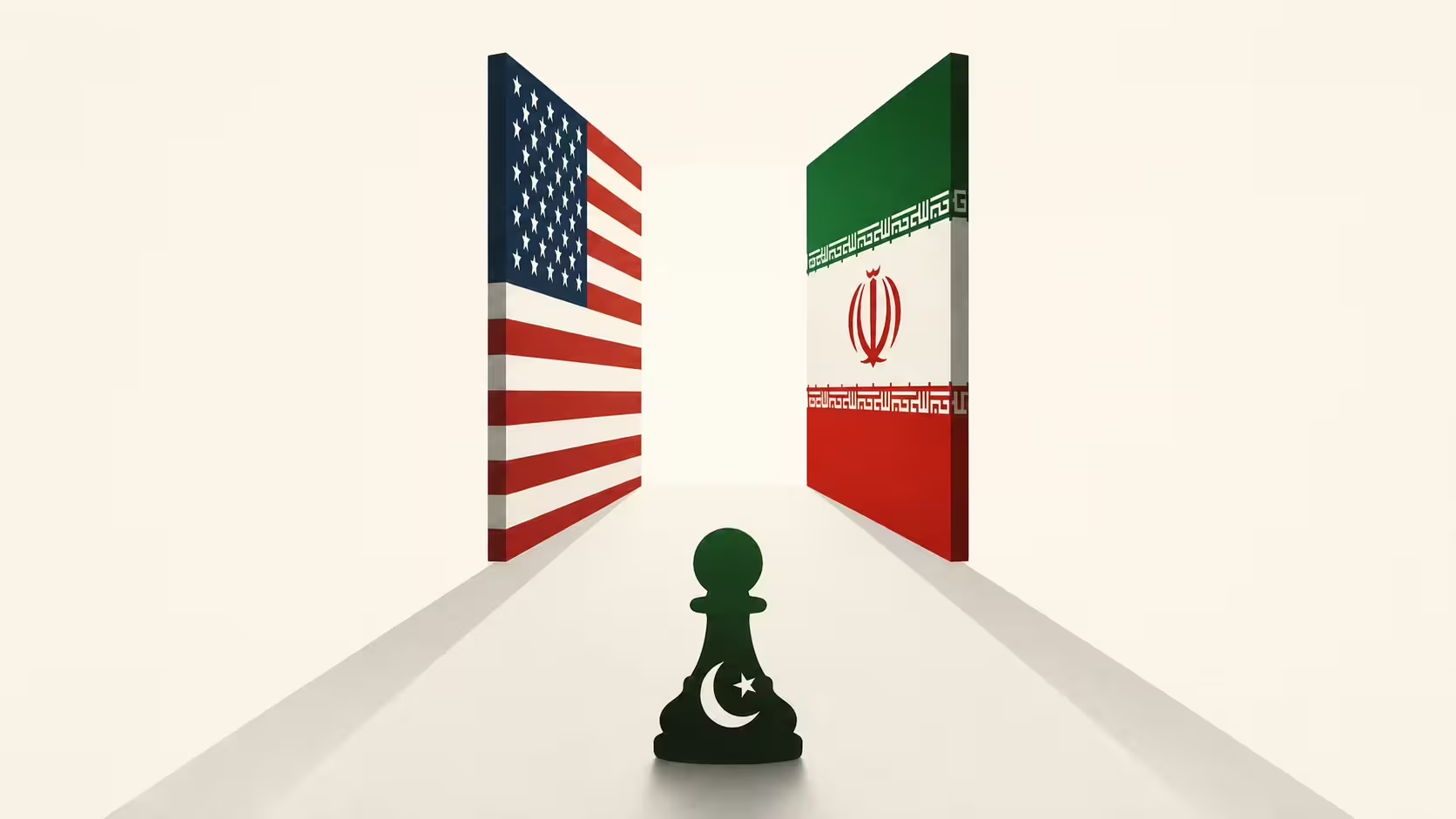
Urgent calls from Doha, Abu Dhabi and Islamabad changed the track.
According to Politico, President Donald Trump received calls from Qatar’s emir, Sheikh Tamim bin Hamad Al Thani, UAE President Sheikh Mohamed bin Zayed Al Nahyan and Pakistan’s army chief, Asim Munir, after he threatened to strike Iran “very hard tonight.”
The message from the mediators, according to U.S. officials and a diplomat briefed on the effort, was that a preliminary agreement opening the way to broader talks was close.
That assessment helped convince Trump to pull back.
Trump later said on Truth Social that a deal could be signed soon. In the Oval Office, he told reporters that Washington had reached a “great settlement” in the Iran war and that the final documents could be completed in the coming days.
Tehran was more cautious.
Iranian Foreign Ministry spokesperson Esmaeil Baghaei said large parts of the negotiating text had been finalized, but Iran would not compromise on its red lines. He also said Tehran had not yet reached a final conclusion on the agreement.
That leaves the emerging deal in a narrow space: Trump is selling momentum. Iran is keeping its signature conditional.
Details
• Politico said the calls to Trump had not been previously reported and came as a last-ditch effort to prevent new U.S. strikes on Iran.
• The report cited two Trump administration officials and a diplomat briefed on the mediation.
• According to one U.S. official, Trump believed Qatar, the UAE and Pakistan had influence with Tehran and Supreme Leader Mojtaba Khamenei, and their assurances that a deal was near helped change his mind.
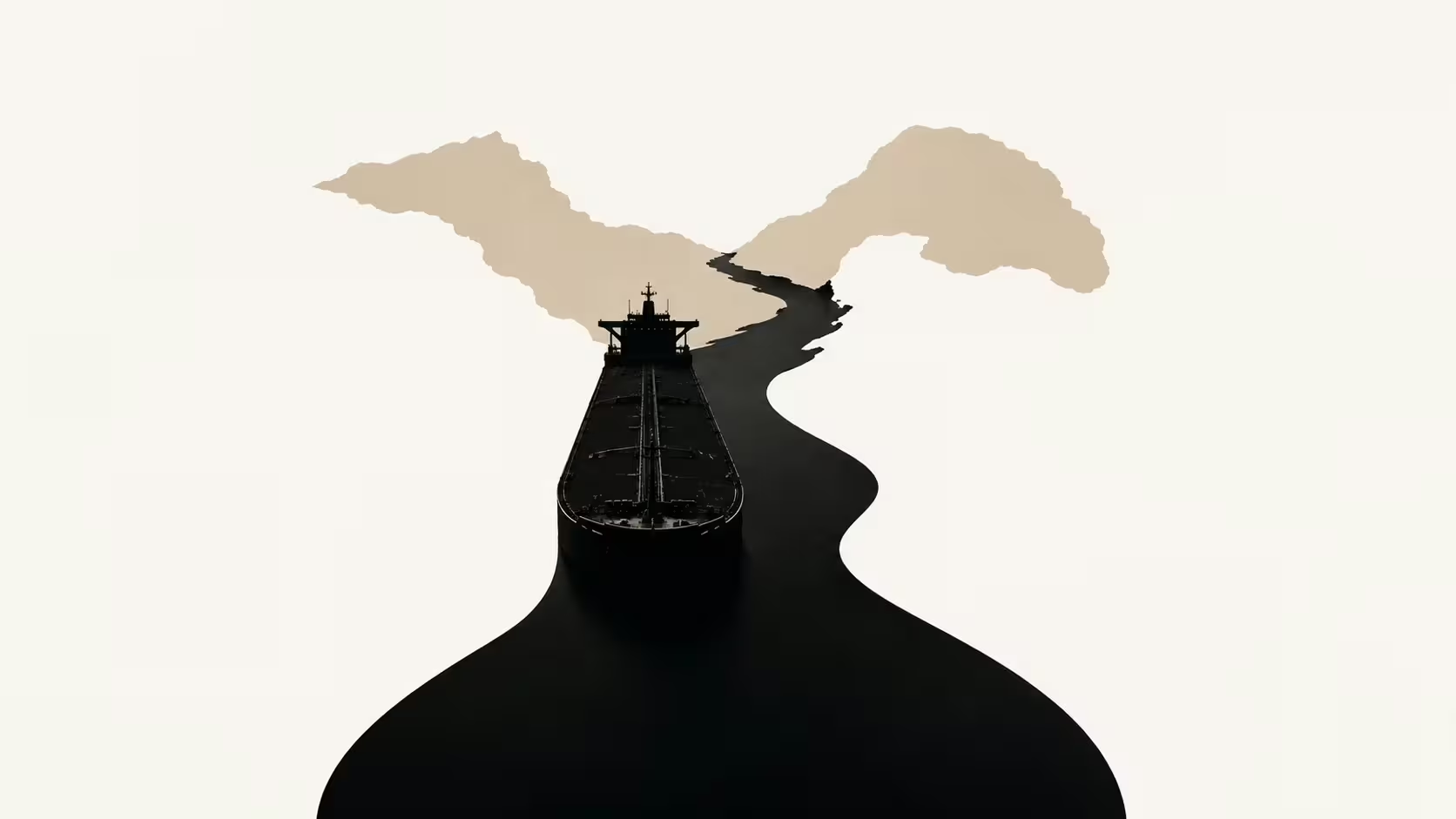
• The first phase of the deal, according to an Israeli official and a person briefed on the diplomacy, appears focused on reopening the Strait of Hormuz and ending the U.S. blockade on the vital waterway.
• Secretary of State Marco Rubio told Congress that detailed nuclear talks would take more time and that reopening Hormuz would be the first step.
• The harder issues, led by Iran’s nuclear program, would come later if the initial track holds.
• It remains unclear whether Khamenei has signed off. U.S. officials have said he was badly injured in the early days of the war and has been moving under strict secrecy to avoid U.S. or Israeli attacks.
• One Arab diplomat voiced skepticism over whether Khamenei had agreed to anything, saying: “I’ll believe it when I see it.”
• A person close to the White House said the seriousness of the deal depends on who Washington is negotiating with inside Iran. If it is the political leadership, the track is real. If it is the IRGC, the picture is less clear.
• Washington and Tehran have exchanged proposals through Qatar and Pakistan in recent days, but Trump had grown increasingly angry over the possibility that Iran was dragging out the process.
• The latest escalation came after Iran downed a U.S. helicopter, pushing Trump to increase military pressure and force Tehran to move faster.
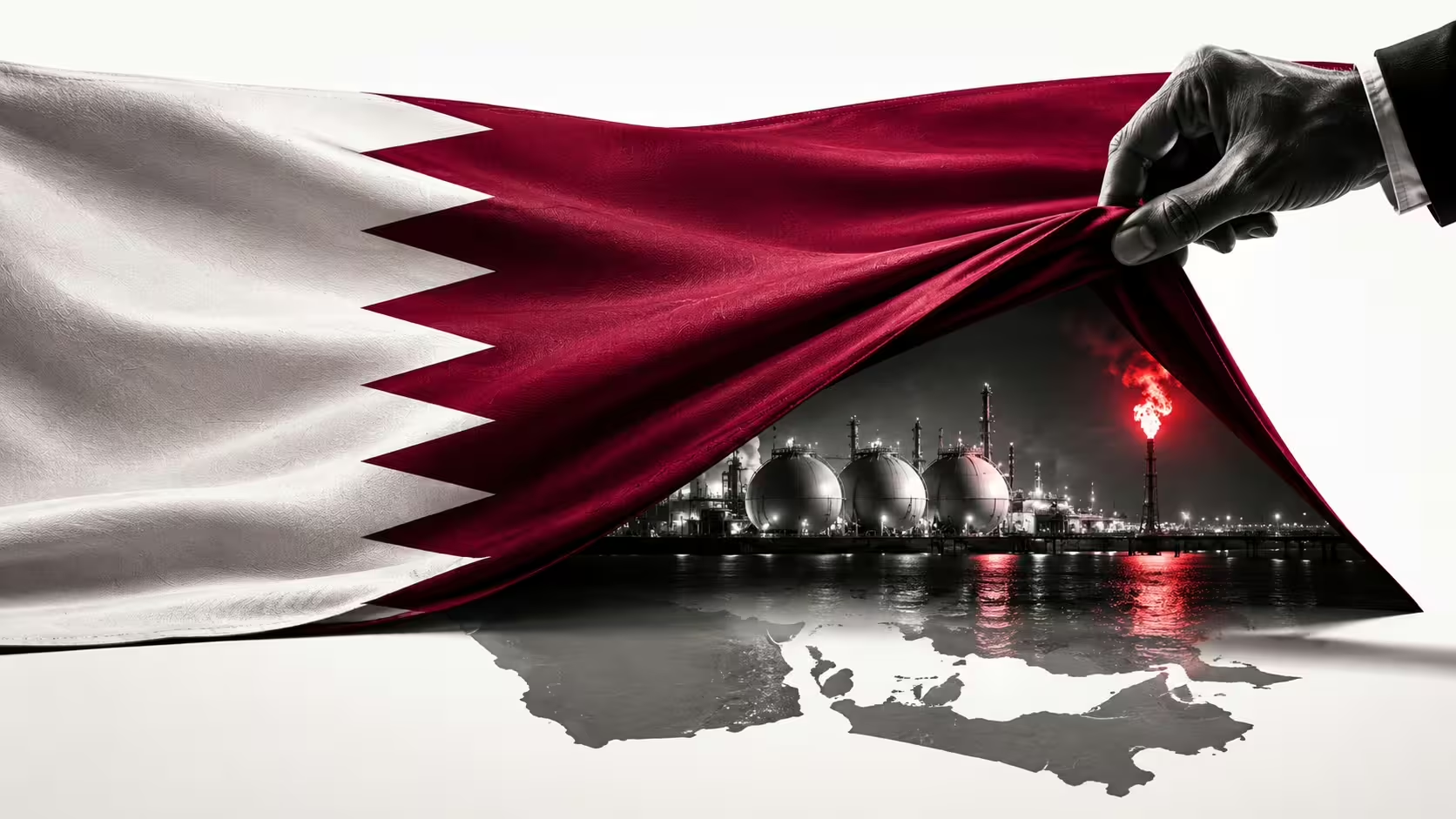
• As part of the talks, Washington and Tehran have discussed allowing Iran access to restricted funds held in Qatar and elsewhere, potentially worth more than $16 billion, according to a European official and a person briefed on the negotiations.
• These are not necessarily “frozen funds” in the full sanctions sense. They are assets Iran had previously been allowed to use for limited purchases before Washington asked banks to halt their release in 2023 during the Israel-Hamas war.
• Creating a channel for those funds could give Tehran an early economic gain without a broad U.S. sanctions-relief announcement.
• Rubio told Congress that Washington would not give Iran upfront sanctions relief in exchange for reopening Hormuz. Any wider relief, he said, would come only in later talks tied to nuclear restrictions.
• Israel is not a party to the memorandum of understanding, but it is watching the track closely.
• Netanyahu’s office said Trump spoke with the Israeli prime minister about the emerging memorandum with Iran to enter negotiations.
• According to the statement, Netanyahu thanked Trump for his commitment that any final agreement would include removing enriched material, dismantling enrichment infrastructure, limiting missile production and ending Iran’s support for its proxies in the region.
What to watch
The first test is not Trump’s announcement. It is Tehran’s signature.
If Iran formally confirms the understandings, the mediators will have turned the threat of bombing into a diplomatic track that starts with Hormuz. If Tehran stops at saying the text is incomplete, Trump’s announcement will look more like political pressure than a finished deal.
The second test is money. The difference between “restricted” and “frozen” funds could decide whether Iran gets a quick economic win it can sell at home.
The third test is Israel. Netanyahu is not just watching the opening of talks. He wants the process to end with heavy terms: removal of enriched material, dismantling of the nuclear program, limits on ballistic missiles and an end to Iran’s support for proxies. Those conditions may leave an initial deal possible, but make the final one far harder.