The latest
The Washington Post said Qatar tried to protect its most valuable economic asset through secret talks with Iran at the start of the war.
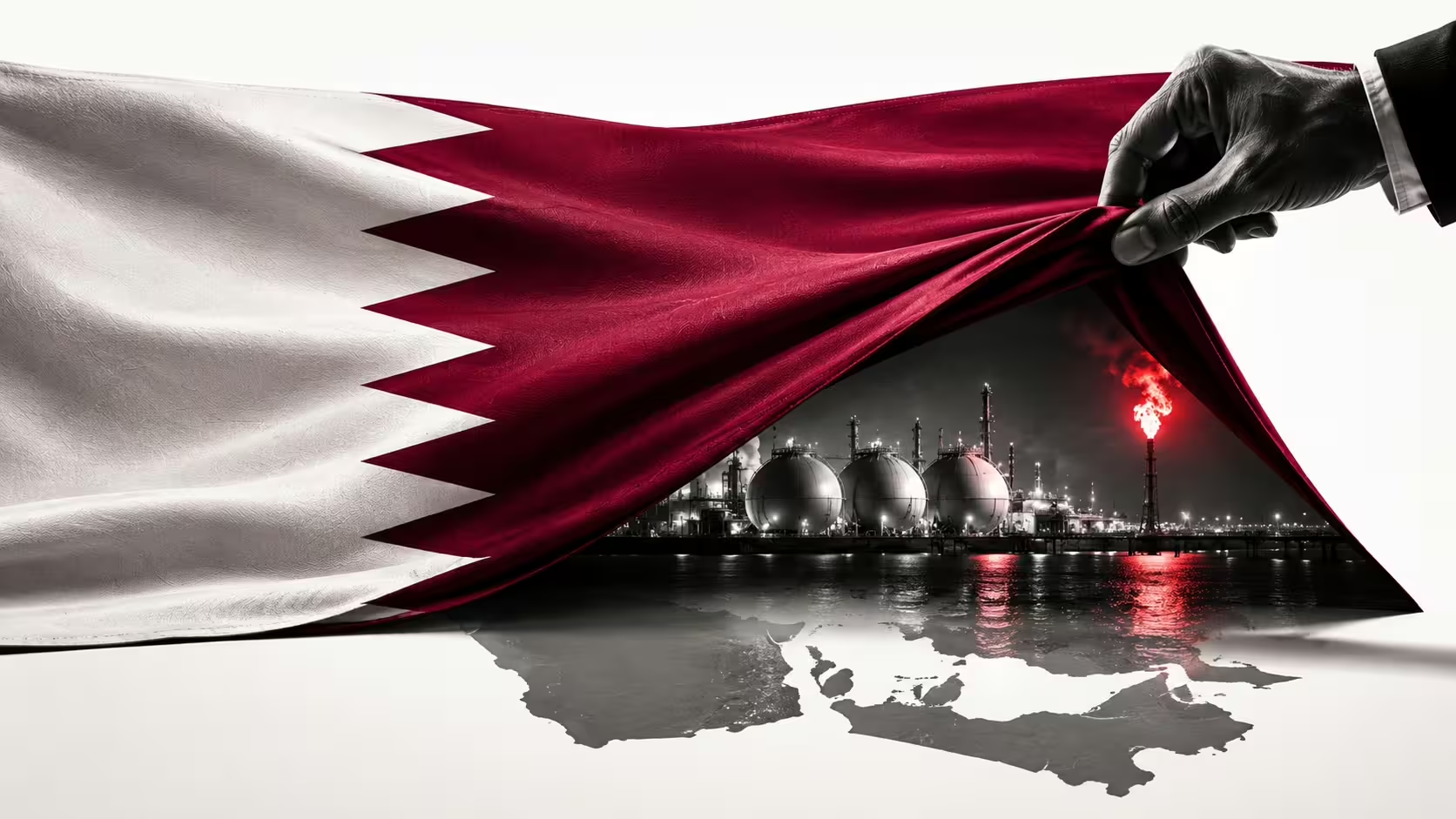
The target was Ras Laffan, the vast gas complex that sits at the heart of Qatar’s economy and plays a major role in global LNG supply.
According to Middle Eastern security officials and Western officials briefed on intelligence, Doha approached Tehran with a possible understanding: Iran would avoid striking Ras Laffan, and Qatar would shut down gas production unilaterally.
The move would have sent a shock through global energy markets. It also could have raised economic pressure on the United States and Israel to shorten the war.
One senior regional security official described the outreach as a “secret deal.” Another official said Qatar’s message to Iran was that Tehran could achieve its goals without hitting Qatari territory.
Qatar did not secure a firm commitment from Iran, according to the report.
Still, Doha shut down Ras Laffan on the third day of the war as Iranian missiles and drones targeted sites across the Gulf. Qatar said at the time the decision followed military attacks on operating facilities. The Washington Post said satellite images it reviewed later showed no obvious damage at Ras Laffan during that initial shutdown.
Qatar strongly rejected the report.
Its international media office told the newspaper that any suggestion its energy decisions were made in coordination with Iran, for Iran’s benefit, or to influence the course of the war was “categorically false.”
Doha said the allegation was meant to damage Qatar’s reputation, undermine its mediation role and strain its strategic partnership with the United States.
Details
• The Washington Post said the alleged Qatari outreach was detected through monitoring of Iranian leadership communications.
• Security officials said Qatar was trying to avoid damage to Ras Laffan that could take years to repair.
• Ras Laffan is one of the world’s most important gas facilities and a central pillar of Qatar’s economy.
• Qatar shut the complex in the war’s early days, before other Gulf states took similar steps.
• Qatari officials warned at the time that the war could disrupt global energy markets.
• The newspaper said satellite imagery showed no clear damage at Ras Laffan during the first shutdown.
• Qatar said the shutdown was based on military threat assessments and concern for workers and infrastructure.
• Around two weeks later, Iran did strike Ras Laffan after Israeli attacks damaged Iranian gas infrastructure.
• The later attack caused visible damage to an LNG facility, according to satellite images cited by the newspaper.
• Qatar’s energy minister said the damage affected infrastructure tied to nearly 20% of Qatar’s LNG exports and could take three to five years to repair.
What to watch
The report shows how Gulf states have tried to survive a war they did not start and cannot fully control.
Qatar was in an especially exposed position: a mediator between Washington and Tehran, a major U.S. security partner, and a neighbor that shares the world’s largest gas field with Iran.
If The Washington Post’s account is accurate, Doha was acting first to protect itself, even if that complicated U.S. and Israeli war aims.
If Qatar’s denial is accurate, the shutdown was a defensive move driven by the risk to workers and critical infrastructure.
Either way, Ras Laffan is no longer just an energy site. It has become one of the pressure points of the war.