With the closure being implemented, Iran’s problem lies in the fact that its entire trade model is exposed to almost a single corridor.
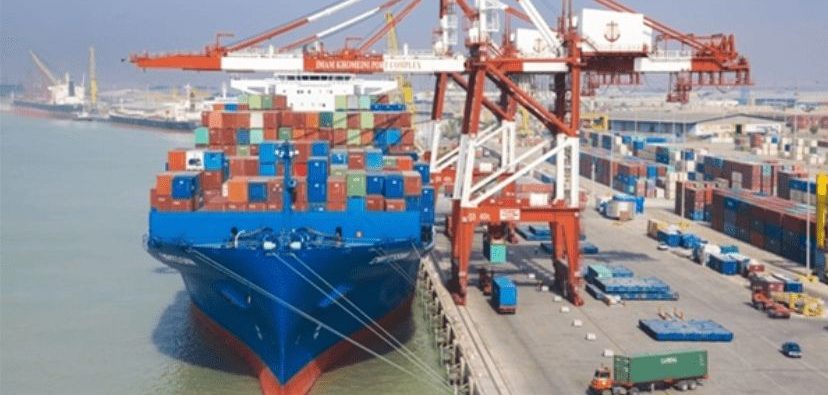
The core of the measure is that most oil, a large share of petrochemicals, and a heavy portion of industrial and food imports move through the Gulf and its ports. This means that any prolonged blockade would not only stop flows, but would also simultaneously pressure the currency, supplies, production, and the state’s ability to finance itself.
The most widely cited estimates put the loss at about $276 million per day in lost exports and $159 million per day in disrupted imports, for a total of $435 million per day.
Details
• Oil is the most dangerous link. Reuters reports that Kharg handles about 90% of Iranian oil shipments, and that Iran had been exporting between 1.1 million and 1.5 million barrels per day this year, mostly through the island. In blockade terms, this means the center of export gravity is exposed at almost a single point.
• Even before this track, oil revenues were Iran’s main source of hard currency, generating more than $50 billion annually in oil income, and this resource remains the country’s most important economic link to the outside world. That is why any broad maritime disruption strikes the most sensitive financial resource, not just the ordinary trade sector.
• Petrochemicals are not marginal in Iran’s revenues. Reuters indicated in March 2026 that between $20 billion and $25 billion in petrochemical products pass annually through the Strait of Hormuz. This is not specific to Iran alone, but it shows the scale of what is concentrated in this maritime corridor, and why a blockade here quickly becomes an industrial and trade shock on top of the oil crisis.
• The alternatives problem is real. The theoretical idea is that Jask, Chabahar, and the Caspian Sea could soften the blow, but in practice open sources do not show alternative capacity close to the importance of Kharg and the Gulf. That is why the assumption that alternatives can replace only a limited share of the volume moving through the Gulf appears closer to reality than any bet on a rapid rerouting.
• Imports are no less dangerous than exports. Once ports are disrupted, the problem is not only lost revenue. Machinery, industrial inputs, and essential goods also enter the choke point. In an economy already suffering from high inflation and a weak currency, reduced imports become an additional crisis multiplier inside the domestic market.
• The currency stands on another edge. Any new blow to foreign currency revenues would accelerate an already existing crisis.
• Storage may be the most important time marker. If production remains above export capacity, filling storage tanks would eventually force Tehran to cut production or shut wells. At that point, the blockade moves from temporary trade pressure to the possibility of longer-term damage to production capacity itself, making the eventual cost of the crisis larger than the daily direct loss figure.
What next?
The first days will decide three questions:
Will the blockade actually be implemented at full scale?
Can Iran preserve any alternative export route?
How many days can it hold before maritime pressure turns into both production and monetary pressure?
If the closure lasts, the equation becomes harsher: fewer exports, fewer dollars, weaker imports, higher inflation, and then forced risk to the fields themselves once storage fills up.
(Analysis)
What matters here is that the blockade tests the state’s ability to continue under the current model itself.
Oil is the main source of hard currency, the indirect cover for imports, the balance valve for the currency, and the lever that allows the system to buy time. When that center is hit from the sea, every domestic crisis accelerates: prices, a total collapse of the toman, imports, and production.
That is why the real value of the blockade does not stop at the $435 million per day figure. It lies in the fact that it presses on a single knot linking trade, energy, currency, and the state all at once.