(Analysis)
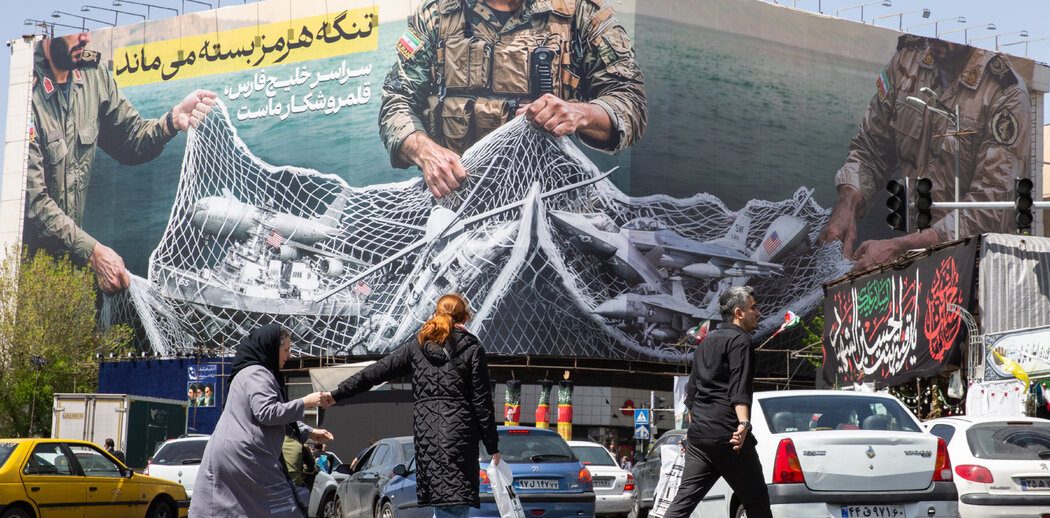
If the guns fell silent today, that silence would not mean the war had truly ended. More likely, it would mark the start of a new phase: a war that is less loud and more cold, but more deeply felt inside Iran and across its surroundings. The regime in Tehran does not view a halt in fighting as a mere military pause. It views it as proof that it endured, remained, and survived. In the logic of ideological systems, survival itself becomes victory.
First: A moral victory for the regime and an internal contraction for the opposition!
The first thing the regime would do after the war stops is build a political narrative saying that the state faced the storm and came out standing. This narrative would be aimed first at the domestic audience. The goal would be to turn survival into an instrument of psychological deterrence.
In such a climate, protest forces would find themselves facing a more difficult environment. Instead of a moment of weakness for the regime, the period would be marketed as a moment of national resilience. That alone could generate a broad sense of frustration among groups that had hoped the war would open a crack in the wall of power.
Then comes the second level: the reorganisation of the security grip. The regime would use any pause in military operations to entrench a prolonged state of emergency, but in a civilian and internal security form. Prosecutions would expand, digital surveillance would intensify, and the priorities of the judiciary and security agencies would be rewritten around protecting the internal front and preventing disorder. In this way, emergency rule would not end when the fire stops. Only its language would change.
Second: An economy of survival, not an economy of recovery!
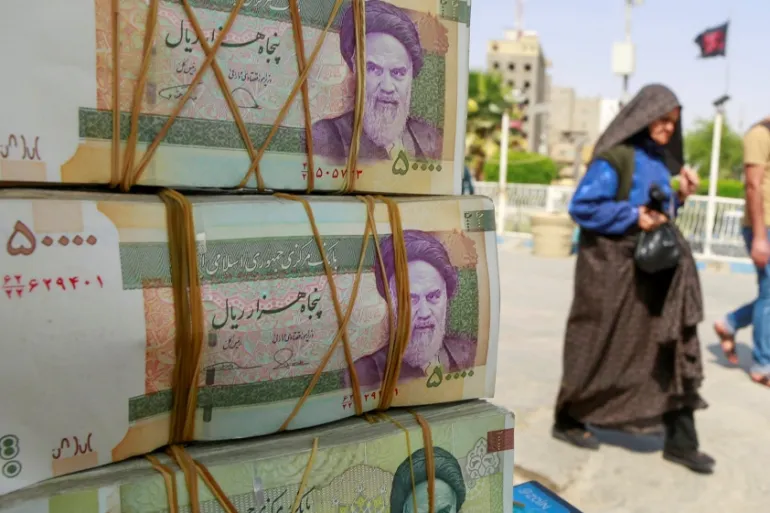
Even if the war stopped, the Iranian economy would not automatically move into a path of recovery. The opposite is closer to reality. The state would handle the next phase as an economy of survival, not a genuine development model. The priority would not be the welfare of the citizen or the revival of the market. It would be the preservation of the power structure and the institutions of deterrence.
Under this logic, resources would be redirected toward sectors tied to security, missiles, and drones, while civilian sectors remained under pressure. That would mean continued erosion of purchasing power, declining quality of services, and a heavier cost of living for society.
With hard currency in short supply, dependence on grey channels could expand:
• smuggling networks,
• unequal trade arrangements,
• and opaque financial circuits.
In other words, the goal would not be to build a normal economy, but to create a breathing system that allows the regime to survive the squeeze. That may prolong the life of the السلطة, but it would damage the economy further and deepen its structural fragility.
Third: The neighbourhood as a pressure valve, not a field of reconciliation!
The end of the war would not automatically mean that Iran returns to a stable relationship with its surroundings. Estrangement and caution are more likely to endure, and trust would remain in question. That is why the regime may view its neighbourhood not as a politically reconciled partner, but as a space through which part of the pressure can be absorbed.
This could take several forms: expanding informal trade, bypassing sanctions, using cross-border influence networks, or trying to turn some neighbouring economies into a financial or logistical breathing space. Such mechanisms may give the regime room to manoeuvre, but at the same time they deepen tension with the regional environment and block any real long-term stability.
Fourth: Greater isolation and deeper dependency
The narrower the regime’s options become in the West and regionally, the stronger its turn to the East is likely to be. But that turn is not free. Distant relationships impose higher transport costs, greater political dependency, and tougher conditions on a state entering such partnerships from a position of need rather than parity.
Here lies an important paradox: the regime that declares resilience may find itself after the war more isolated and more dependent on outside powers to secure the minimum conditions for continuity. In other words, it wins survival, but gradually loses freedom of movement.
Fifth: Exporting the crisis as a mechanism of defence
When internal pressure intensifies, the regime may try to export part of its crisis outward. Not necessarily through open war, but through:
• activating arenas of influence,
• moving tools of pressure,
• or using regional proxies whenever the economic and political squeeze tightens.
This gives the regime room to manoeuvre and reminds others that ignoring it carries a cost. But it also prevents full de-escalation and keeps the region inside a cycle of chronic tension, where there is neither real peace nor full-scale war, but a condition of constant attrition.
Conclusion
If the war stopped now, the regime in Tehran might declare victory simply because it remained in place. But this would be a partial and troubled victory. Survival is not recovery. Security control is not stability. Extending the life of the regime is not the same as solving the crisis of society.
What would come after the war, in this scenario, would not be peace in the full sense. It would be a heavy stillness that freezes the explosion without preventing it. Every extra year bought through repression, a paralysed economy, and the draining of neighbouring spaces would add a new layer of pressure inside a state that has not healed its wound, but merely covered it for a while.