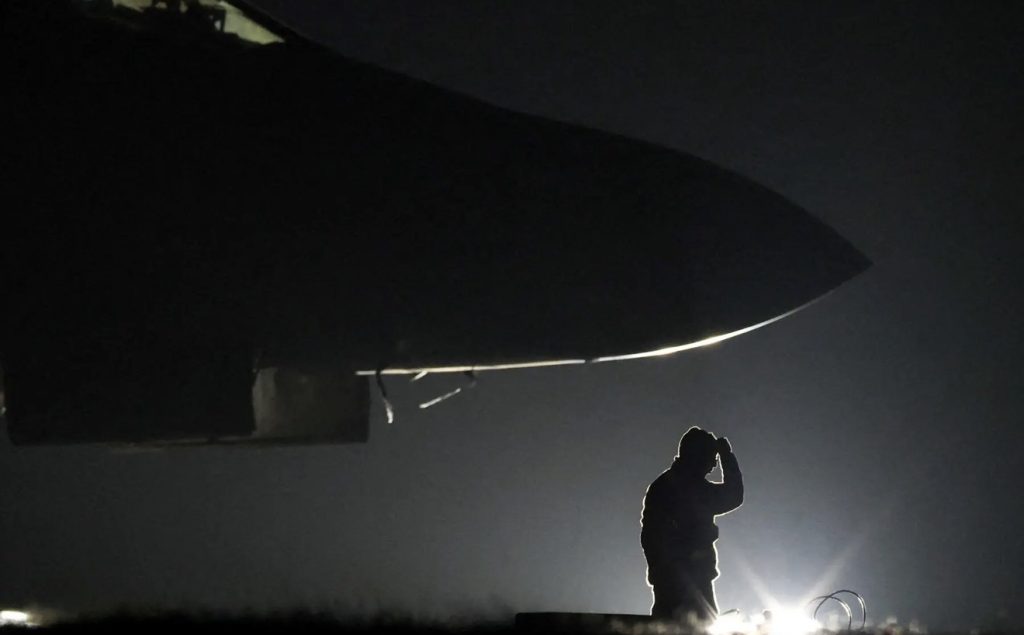
The United States recovered an Air Force officer from inside Iran after a complex rescue operation carried out late Saturday, following the downing of the American fighter jet he was aboard on Friday. Trump announced the success of the mission shortly after midnight Eastern Time, confirming that the officer had been injured but was brought out safely, and that the rescue team suffered no losses.
This development closes the case of the fighter jet’s crew after the first pilot had already been rescued, while the second officer — a weapons systems officer holding the rank of colonel — had remained stranded in difficult mountainous terrain for more than 24 hours.
More details
The New York Times said the rescue operation pushed U.S. special forces deep into Iranian territory in one of the most sensitive missions since the war began. It said an open two-day race unfolded between U.S. and Iranian forces to reach the wounded officer, who had been hiding in a mountainous area carrying only a pistol and limited communications equipment.
According to the report, the mission involved hundreds of special operations troops, along with dozens of aircraft, helicopters, and intelligence, cyber, and space capabilities. After being extracted, the officer was flown to Kuwait for medical treatment.
The newspaper added that the mission faced an extra complication in its final stage after two transport aircraft that were supposed to extract the rescue force and the officer from a remote base inside Iran became disabled. That forced U.S. commanders to send in three replacement aircraft and then destroy the two disabled planes to keep them from falling into Iranian hands.
The operation places the loss of the American fighter jet in a more sensitive context. The downing of the F-15E was the first known case of an American combat aircraft being brought down by Iranian fire since the war began, raising questions over whether Iran still retains effective air defense capabilities despite a month of U.S. and Israeli strikes.
At the same time, Israel widened its attacks on Iran’s economic infrastructure, striking the Mahshahr petrochemical complex in southwestern Iran, one of the country’s most important industrial centers. According to Iranian casualty figures, the strike killed 5 people and wounded 170, while causing a broad production shutdown across the complex.
What next?
The next test is whether Washington treats the rescue as proof of air dominance alone, or reads the downing of the fighter jet as a sign that Iran still has the capacity to prolong the war and raise its cost. The targeting of Iran’s industrial infrastructure also opens a new pressure front that goes beyond the direct battlefield into the economy, supply chains, and energy.
Details:
• U.S. President Donald Trump escalated his rhetoric toward Iran, threatening that hell will rain down on it if it does not reopen the Strait of Hormuz by Monday, in the latest sign of intensifying confrontation between the two sides.
• Trump wrote on Truth Social that the deadline he gave Tehran is about to expire, after he had extended the final date on February 27 by an additional ten days until April 6 to reopen the strategic waterway.
• On the other side, Iran said its forces are continuing to sweep an area near the site where a U.S. warplane crashed in the country’s southwest, as Washington and Tehran race to find a missing American pilot. According to reports, a U.S. F-15 fighter jet was shot down over southwestern Iran on Friday. One of the two crew members was rescued, while the other remains missing.
• In a separate incident, Iranian media reported that a U.S. A-10 aircraft went down in the Gulf after being hit by Iranian air defences, while U.S. sources said the circumstances of the crash remain unresolved and that the pilot was rescued.
• In Israel, Iran launched a salvo of ballistic missiles toward the centre of the country, causing major damage to homes and injuring six people, according to Israeli reports. Sirens sounded in Ramat Gan, Givatayim, Bnei Brak and Petah Tikva.
• In Iran, Russia’s Rosatom said it evacuated 198 employees from the Bushehr nuclear plant after a strike targeted an area near it, while Iranian media said one person was killed and a service building near the plant was damaged in the attack, which Tehran blamed on the United States and Israel.
• In Iraq, the Shalamcheh border crossing with Iran was closed after strikes on the Iranian side killed one Iraqi and wounded five others, according to security sources.
•• In another development, Iranian media quoted the Khatam al-Anbiya joint military command as saying that Iraq would be exempt from any restrictions on passage through the Strait of Hormuz, indicating preferential treatment for Baghdad while Tehran tightens its grip on the vital waterway.
• In Lebanon, the Israeli military continued its attacks on the city of Tyre and its surroundings, and issued new evacuation orders for residents of the city and nearby areas ahead of strikes it said were targeting Hezbollah sites. Reports also said a hospital in Tyre was damaged after airstrikes hit nearby buildings, injuring 11 people.
• Politically, Iranian Foreign Minister Abbas Araghchi said his country has never refused to go to Islamabad for talks aimed at ending the war, but stressed that Tehran wants decisive and lasting terms to end what he described as the illegal war imposed on it.
• In the United States, the State Department announced the detention of the niece of the late Iranian commander Qassem Soleimani and her daughter after revoking their lawful permanent resident status, accusing them of supporting positions hostile to the United States and favourable to the Revolutionary Guard.
Beyond the News:
The signs are growing that the conflict is no longer confined to direct military strikes, but is now threatening navigation through the Strait of Hormuz, global energy supplies and regional stability from Lebanon to Iraq. The widening strikes and escalating messages exchanged between Washington and Tehran are also raising the chances that the war could enter a more dangerous phase in the coming hours.