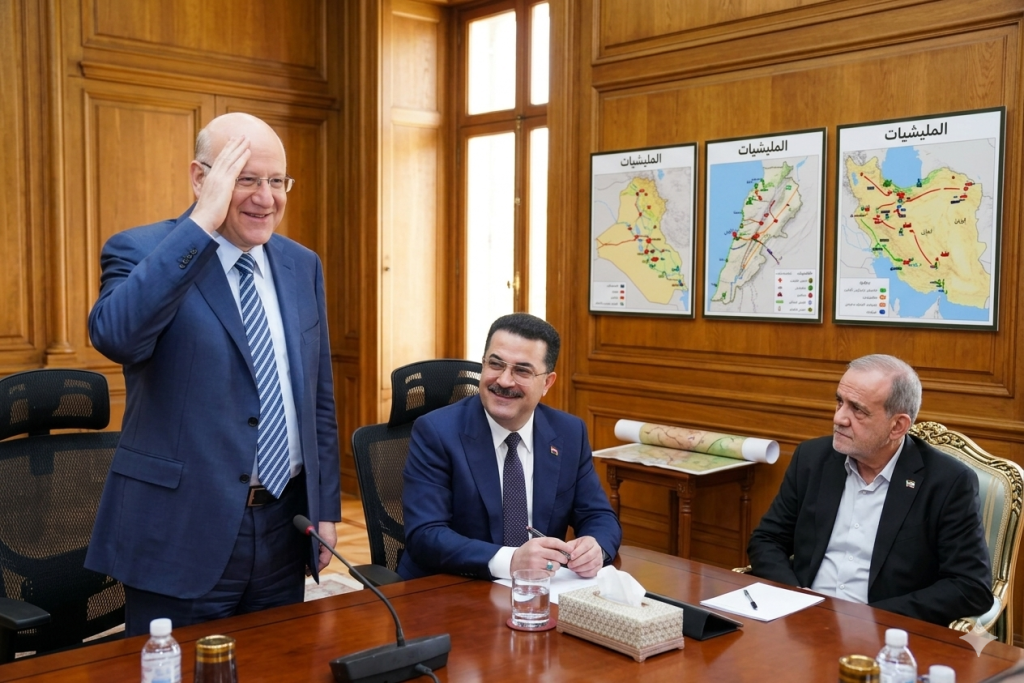
Masoud Pezeshkian, Mohammed Shia Al-Sudani, and Najib Mikati each represent, in his own way, the model of an official who holds the formal title but not always the real instruments of coercive power. They can issue statements, call for calm, make appeals, and try to contain the fallout, but they do not truly control the decision to open or close the fronts.
What is most dangerous in the region’s wars is not only the multiplication of battlefronts, but the fracturing of the very idea of the state. A president apologises for actions he does not fully control. A prime minister negotiates on behalf of a state that coexists with a parallel weapon. Another is described as commander-in-chief while everyone knows that some factions move according to their own logic and regional calculations. This leaves all three states paying the price without monopolising the decision.
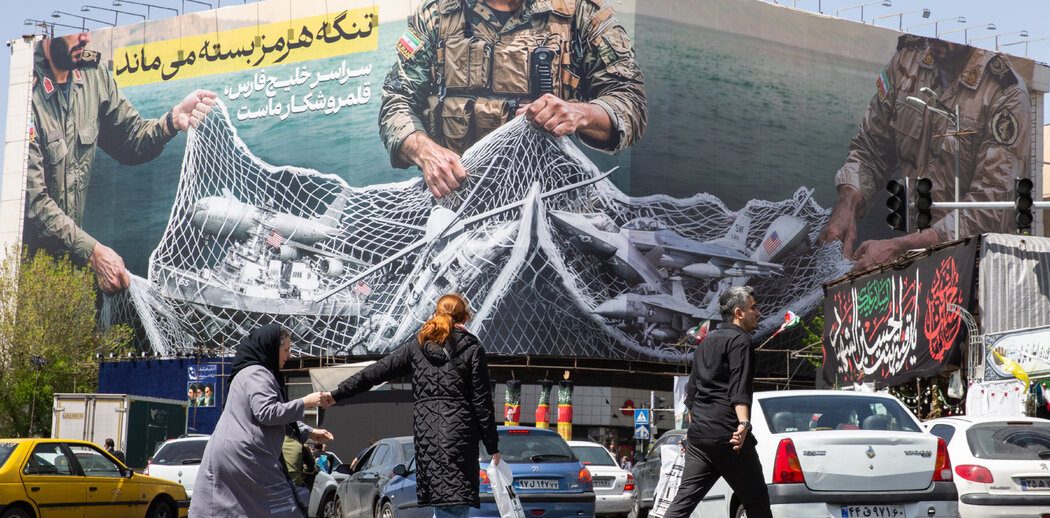
The current war, and those that preceded it in the region, point to one political dilemma under different names: the state exists in form, but sovereignty is in practice distributed between official institutions and armed actors that either overtake the state or move ahead of it. In Iran, events have shown that the centre of gravity shifted clearly toward the Revolutionary Guard at the moment of succession after the killing of Ali Khamenei, and that Mojtaba Khamenei’s rise took place under the pressure and influence of the Guard.
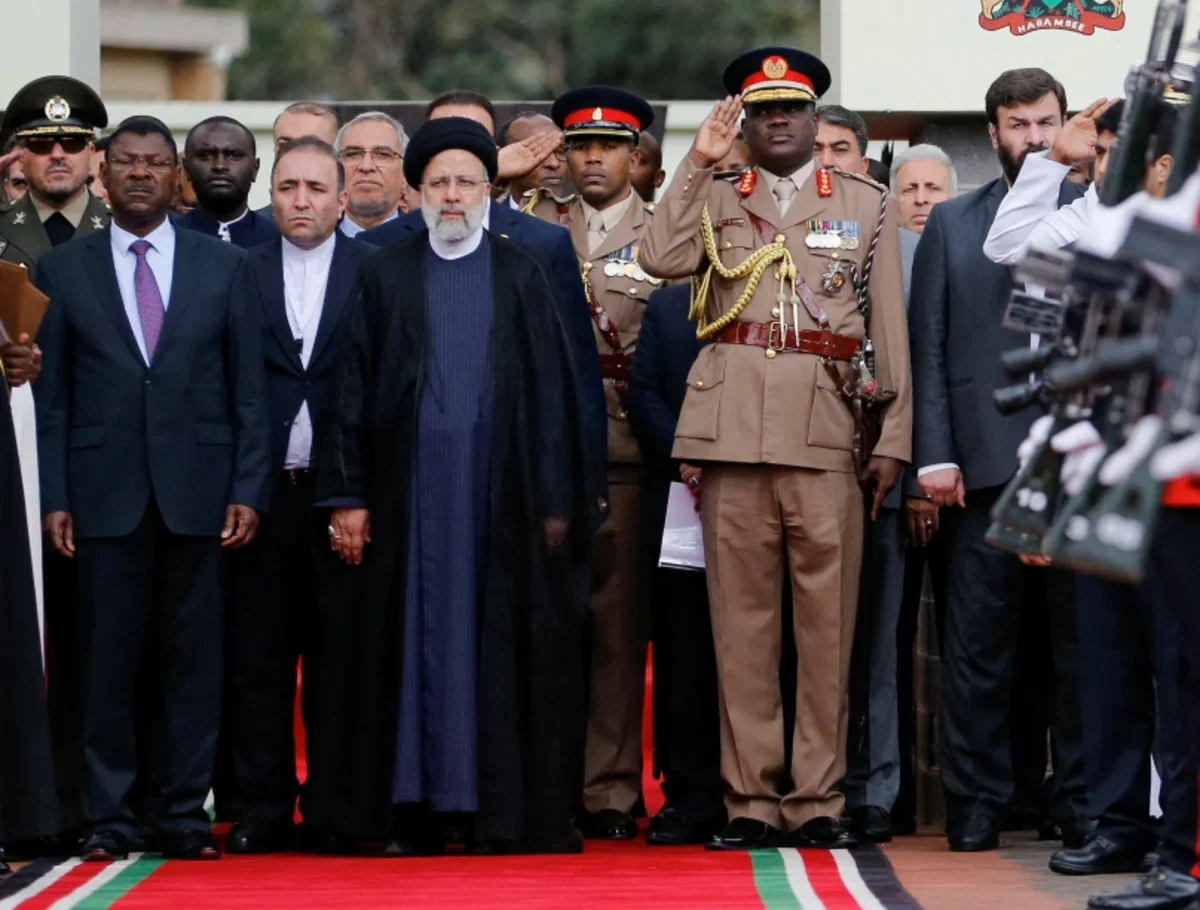
In that system, the president is not the highest authority on war and peace in the first place, because the constitution gives the decisive position to the Supreme Leader as head of the system and commander-in-chief.
In Iraq, the picture is less constitutional and more ambiguous. On paper, the prime minister is the commander-in-chief of the armed forces. In reality, the security landscape includes powerful armed factions formed within or around the Popular Mobilization Forces, with political and economic reach and close ties to Tehran. Even when these groups reduce or delay their participation, they remain part of a cross-border Iranian sphere of influence, and their decisions cannot be understood solely through the institutions of Baghdad.
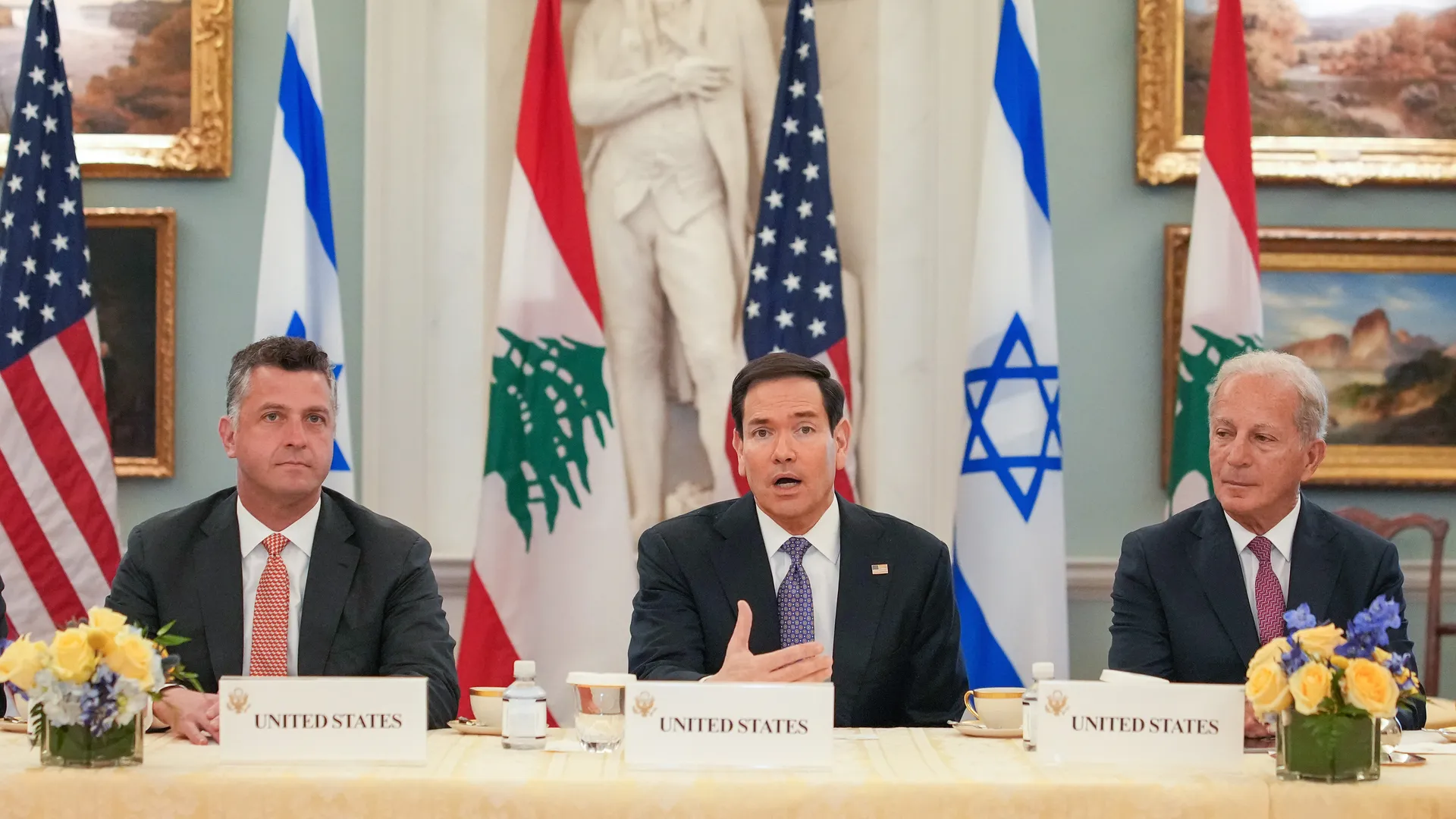
In Lebanon, Najib Mikati is no longer the current prime minister, but he still represents a long Lebanese phase in which the premiership managed balances and statements more than it managed the state’s monopoly over arms.
Detail
In Iran, Masoud Pezeshkian does not appear to be the true owner of the war decision even when he speaks in the name of the state. Days ago, he announced the suspension of attacks on neighbouring countries after the approval of a temporary leadership council, and he offered a personal apology to the affected states. At almost the same moment, the Revolutionary Guard was setting the pace for the selection of the new Supreme Leader. In this sense, the president is a negotiating and de-escalatory front, not the centre of sovereign force.
In Iraq, Al-Sudani’s problem is not the constitutional text itself, but the gap between the text and reality. He can manage state institutions, negotiate with Washington, and absorb pressure, but he does not control the logic of factions that see themselves as part of a regional axis before they see themselves as part of a national state.
In Lebanon, the crisis reveals the same pattern more starkly. The state declares that it seeks to place all arms under its control, the army moves in the south, and the government issues decisions, yet Hezbollah has for years retained for itself the right to decide war, deterrence and timing.
What Next?
The question is no longer who holds the office, but who holds the power to compel. If the regional war continues on this path, the same picture will keep repeating itself:
• In Iran, a president explains and apologises while the real military decision lies elsewhere.
• In Iraq, a government tries to prevent explosion while factions retain the right to drag the country to the brink.
• In Lebanon, an authority declares sovereignty while testing its limits every day against a parallel weapon.
This means that any talk of a durable ceasefire or a security settlement in these states will remain incomplete unless it first answers a simpler and more dangerous question: who actually monopolises the decision of war?