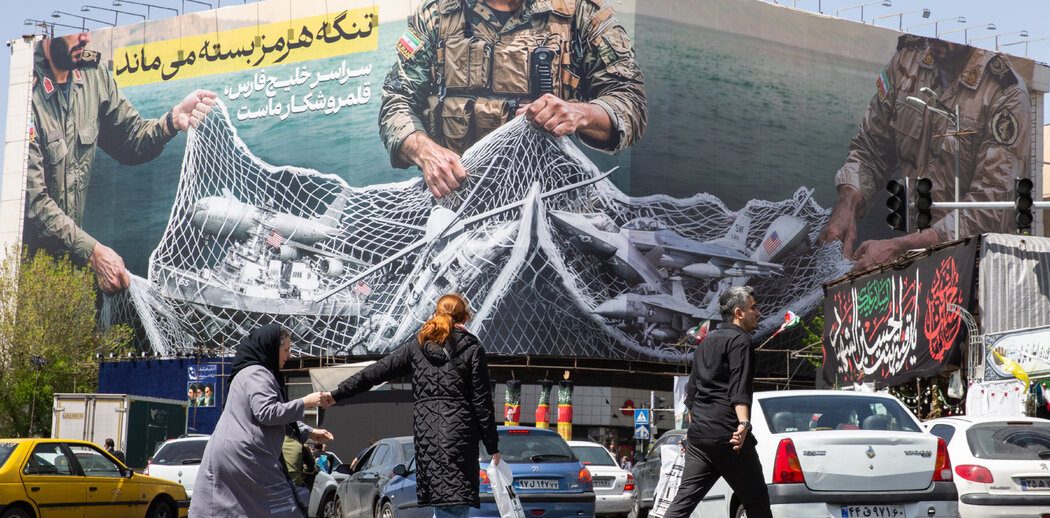
Trump is speaking as if he wants to hold both threads at once: the thread of war and the thread of a negotiated deal. In public, he hints that the talks are moving in a positive direction and that there is a chance to end the war. But behind that optimism, Washington does not look like it is easing pressure. It looks like it is adding new cards of strength to the negotiating table.
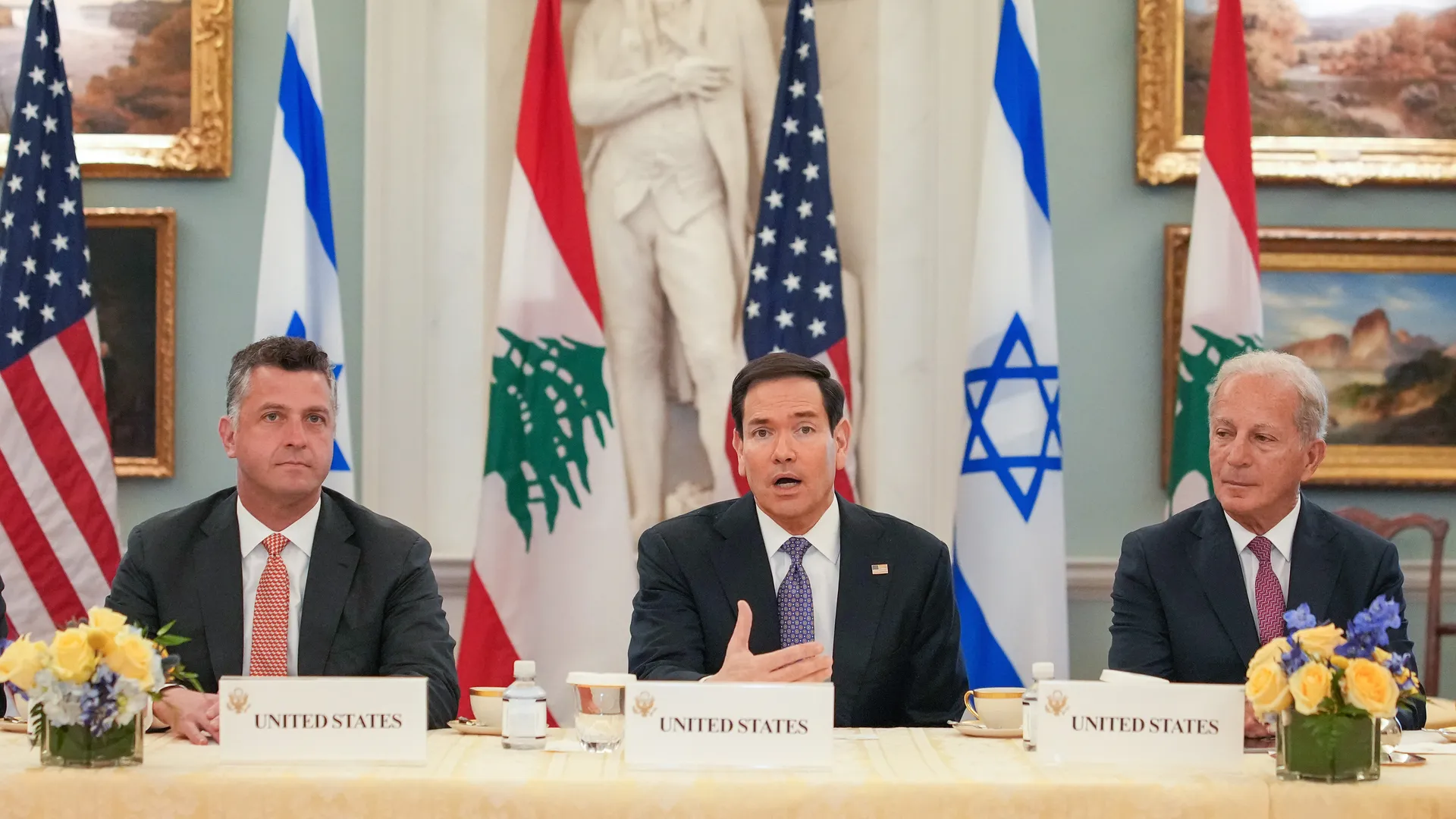
The clearest political movement has come through mediators from Turkey, Egypt and Pakistan, who are pushing to arrange a meeting between U.S. and Iranian officials in the coming hours. Pakistan went further by offering to host a peace track, an opening Trump quickly seized on and amplified politically. The problem is that the positive signals have not yet turned into real convergence. Washington has sent Tehran a 15-point plan to end the war, but at its core it revives many of Trump’s earlier demands, meaning the door is open to negotiation, but not necessarily to concession.
This is where the Gulf contradiction appears. Saudi Arabia and the United Arab Emirates are not comfortable with Trump’s push for a quick deal. In both capitals, the reading is that the issue is not only a cease-fire, but the shape of the ending. Does Iran emerge from this war genuinely weaker, or does it survive through a political arrangement that allows it to reposition and threaten again? That is why both are pressing for continued attrition until the danger is reduced, not merely frozen.
Detail
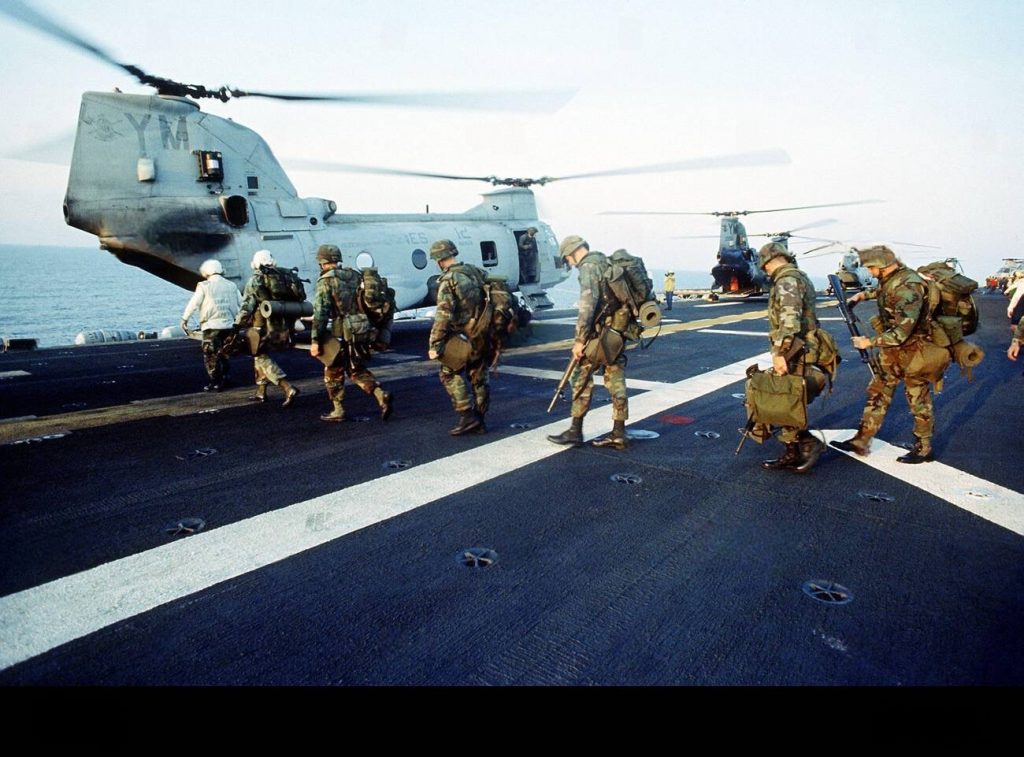
At sea and across the wider theater, the picture is clearer than the rhetoric. The Pentagon is moving elite forces in order to widen its options. Reports point to the deployment of about 2,000 to 3,000 soldiers from the 82nd Airborne Division, including elements of the Immediate Response Force and the headquarters unit. This is a formation built to move within 18 hours and typically used for missions requiring speed, the seizure of airfields and critical infrastructure, and the opening of a bridgehead for larger operations.
In parallel, there is a naval and amphibious flow that can only be read as preparation for more serious contingencies. Three warships from the Tripoli Amphibious Ready Group are nearing the Middle East carrying around 4,500 personnel, including about 2,200 from the 31st Marine Expeditionary Unit. From the other direction, the 11th Marine Expeditionary Unit moved out early from San Diego and is expected to arrive later to reinforce or rotate with the force already heading in.
The movement of these units suggests Washington is building a layered operational ladder. Marines first, because of their amphibious flexibility and capacity for assault and rapid repair. Paratroopers next, to reinforce, secure and expand. In that context, Kharg Island keeps returning to the center of the picture. It is both an economic and military pressure node.
Some U.S. assessments see a seizure of the island as achievable quickly. But the problem is not taking the island. It is holding it under Iranian drone and missile fire. That is why some military readings favor any move there beginning with the Marines, whose combat engineers are better placed to restore the damaged airfield before additional troops and matériel are flown in.
These moves bring the number of additional ground forces sent into the war theater to roughly 7,000, within a broader operation for which the Pentagon has assigned about 50,000 personnel from the region, Europe and the United States.
The meaning is clear. Negotiations are moving, but the military architecture is being built on the assumption that failure remains possible, and that Washington wants a real capacity to shift from naval and air pressure to a more sensitive ground option if necessary.
Then we get to oil, which is where reality appears without political rhetoric. Yes, Brent fell from above $110 to around $98, and U.S. crude slipped to about $88 because the market picked up the possibility of successful talks. But that is the paper market. The physical market says that crude able to avoid Hormuz is being sold at far higher prices, to the point that some Emirati barrels moving through alternative routes have reached about $160.
That gap says the real choke point has not ended. Asia is scrambling hard for alternatives to Gulf crude so it can keep producing diesel and jet fuel, pushing up prices for grades from Norway, Russia, Colombia and even some U.S. barrels. Dubai crude itself no longer reflects Dubai oil in any meaningful way, because the emirate’s crude is no longer exiting through the strait as before. Pricing now leans more on Omani crude and limited Abu Dhabi barrels moving through Fujairah.
In other words, the market is waiting for one thing only: will Hormuz actually reopen or not? Before the war, roughly one-fifth of global oil moved through that artery every day. Even with alternative routes and releases from reserves, the shortfall remains enormous if the closure continues or if passage remains subject to declared Iranian authority.
What’s Next?
If the mediation succeeds, Trump may get the negotiating image he wants without giving up the gains of military pressure. If it fails, the ongoing buildup says Washington is not only seeking to deter Iran from afar, but to keep a ready capability to impose a new equation around Kharg and Hormuz. Until then, oil will keep reading the facts more coldly than the politicians do.