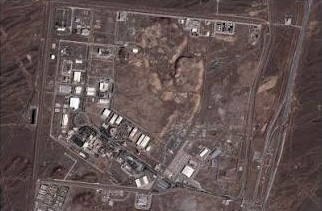
The Natanz nuclear facility returned to the spotlight today after Iran announced that the site had been struck, while Israeli media platforms quickly highlighted the development as a new chapter in the targeting of the central node of Iran’s enrichment programme.
The Jerusalem Post and The Times of Israel carried almost the same account: a US-Israeli attack on the enrichment facility, with no declared radioactive leak and no immediate indication of the real scale of the damage deep inside the site’s underground structure.
Trump has spoken about the possibility of easing or scaling down operations, yet Washington is at the same time pushing more forces and capabilities into the region. That overlap makes today’s strike on Natanz look like a dual message: military pressure has not stopped, but the final political decision on how this ends is still open.
Detail
Natanz has moved back to the centre of the story today because of one core question: what is still left inside it? In recent days, The Wall Street Journal cited Rafael Grossi as saying that Iran’s stockpile of highly enriched uranium appears to remain buried at its main sites, including Natanz. That means the earlier strikes, and now today’s strike, may have disrupted access to the material or hindered operations at the site, but they have not necessarily closed the file on the fissile material itself.
This is where the real question in Washington begins to take shape: is it enough to leave the material under the rubble while threatening new strikes if Tehran tries to recover it, or will military logic eventually push toward a far more complex operation to secure it or destroy it outright?
The Wall Street Journal lays out that possibility clearly and notes that any attempt to seize this material would require:
•a large force
•combat security
•excavation and protection capabilities under fire
That is what makes such an option closer to a major special mission than to a conventional airstrike.
The Israeli angle adds further questions to the picture. In today’s Israeli coverage, the targeting of Natanz appears as part of a broader effort to keep pressure on both Iran’s nuclear and military infrastructure at the same time. But what stands out is that Israeli media itself has not produced evidence that today’s strike definitively settled the facility’s role. What has been confirmed is the strike itself and the absence of radioactive contamination. The question of whether equipment, tunnels, storage areas, or specific materials have actually been taken out of the equation remains open.
The technical background also does not allow for an easy claim that everything has been destroyed. Satellite imagery highlighted by The Washington Post after the strikes in early March pointed to damage to buildings and access points linked to the underground section of the Natanz complex, not to a final resolution of everything located deep below.
What next?
The most likely path for now appears to be this:
•continued air pressure
•leaving the material under the rubble
•monitoring any Iranian attempt to recover it
•or to restart part of the system
This option fits more closely with Trump’s current posture, which oscillates between escalation and decisive action on one side, and a desire to avoid sliding into a broader ground war on the other.
But that does not mean the file is closed. If it becomes clear that Tehran is still able to access highly enriched uranium, move part of it, or rebuild an operational track around Natanz and Isfahan, the American debate will quickly shift from disruption to seizure or direct physical destruction. At that point, Natanz will again become the knot forcing Trump to choose between simply burying the threat and going in to pull it out from under the rubble.