The U.S. military posture in the Gulf is shifting from reacting to attacks to planning a new geographic reality that could end the Strait closure crisis.
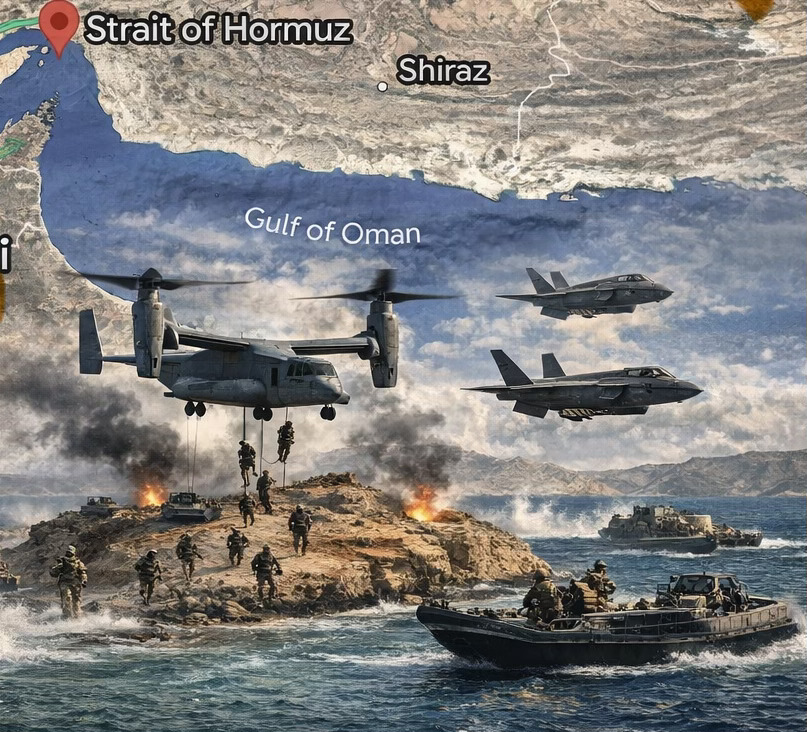
The arrival of the amphibious assault ship USS Tripoli, carrying 2,200 Marines, is being viewed as preparation for possible seize-and-hold operations targeting the islands Tehran uses as bases for mine-laying and missile platforms.
Details: the “hostage island” option instead of destroying oil facilities
In this context, Kharg Island stands out as the first strategic target. Rather than destroying its oil infrastructure, which could trigger a global economic and environmental disaster, military thinking appears to be leaning toward seizing it.
• Kharg Island: It accounts for 90% of Iran’s oil exports. Seizing it would turn it from a source of regime financing into a major bargaining chip in Washington’s hands.
• Qeshm and Hormuz: Mountainous islands with tunnels and fast attack boats. Controlling them would sharply reduce Tehran’s ability to threaten tankers at the narrowest point of the strait.
• Operational capabilities: The 31st MEU relies on Osprey aircraft and F-35B fighters capable of vertical takeoff, allowing for rapid strike operations without the need for conventional airfields.
The current direction reflects a growing conviction inside the Pentagon that thousands of air sorties have not fully eliminated the Iranian threat. “Nibbling away” at the islands is being viewed as a strategic move that tightens the pressure on the IRGC and leaves it with two choices:
direct confrontation at sea,
or accepting Washington’s terms for reopening the strait.
What’s next?
The next phase will depend on military “probing.” Will U.S. forces begin with a show of force near these islands, or will they wait for another maritime incident to provide the trigger for a larger landing operation?
What is already clear is that the presence of the Marines raises expectations from a war of attrition to a war over positions and control of terrain.