Iran’s women’s national football team is facing deep uncertainty as its Asian Cup campaign in Australia comes to an end, after the players refused to sing the anthem before their opening match against South Korea and then returned to singing it in later games amid reports of pressure and fears for their families in Iran. After their elimination against the Philippines, protesters surrounded the team bus on the Gold Coast, while footage appeared to show what looked like distress signals from inside the vehicle.
Detail
• The turning point came on March 2, when the players stood in silence during the anthem before facing South Korea. Outside Iran, the moment was widely read as a silent act of protest. Iranian state media later branded them wartime traitors.
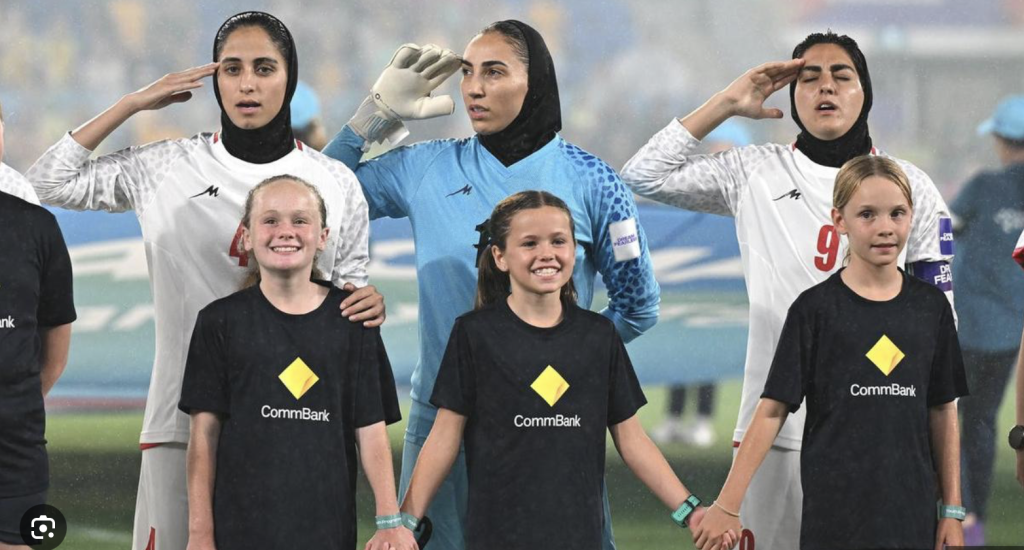
• Before the next match against Australia, the players sang the anthem and delivered a military-style salute. They did the same again against the Philippines. Reuters and ABC reported that rights advocates linked the shift to heavy pressure and close monitoring.
• After the final defeat and exit from the tournament, protesters surrounded the team bus on the Gold Coast and chanted for the players to be saved. Australian media documented the scene, and images circulated showing what was described as a distress signal from inside the bus.
• The pressure did not stay at street level. A coalition of 12 Iranian-Australian organisations and civil society groups urged Home Affairs Minister Tony Burke to stop any forced return, guarantee independent legal advice, and provide humanitarian protection if needed.
• FIFPRO also raised serious concerns about the team’s safety and said it had been unable to contact the players directly. Reuters reported that a petition calling for protection had gathered more than 66,000 signatures.
• At the same time, coach Marziyeh Jafari said the team was eager to return to Iran, though rights advocates and some media reports questioned whether such statements can be separated from the atmosphere of pressure surrounding the squad.
What next?
1.Attention is now on whether any player will seek individual protection or asylum, because the Australian government has not disclosed any such arrangement.
2.Foreign Minister Penny Wong said Australia stands in solidarity with the team, but stopped short of outlining any direct protective measures.
3.If the squad leaves without any protection pathway, the case could quickly shift from a sports controversy to a wider story of transnational repression. This is an analytical inference based on the public warnings from rights groups and player advocates, not on any confirmed punitive action after return.
(Analysis)
This is no longer the story of a team that lost three matches. It is the story of a state that expects sport to remain an instrument of discipline and loyalty, even beyond its borders. The players’ silence in the opening match looked deeply personal, but in Tehran it was immediately treated as political. Their later, louder anthem performances suggested something else: not a natural change of mood, but the cost of dissent when family remains inside the country and the state is at war. That is an analytical reading grounded in the surrounding reporting, not in direct public testimony from the players themselves.
The most revealing moment came at the bus. Whether every detail of the reported distress gesture is ultimately verified or remains partly interpretive, the image of the team trapped between protesters calling for protection and authorities saying very little captured the whole dilemma. The players are physically in Australia, but the real decision over their future does not yet appear to be fully in Australian hands.