
The United States and Iran, with support from regional mediators, are pushing toward a 45-day ceasefire framework in a last attempt to open the door to a broader agreement that could permanently end the war. According to four U.S., Israeli, and regional sources familiar with the talks, the proposed path would unfold in two phases, beginning with a temporary ceasefire and then moving toward a final agreement to end the war!
Detail
This push comes as the deadline set by U.S. President Donald Trump for Iran approaches. Trump extended the deadline by 20 hours on Sunday, moving it to Tuesday at 8:00 p.m. Eastern Time. He told Axios that the United States is engaged in deep negotiations with Iran and that a deal is still possible before the deadline expires, while also threatening major escalation if the talks fail!
According to the report, mediation efforts are being carried out through Pakistan, Egypt, and Turkey, alongside text messages exchanged between Trump envoy Steve Witkoff and Iranian Foreign Minister Abbas Araghchi. The Trump administration has presented several proposals in recent days, but Tehran has not accepted them so far, according to a U.S. official!
The proposed formula has two phases. The first would begin with a 45-day ceasefire that could be extended if the negotiations require more time. The second phase would focus on a final agreement to end the war. Mediators believe that fully reopening the Strait of Hormuz and resolving the issue of Iran’s highly enriched uranium, either by removing it from the country or lowering its enrichment level, would only be possible under a comprehensive final deal!
Mediators are now working on confidence-building steps Iran could take during the first phase, especially on Hormuz and highly enriched uranium, because Tehran sees both files as its most important bargaining chips and does not want to fully give them up in exchange for only a temporary ceasefire, according to two sources!
At the same time, mediators are seeking U.S. steps that would give Iran assurances that the ceasefire would not exist only on paper, as Tehran fears a repeat of scenarios like Gaza or Lebanon, where attacks could resume at any moment!
Two sources also said that an operational plan is already in place for a large-scale strike on Iran’s energy facilities if diplomacy collapses. According to a source with direct knowledge, mediators fear that any Iranian retaliation to such strikes could cause major damage to oil and water facilities in Gulf states!
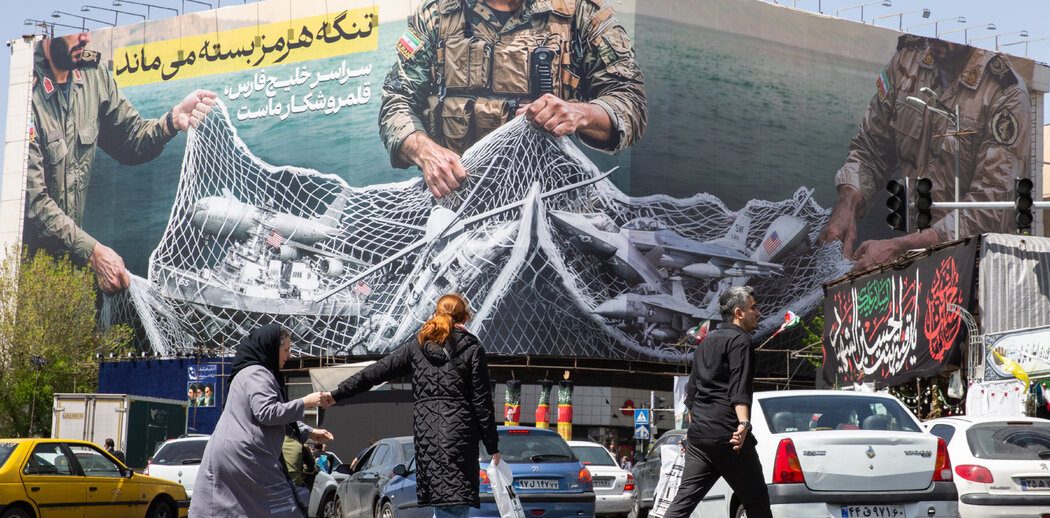
The White House declined to comment. Meanwhile, Iranian officials have continued to project a hardline stance in public. On Sunday, the Iranian Revolutionary Guard Corps navy said the situation in the Strait of Hormuz would never return to what it was before the war, especially for the United States and Israel!
What’s next?
Attention is now focused on the coming hours, as mediators see them as the last opportunity to stop the war from sliding into a far more destructive phase. If this track fails, the conflict could move toward large-scale strikes on Iran’s energy infrastructure, followed by retaliation that may extend to vital facilities across the Gulf!
Source: Axios – Barak Ravid!