The war entered its thirteenth day with Iran appearing no longer content with conventional military retaliation. Instead, it has shifted toward widening the pressure on energy, shipping, and regional diplomacy. The clearest expression of that shift emerged across three simultaneous tracks: the targeting of fuel facilities in Salalah, the strike on two tankers in Iraqi waters, and the widening threat to U.S. facilities in Baghdad, alongside continued missile and drone pressure on Israel through Iran and Hezbollah.
In Oman, the state news agency said drones struck oil storage facilities at the port of Salalah, causing fires and material damage. The energy ministry said oil supplies and petroleum products were not disrupted. The fire hit fuel tanks, but it did not strike the core of Oman’s strategic supply infrastructure.
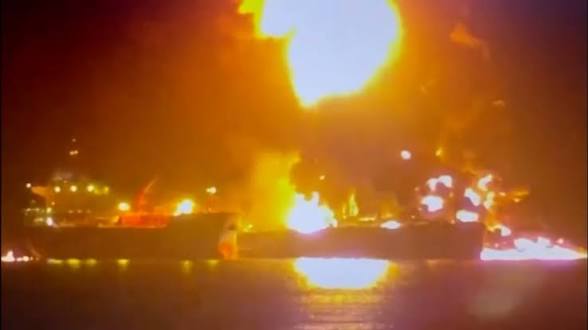
In Iraq, the picture appeared more sensitive. Reuters and other outlets reported that explosive-laden boats attacked two fuel tankers in Iraqi waters, setting them ablaze and killing one crew member, before Iraqi authorities announced the suspension of oil port operations while keeping commercial ports open. In parallel, The Washington Post reported, citing a security official and an internal U.S. alert, that six drones targeted the Baghdad Diplomatic Support Center, with five shot down and one hitting the compound near a guard tower.
Detail
• Salalah: The strike hit fuel tanks and caused a fire, but Muscat said supplies were not disrupted, meaning the message so far is more about raising costs and spreading anxiety than crippling Oman’s market itself.
• Umm Qasr and Iraqi waters: The attack on the two tankers took place inside a loading zone linked to Iraqi exports and forced authorities to halt oil port operations. It is a development that damages the reputation of safe shipping corridors as much as it affects the cargo itself.
• Hormuz and prices: The New York Times and the Associated Press reported that oil rose above $100 a barrel, while the release of strategic reserves lost much of its calming effect in the face of fears over prolonged supply disruption and the paralysis of Gulf shipping.
• Baghdad: The strike on the U.S. facility near the airport confirms that Iraq is no longer just a political transit arena. It has become a direct part of the war’s target bank, whether through pro-Tehran militias or through the broader deterioration of the security environment around diplomatic compounds and military bases.
• Beirut: Hezbollah launched around 100 rockets and drones toward northern Israel, and Israel responded with wide strikes on Beirut’s southern suburbs and areas in Beirut and southern Lebanon, leaving dead and wounded and expanding displacement.
• Security Council: The council adopted a resolution condemning Iran’s attacks on Gulf states and demanding an end to attacks on civilian targets and infrastructure, signaling that the crisis has moved beyond a bilateral confrontation into an open regional security file.
What Next?
The more dangerous scenario now is not simply another isolated strike here or there, but the entrenchment of a war pattern built on exhausting the region economically, gradually choking maritime shipping, and leaving Baghdad and Beirut unable to separate the state from armed actors. If attacks on ports, tankers, and diplomatic facilities continue, the conversation may shift from rounds of deterrence to a prolonged regional supply crisis.
(Analysis)
What the trajectory of events suggests is that Iran does not appear to be moving toward an orderly de-escalation, but toward an expansion of broad instability. The strikes in Salalah and Umm Qasr do not collapse markets immediately, but they build a sense that every oil and maritime route in the Gulf can enter the danger zone. At the same time, Baghdad and Beirut appear handcuffed because each is paying the price for a military decision that the state does not fully control: Baghdad because of militias and a fragile security environment, and Beirut because Hezbollah entered the war without the Lebanese government having the capacity to control the pace.
This suggests that Iran has lost its last hopes and is now using economic and political fire to compensate for what it is losing militarily. Based on the available indicators, that is the most important shift on day thirteen.