Summary:
1.After 12 days of war, Iran has not fully cracked, just as Washington and Tel Aviv have not decisively settled the battle. Air superiority and deep strikes are evident, but Iran’s ability to retaliate and disrupt the region still stands.
2.The most dangerous shift in this round is that the war has moved beyond conventional military strikes to include civilian sites, oil infrastructure, maritime corridors, banks, and the movement of shipping and energy all at once.
3.The next surprise, if it comes, may not necessarily be a new weapon that changes everything at once. It may instead take the form of a higher level of pressure: deeper strikes on fortified Iranian nodes, broader attacks on the regional economy, or a rise in the cost of shipping and energy beyond what the region can absorb.
News
The US-Israeli war on Iran entered its twelfth day with no clear sign of a quick end. The opening strike caused a strategic shock inside the Iranian power structure, and the follow-up raids widened the scale of destruction across military, oil, and communications sites. But developments in recent days have shown that Tehran still retains a measure of painful retaliatory capability, whether through missiles and drones or through maritime and economic pressure.
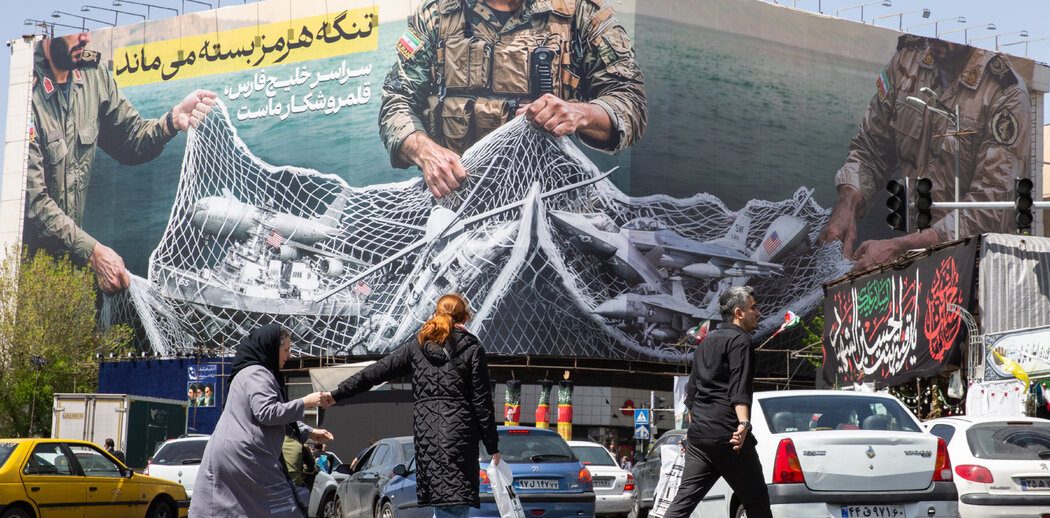
The current picture does not point to a short war in the classical sense. What we are seeing is a layered war of attrition: Washington and Tel Aviv are applying pressure through airpower, technology, and intelligence, while Iran is responding by expanding the cost battlefield to bases, shipping lanes, markets, and regional facilities.
Detail
Over the past 12 days, four main military and political realities have taken shape:
1. Air superiority does not mean political resolution
The United States and Israel have succeeded in imposing a high degree of air control over wide parts of Iranian airspace, with heavy use of stealth fighters, cruise missiles, and B-2 bombers, alongside early disruption of surveillance, communications, and command networks. This has given the alliance the ability to hit command-and-control centres, missile facilities, and infrastructure linked to the nuclear programme, while opening the way for successive waves of strikes.
But this superiority has not, so far, translated into a complete collapse of Iran’s ability to respond, nor into a rapid سقوط of the regime’s structure.
2. Iran has shifted from direct retaliation to widening the cost
The Iranian response is now measured less by the sheer number of missiles than by the kind of damage the war is imposing on the wider region. In recent hours, attacks on targets in Israel and across the region have continued, with their effects visible in Bahrain, Dubai, Iraq, and the wider Gulf maritime space, alongside threats against banks and economic interests linked to Washington and Tel Aviv.
3. The Strait of Hormuz has become a front of its own
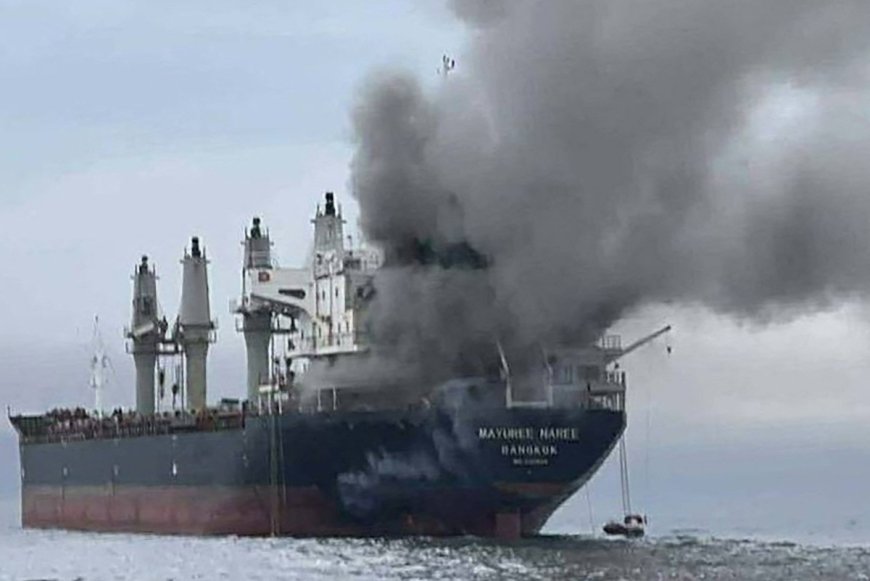
One of the most dangerous shifts is the strong move of the war into the maritime theatre. Attacks and military moves tied to threats against shipping and energy fields have raised the risk level in one of the world’s most critical trade arteries. Once shipping itself becomes the subject of daily confrontation, the waterway ceases to be a background setting and turns into a strategic centre of gravity that may define the next phase.
4. The war has entered the region’s economic and psychological structure
Banks are being targeted, shipping is under strain, energy supply chains are under threat, oil markets are under pressure, and fears are rising that the war may become a test of the Gulf’s ability as a whole to absorb the shock.
In Tehran itself, the effects of the bombing have spread into the urban environment, with heavy oil smoke, pollution, psychological pressure, and internal displacement from the capital to rural areas.
What next?
The next phase may move along three main paths:
1. Surgical escalation against the most fortified nodes
If Washington and Tel Aviv conclude that the current strikes have not achieved enough against the most heavily protected sites, they may shift to a more focused wave against facilities that are still operating or are believed to retain operational capacity. This does not necessarily mean a large-scale ground invasion, but it could mean limited special operations or the use of deeper-penetration and more precise munitions.
2. Expanding the war against the economy, not just the fronts
Iranian threats to target banks and economic interests, alongside maritime pressure, raise the possibility that the war may move into a phase where commercial and financial cost becomes part of the daily battle rather than a side effect. This is where the real danger lies for the Gulf and for global markets.
3. Continued ambiguity over the war’s ceiling
The gap between the American desire to project control and the battlefield reality that Iran can still inflict pain means the war has not yet reached a closing moment. That leaves room for surprises, though not in the cinematic sense. The more likely surprise is that the war lasts longer than politicians declared, and that its effects widen before any settlement or ceasefire takes shape.
(Analysis)
After 12 days, it is fair to say that the element of surprise has not disappeared, but it has changed. At the beginning, the surprise lay in the scale of the opening strike, the penetration of the regime’s top tier, and the speed of the move into the Iranian interior. Now, the surprise is no longer about the type of weapon, but about the limits of political and military possibility.
Can Washington and Tel Aviv turn firepower superiority into a final outcome?
And can Iran, under this level of pressure, impose an equation in which its survival is costly, but its سقوط is even more costly?
For now, the answer remains unsettled. That is why talk of a near peace appears premature, just as talk of Iran’s full and imminent collapse appears overstated. What we are actually seeing is a war open to multiple possibilities: armies advancing in the sky, while the final outcome will also be decided at sea, in oil markets, and in each side’s capacity to endure attrition.