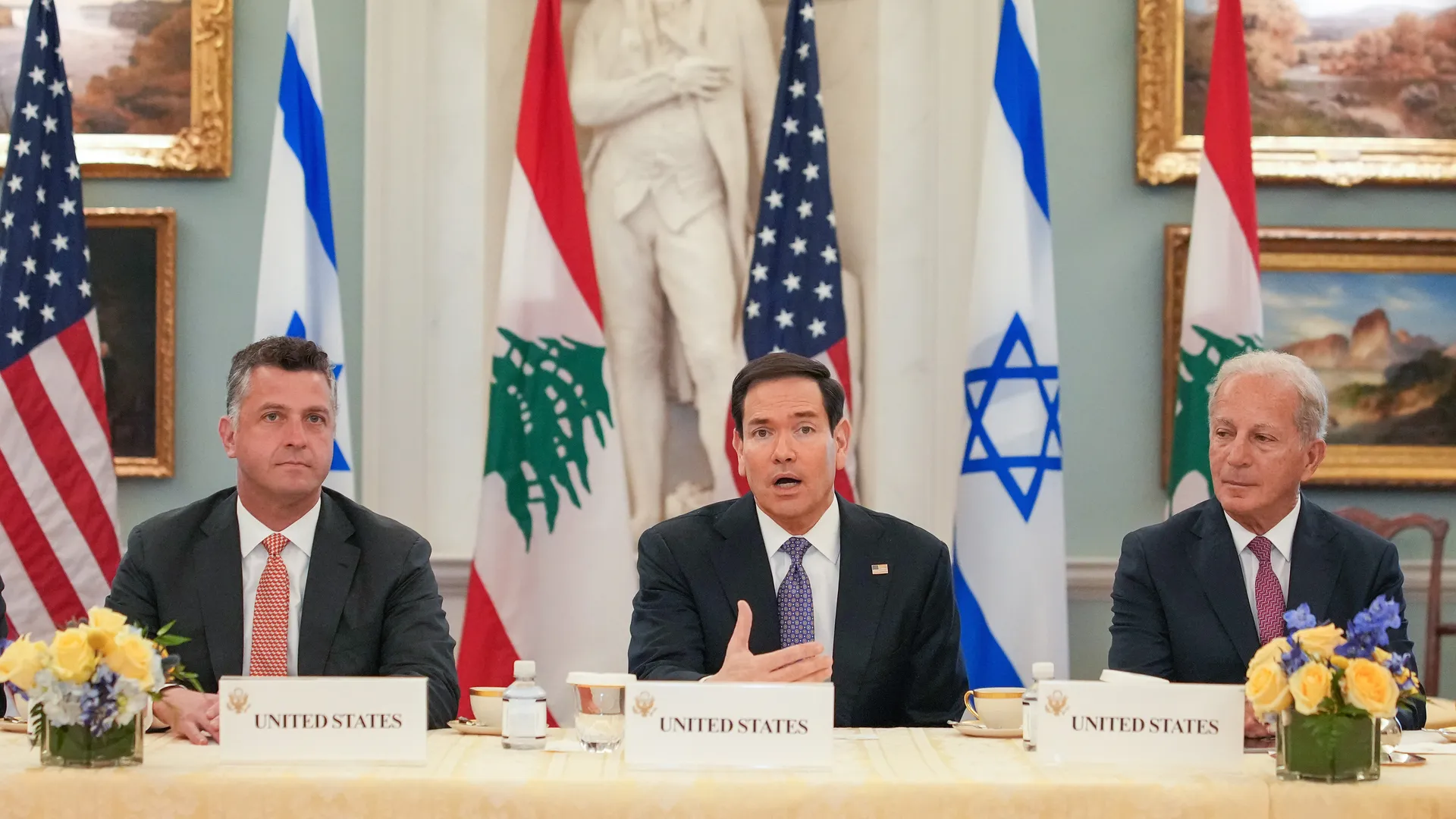
At Munich, leaders did not merely lament turbulence. They diagnosed a rupture. The post-1945 order, they argued, is no longer a stable frame but a weakening scaffold. Germany’s chancellor, Friedrich Merz, described a world in which the old order no longer exists and great-power politics has returned, with freedom no longer guaranteed. France’s Emmanuel Macron warned that Europe’s inherited security arrangements are no longer sufficient and that the continent must prepare for conflict. The United States, through Secretary of State Marco Rubio, framed the moment as the arrival of a new geopolitical era because the old world is gone. The Munich Security Report 2026, titled Under Destruction, set the intellectual mood: this is not renovation; it is dismantling.
For the Middle East, the problem is not that the old world has died. The problem is that it has not died yet. We are living in the double exposure of history: an old order that is collapsing without handing over the keys, and a new order whose rules, authors and enforcement mechanisms remain indistinct. This grey zone is where miscalculation accelerates, security shocks turn into economic shocks, and economic shocks spill into domestic legitimacy.
From Rules to Power Markets
The modern international order has long depended on a grand narrative: institutions, law, predictable rules and a moral vocabulary to match them. Postmodern theory taught us to mistrust grand narratives, not because they are always false, but because they mutate as power shifts. In moments like this, rules do not disappear overnight; they become selective. Law is invoked when it serves, sidelined when it constrains. The result is a power market rather than a rules-based system.
Hannah Arendt’s distinction between power and violence becomes newly relevant: when legitimacy thins, coercion rises to fill the void. Carl Schmitt’s friend–enemy logic returns as politics sheds its liberal clothes and reverts to sharper antagonisms. Achille Mbembe’s lens on the management of life and death is no longer confined to bullets; it includes sieges, sanctions, financial exclusion and engineered scarcity. In this environment, nearly everything is weaponised: tariffs, chips, payment rails, supply chains and sea lanes.
The Middle East as the Knot, Not the Margin
The Middle East is not a peripheral theatre of recurring crisis. It is a knot in the emerging order for four structural reasons.
First, energy did not vanish. Its forms are changing, but its strategic weight remains, especially as supply chains are politicised and volatility becomes a tool.
Second, geography is back. Maritime chokepoints, ports and logistics corridors connecting Asia to Europe acquire heightened value in an era of great-power rivalry.
Third, data has become a second oil. Undersea cables, data centres and the governance of artificial intelligence are new layers of sovereignty. Whoever owns the infrastructure owns a margin of decision.
Fourth, domestic legitimacy has become part of deterrence. The boundary between internal stability and external leverage is dissolving. A domestic shock is no longer only a domestic story; it is a bargaining chip in external contests.
So we are not outside the map. We are inside its hinge. But being a hinge does not guarantee agency. A hinge can also be a pressure point.
The Interregnum: The Ghosts of the Old and the Seductions of the New
The most dangerous feature of this period is its in-between character. Gramsci’s famous insight about interregnum applies with uncomfortable precision: when the old is dying and the new cannot yet be born, morbid symptoms appear. The Middle East experiences this twice over, externally and internally.
Externally, major powers are competing to re-slot the region into their architectures: who secures energy flows, who polices sea lanes, who dominates critical technologies, who sets the standards of finance, who provides the security umbrella.
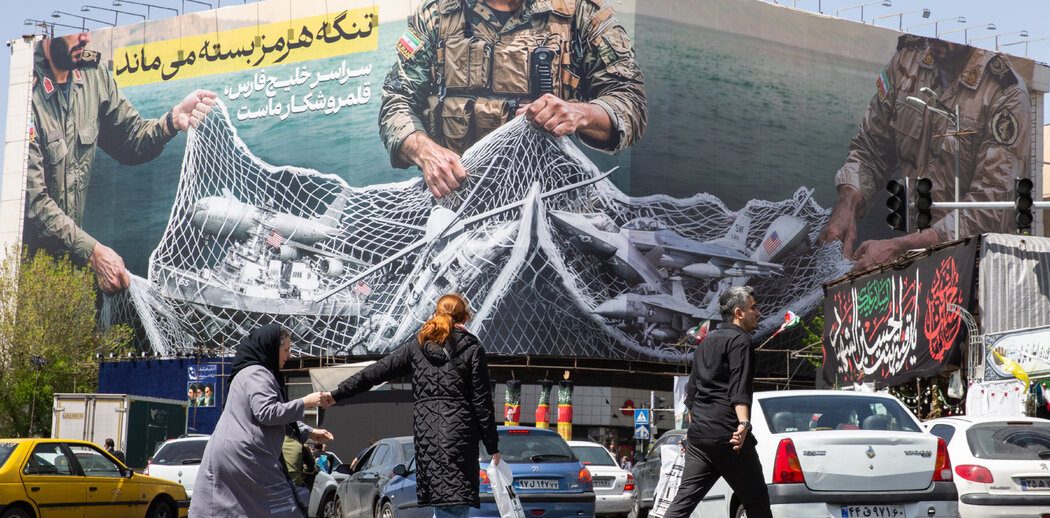
Internally, there is often a gap between the rhetoric of ambition and the institutional capacity to convert ambition into durable power. Jean Baudrillard warned that images can precede reality and even replace it. In transitional eras, the aesthetics of strength can become a substitute for its substance.
Three Roles on the Emerging Map
The new order will not be written in a single script. For Middle Eastern states, three roles are plausible, each with a price.
One: a proxy zone. The region is managed as a competitive space where influence is purchased and crises are curated to adjust balances. This role consumes societies: security first, then economics, then social cohesion.
Two: a flexible balance zone. States diversify ties, prevent monopolies over security and finance, and extract room for manoeuvre. Harder to execute, but it yields a measure of independence.
Three: layered sovereignty. This is the uncomfortable, necessary ambition: treat security, economics and knowledge as one sovereignty stack. Not performative sovereignty, but infrastructural sovereignty: maritime security, food security, financial resilience, data sovereignty and selective industrial capacity in critical technologies.
The Uncomfortable Thesis: We Overread the World and Underread Ourselves
Munich matters, but it is not destiny. The deeper shock is closer to home: much of the region still debates patrons rather than contracts. It seeks ready-made guarantees rather than builds capabilities. It negotiates outcomes rather than negotiates rules.
In a world that is fragmenting, the state without internal rules becomes raw material for others’ rules. The economy without knowledge becomes a permanent customer in the market for arms and technology. The polity without a credible domestic narrative will be tempted to purchase legitimacy externally, and that is the most expensive commodity of all.
Literature has long warned that when the centre cannot hold, justice does not automatically emerge; disorder does. The image of things falling apart is not a poetic flourish here. It is a description of how systems behave when their anchor weakens.
What It Takes Not to Become a Stage
Five operational principles should guide Middle Eastern policy in the age of two worlds.
First, autonomy is not declared; it is built. Deterrence must be multidimensional: economic, cyber, maritime, logistics.
Second, alliances must shift from transactions to engineering. Long-term, measurable interests matter more than emotional alignment.
Third, data sovereignty is no longer optional. Cables, data centres and AI standards are part of national security.
Fourth, social security is a first line of defence. Education, jobs and institutional trust are deterrence assets, not domestic footnotes.
Fifth, language matters. In the postmodern condition, meaning is easily hijacked and propaganda readily substitutes for policy. States must discipline meaning before they market images.
The concluding proposition is simple and severe. The new world order will not assign the Middle East a role. The Middle East will take a role to the extent that it converts geography from burden to advantage, resources from rent to capability, alliances from dependency to balance, and identity from slogan to social contract.
Otherwise, we will remain trapped in the narrowest corridor of all: not protected by an old order that still worked, and not stabilised by a new order that is clear, but forced to pay the transition’s price indefinitely.
Sources: Munich Security Report 2026 Under Destruction; public remarks at the Munich Security Conference by Merz, Macron and Rubio as reported by major international outlets.