The latest:
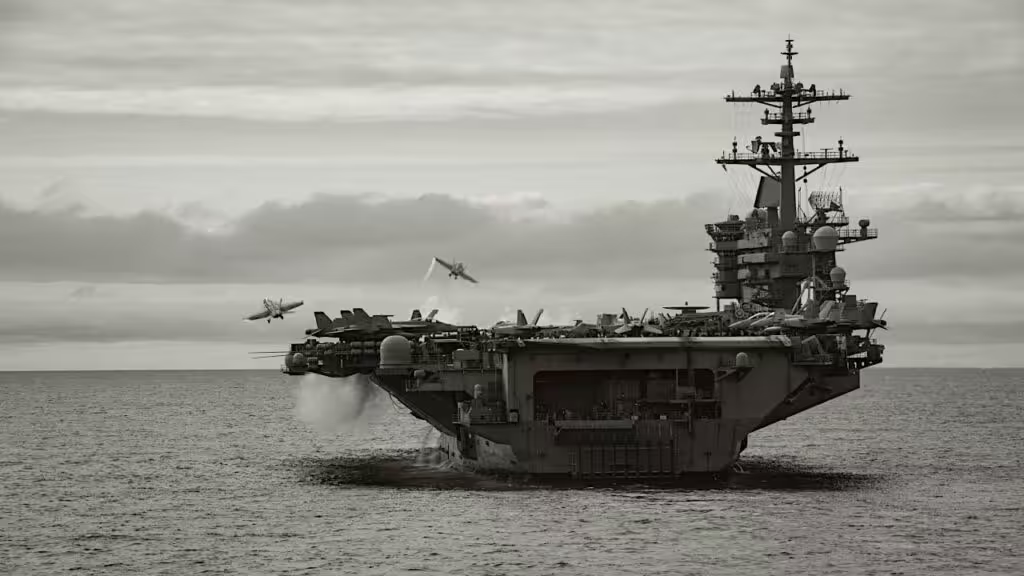
The USS Theodore Roosevelt entered US Central Command’s area of responsibility on Sunday, bringing three American carrier strike groups to the Middle East, a US official said. The arrival came hours before President Donald Trump was due to leave Washington for an Asia tour ending in talks with Chinese President Xi Jinping and Russian President Vladimir Putin.
Details:
- The deployment: The Roosevelt joins the USS George Washington and the USS George H.W. Bush, both already in the region. Reuters reported on November 14 that the carrier was heading there to replace one of the deployed ships, though US officials said all three could remain if required.
- The strike group: According to Stars and Stripes, the Roosevelt had been moving toward the region after leaving Singapore earlier this month. Its strike group includes Carrier Air Wing 11, the cruiser USS Chosin and the destroyers USS Decatur and USS Paul Hamilton. Washington has not detailed the group’s tasking or deployment length.
- The precedent: Three simultaneous US carriers is a rare posture. A comparable concentration occurred in April, the first time three American carriers operated there at once since the 2003 Iraq war. A carrier’s entry into CENTCOM’s area does not establish where the group will operate or how long it stays.
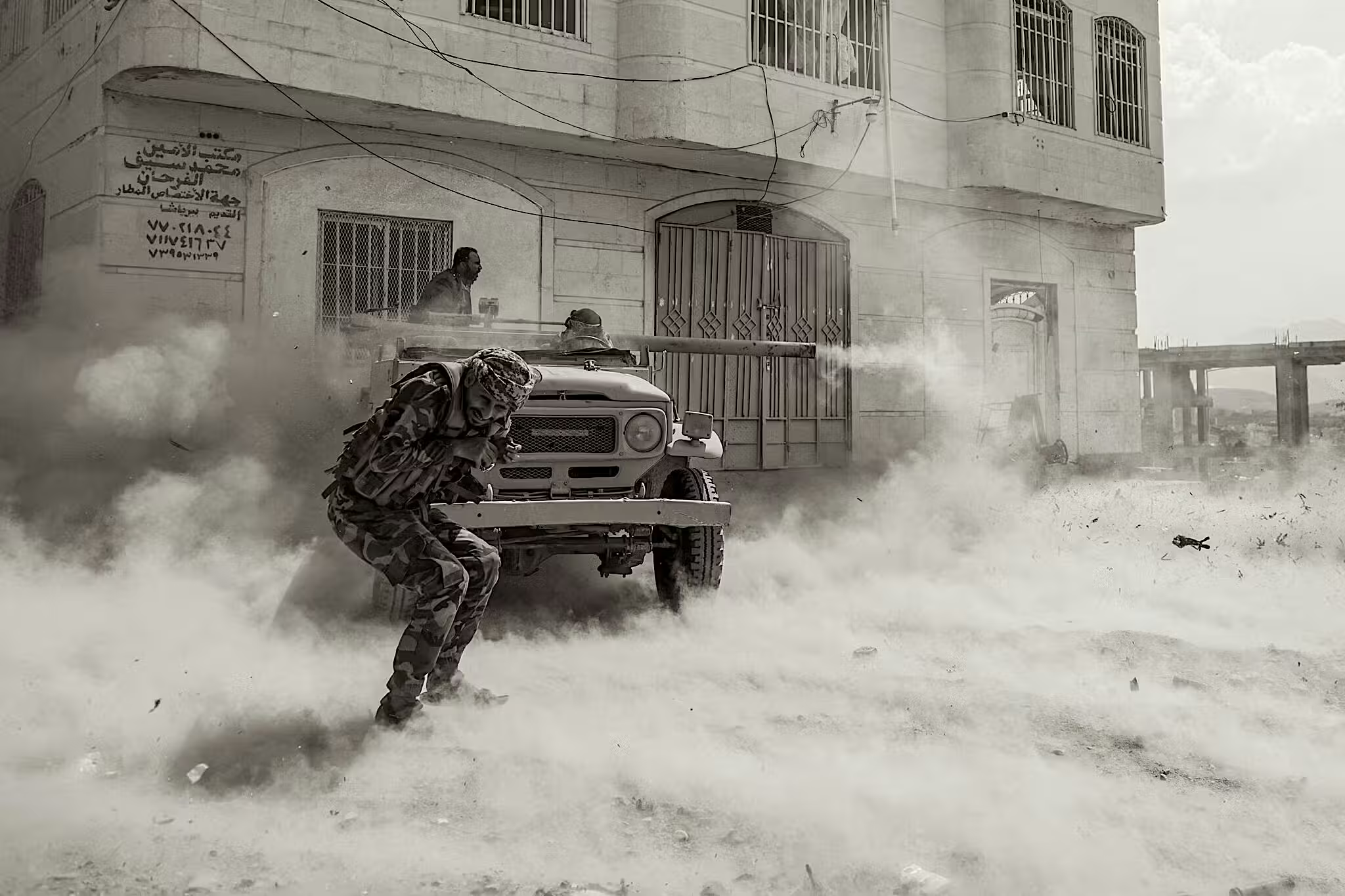
- Iranian attack: The warship reached the region as Iran struck a base in Bahrain hosting US military assets on Sunday, the first Iranian attack on a Gulf state in weeks. The Islamic Revolutionary Guard Corps said it had launched drones toward the site.
- Trump’s calculation: Trump told senior advisers he may hold off ordering additional strikes unless Iran or the Iran-backed Houthis launch new attacks on American interests. No new large-scale strike campaign has been announced, though the third strike group widens the military options available to the president.
- Regional pressure: Saudi Crown Prince Mohammed bin Salman and Turkish President Recep Tayyip Erdogan urged Trump to avoid another round of military escalation, while Israeli officials continued pressing Washington to consider resuming operations against Iran, according to Reuters.
- The missile estimate: The Wall Street Journal reported Sunday that US intelligence agencies assess Tehran still holds between 1,500 and 2,500 missiles despite heavy American and Israeli strikes on its military infrastructure. Officials described the estimate as low confidence, citing difficulty counting which missiles remain operational or stored.
- The itinerary: Trump departs Washington early Monday for the Philippines, meeting Southeast Asian leaders in Manila on Tuesday before traveling to Shenzhen on Wednesday, the Jerusalem Post reported after a White House briefing. He attends the APEC summit Thursday, followed by a bilateral meeting and working lunch with Xi.
- Beijing’s framing: China’s foreign ministry confirmed Monday that Trump will meet Putin and Xi in a trilateral summit in Shenzhen on Thursday, calling it a meeting of “historic significance” and saying it would strengthen global peace and stability. The ministry did not disclose a formal agenda.
- Washington’s framing: The White House told the Washington Post that Iran will be among the topics, alongside possible reductions to the three countries’ nuclear arsenals. Senior officials cautioned Friday that no arms control agreement is expected from a first meeting, which one official called a starting point. Ukraine is not on the trilateral agenda, officials said, citing separate US-Russia channels.
Between the lines:
The military buildup and summit preparation point to two tracks running at once: sustained pressure on Tehran through naval presence, and exploratory talks with the other major powers. Trump’s reported reluctance to order new strikes absent an Iranian or Houthi attack, set against Sunday’s drone launch toward Bahrain, leaves that restraint conditional on events he does not control.
What’s next
Watch Thursday’s Shenzhen trilateral for any public readout naming Iran, whether the George Washington departs CENTCOM or all three carriers stay, and whether Washington responds militarily to the Bahrain base attack.