The latest:
Iran’s economy will shrink by more than 25% this year, US Treasury Secretary Scott Bessent said in an interview with Iran International, calling the decline sharper than Russia’s collapse after the fall of the Soviet Union. He described Washington’s economic isolation campaign as highly successful and said Tehran’s leadership is now effectively bankrupt, unable to secure the hard currency it needs to import goods.
Details:
- The headline figure: Bessent put Iran’s 2025 contraction above 25%, framing it as worse than the post-Soviet Russian collapse. That estimate is more than three times the 7.6% contraction the International Monetary Fund projected for Iran in its World Economic Outlook released on October 13.
- The bankruptcy claim: Asked about criticism that sanctions hurt ordinary Iranians, Bessent said humanitarian channels remain open but the government lacks the foreign currency to use them, saying the system is now too broke to buy medicine or food abroad. He attributed that to 47 years of policy decisions.
- Oil at zero: Bessent said Iran may have reached a point, possibly for the first time since oil was discovered there, with no crude aboard tankers at sea. He said no loadings are taking place at Kharg Island, that production itself is disrupted, and that the United States is blockading Iranian ports.
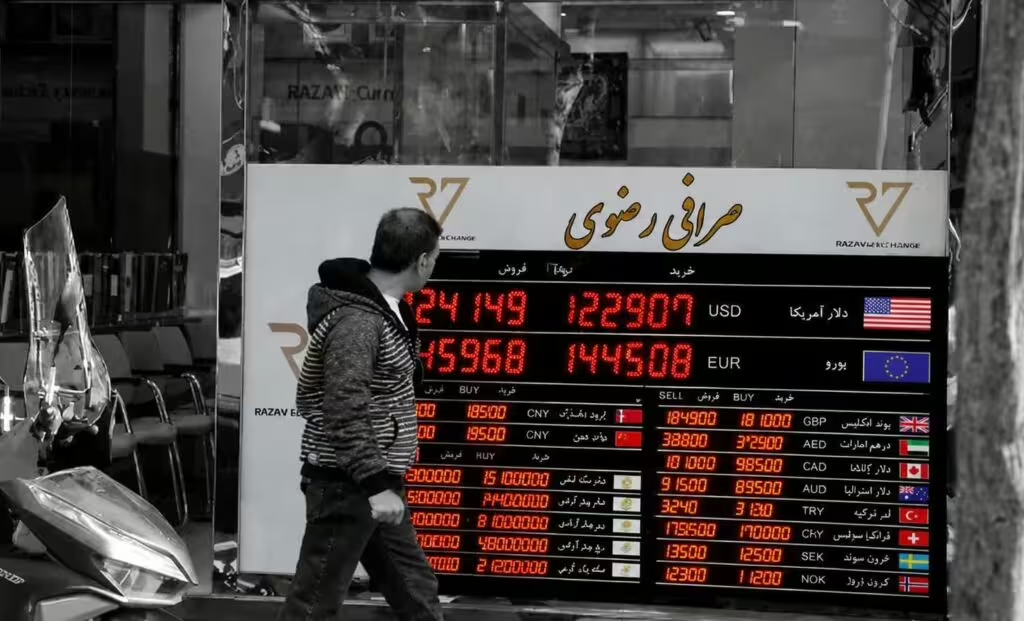
- The currency: Bessent said he believes Iranian leaders are concealing the real value of the national currency, estimating the true rate has passed 300,000 tomans. He linked the halt in publishing the official rate to that gap, and said the central bank is fuelling inflation through continuous money printing.
- Proxy funding: Speaking separately to CNBC, Bessent said Tehran’s financing of the Houthis, Hamas and Hezbollah is shrinking because the government cannot obtain dollars. He said Revolutionary Guard officials are now voicing deep concern publicly and privately and are discussing a possible collapse.
- The banking net: Bessent said Treasury is monitoring a large Pakistani bank, has shut branches of an Egyptian bank in Dubai and closed a Turkish bank. He said foreign branches of VTB, Russia’s second-largest bank, were found assisting Tehran from outside Russian territory.
- The informant program: Bessent said Iranians who provide information on illicit activity and money-transfer routes can receive up to 30% of funds the United States recovers, adding that details are on the Treasury website and that many have already made contact. He urged Iranian consular and embassy staff worldwide to come forward.
- The appeal to Iranians: Bessent urged Iranians to stop paying taxes, arguing they receive nothing in return, and told them to stockpile winter fuel and fill their car tanks now, predicting a severe heating-fuel shortage and further declines in gasoline output.
- Escalation and goal: Bessent said the isolation operation launched on August 24 is going very well, that several Gulf states have cut ties with Tehran and flights to Russia and China have been restricted. He said the campaign aims to block a nuclear weapon and halt proxy financing, and to force negotiations.
Background:
Washington launched the economic isolation operation on August 24, targeting oil revenues and the financial networks that help Tehran evade sanctions. Bessent said on October 22 that tankers once filling the Kharg Island loading terminal had disappeared entirely.
Between the lines:
The gap between Bessent’s 25% figure and the IMF’s 7.6% is the central unresolved point: one is a sitting official’s estimate during an active pressure campaign, the other a multilateral forecast published weeks earlier. Bessent’s own claim that Iranian officials conceal the real exchange rate underscores how little verified data either number rests on.
What’s next
Bessent said pressure will intensify over the next eight weeks. Watch for the next IMF revision, any resumption of published Iranian exchange-rate data, loading activity at Kharg Island, and whether Tehran signals willingness to negotiate.