The latest:
Benjamin Netanyahu is expected to remain Israel’s prime minister in a caretaker capacity after stronger-than-forecast support among Jewish voters left his opponents with little path to unseating him. With roughly 86% of ballots counted, Israel’s three main television channels projected his bloc at 53 seats against 48 for Gadi Eisenkot’s camp. Neither reaches the 61 needed to govern.
Details:
- The numbers: With 93% of ballots processed, equal to 85.6% of the total vote, Netanyahu’s right-wing and religious bloc stood at 53 seats and Eisenkot’s change bloc at 48, according to Israeli television projections. Between 430,000 and 480,000 double envelopes remain uncounted and could still shift the map.
- The Arab vote: Parties representing Arab citizens are projected to win 19 seats, an unprecedented total, after what the New York Times described as record turnout driven by fear of another far-right government. Overall turnout reached 77.7%, the highest in more than two decades and about seven points above 2022.
- Caretaker powers: Netanyahu stays in office through any coalition talks or until a new election next year. Guy Lurie of the Israel Democracy Institute said a transitional government formally holds the same powers as a regular one, including on the war with Iran, but carries a “duty of restraint”.
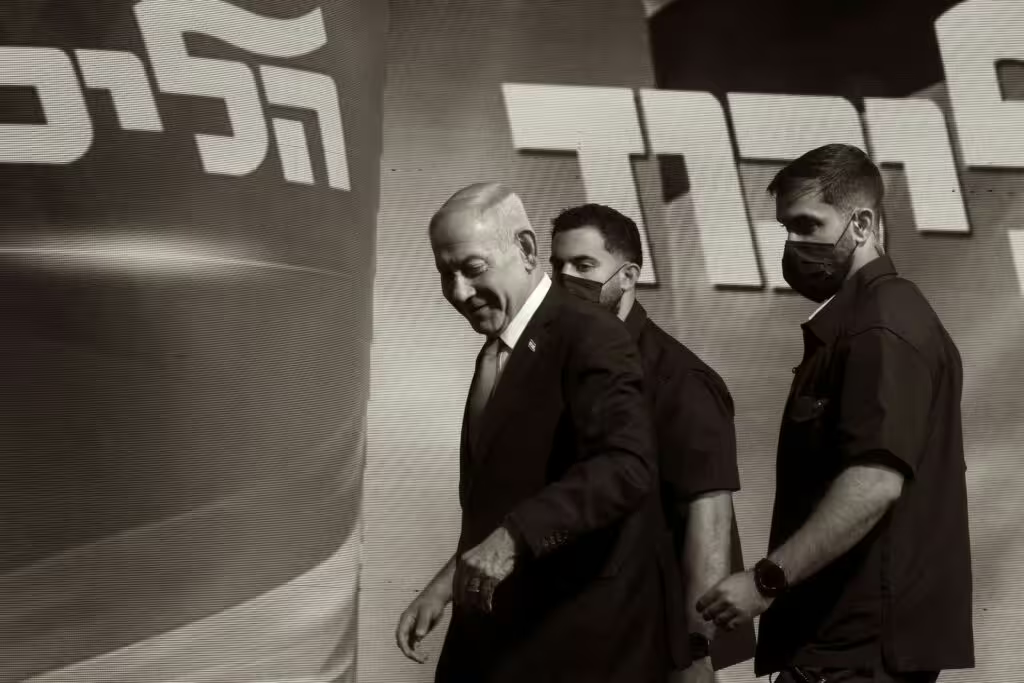
- Netanyahu’s pitch: Speaking to Likud supporters in Jerusalem after 3 a.m., Netanyahu called for a strong national right-wing government and raised the possibility of resuming joint operations against Iran with Donald Trump, describing a unique historic opportunity to end the Iranian threat definitively.
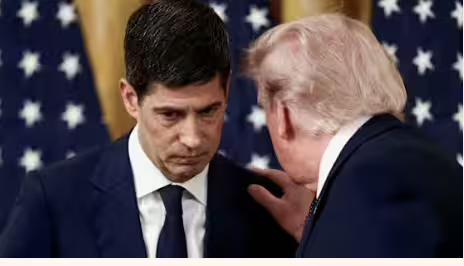
- Trump’s reaction: Asked about the results after a campaign stop in Texas, Trump, who had endorsed Netanyahu, said the prime minister performed very well and credited his own backing as a significant factor. Netanyahu’s office has not responded to a request for comment on accusations it exploits the Iran conflict politically.
- Eisenkot’s warning: Eisenkot acknowledged Netanyahu remains caretaker prime minister but told security and civil service chiefs he lacks a mandate or public confidence, urging them to resist pressure and warning against using Israel’s security for political ends. Netanyahu’s office has previously rejected such accusations.
- Likud’s fraud claim: Likud issued an unusual statement alleging Arab parties stole the election and called on police and intelligence services to investigate. Israel’s Central Elections Committee said there were no indications of widespread irregularities in Tuesday’s vote. Analysts said the move aims to delegitimize Arab votes ahead of coalition arithmetic.
- The opposition’s bind: Gayil Talshir, a Hebrew University political scientist advising the opposition, said winning the Knesset without forming a government is a disaster the camp must now manage. Yohanan Plesner of the Israel Democracy Institute said harmful legislation was introduced but remains reversible through parliament.
- The Knesset fight: Parliament convenes on 10 November to swear in 120 members. The change bloc is weighing a move to remove Speaker Amir Ohana, framing it as parliamentary procedure rather than cooperation with Arab parties. United Torah Judaism is considering abstaining, while Likud plans to contest it.
- Markets reacted: The prospect of a caretaker government without a parliamentary majority pushed the shekel down about 1.6% to 3.10 against the dollar, while main Tel Aviv Stock Exchange indices fell more than 3%.
Background:
This was Israel’s first national vote since the Hamas-led attack of 7 October 2023, which killed 1,200 people and took 251 hostages, triggering wars in Gaza, Lebanon and Iran. Netanyahu has refused an independent inquiry into the security failure and faces corruption charges at home, which he denies.
Between the lines:
Analysts quoted by the New York Times argue deadlock is Netanyahu’s preferred outcome: Natan Sachs of the Middle East Institute said Netanyahu still controls most events, while biographer Mazal Mualem said his goal was to block rivals from governing even without 61 seats. Another election would likely penalize the opposition, which underperformed after investing years in this campaign, and record Arab turnout may not repeat.
What’s next
The Knesset convenes 10 November with the speakership the first test of whether Eisenkot’s bloc can command a parliamentary majority. Yair Golan meets Eisenkot and Yair Lapid separately, and remaining double envelopes could still alter the seat count.