Key Points
- Meta said Monday it plans to raise up to $95 billion, its largest-ever equity fundraising.
- Nvidia, AMD and Broadcom signaled interest in buying up to $5 billion of Class A stock.
- The raise follows Meta's first negative free cash flow in over a decade, a $2.12 billion burn.
The latest:
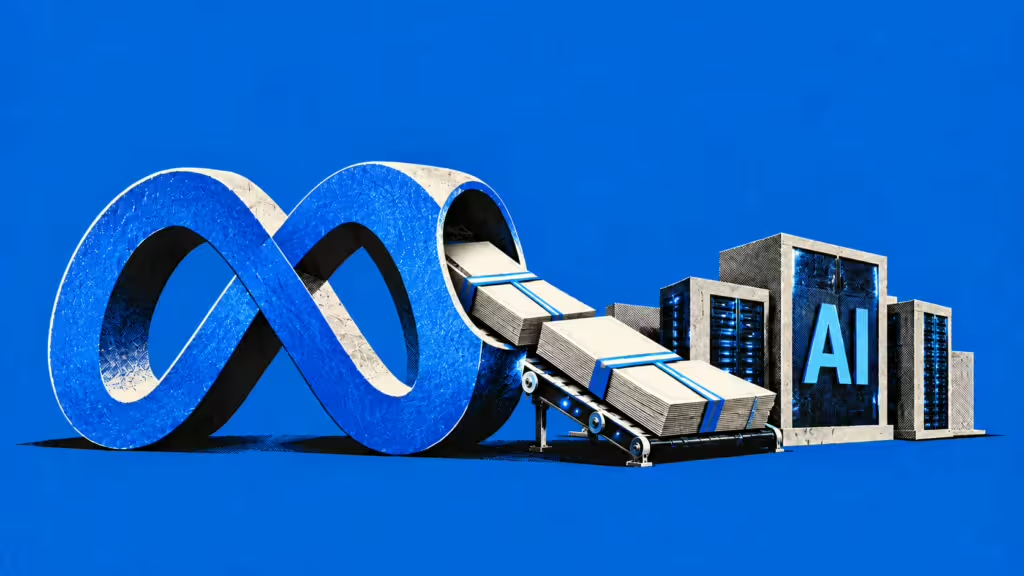
Meta Platforms is seeking up to $95 billion in new equity, the biggest fundraising in its history and among the largest ever by an artificial intelligence company, Reuters reported Monday. The company has launched public offerings of roughly $35 billion in common and preferred stock and plans a separate at-the-market program of up to $60 billion. Meta’s shares fell about 1.4% in morning trading.
Details:
- The structure: The first tranche covers about $35 billion in common and convertible preferred stock, already launched. The far larger $60 billion at-the-market share sale program comes later, and Meta said it has not finalized the timing or terms of that sale.
- The timeline: Meta will launch the bigger program only after its new non-voting Class C shares begin trading, expected in the first quarter of 2027. The company has said it would issue Class C stock in January 2027, effectively a two-for-one split, to fund acquisitions and retain talent while preserving Mark Zuckerberg’s control.
- The chipmakers: Nvidia, AMD and Broadcom together expressed interest in buying up to $5 billion of Class A shares, according to Reuters. Their participation feeds concerns about an increasingly circular flow of capital in the AI industry, with chip suppliers helping finance the expansion of one of their largest customers.
- The cash problem: Meta reported a $2.12 billion cash burn in the third quarter, its first negative free cash flow in more than a decade, against positive free cash flow of $10.63 billion a year earlier. The company has committed to roughly $825 billion in future spending on data centers, AI infrastructure and cloud capacity.
- The balance sheet: As of September 30, Meta held $82.45 billion in cash, cash equivalents and marketable securities, against long-term debt of $80.92 billion, according to its latest quarterly filing. Last week it raised the lower end of its annual capital expenditure forecast to $135 billion–$145 billion.
- The analyst read: William Blair analysts wrote that the financing reinforces both Meta’s confidence in long-term AI returns and the increasingly capital-intensive nature of chasing that opportunity, adding that “we expect investors to continue to question the financing and potential for future capital raises.”
- The case for it: The same analysts assessed Meta will ultimately build a profitable AI business, with longer-term returns helping diversify the company, though they cautioned the path may not be linear. The early popularity of its consumer AI agent Muse and a competitive new model series have partly justified the spending.
- The wider shift: Big technology companies that once funded investments from cash are turning to debt markets and equity raises. Alphabet earlier this year increased the size of its equity offerings to $84.75 billion. The same day, SpaceX said an Apollo Global Management affiliate will buy AI chips and server hardware and lease them to the firm, carrying total principal payments of about $40 billion.
Background:
Meta has been spending heavily on chips and data centers to compete with OpenAI and Anthropic. The Class C issuance was designed to let Zuckerberg sell shares to cover a potential California billionaire wealth tax, in exchange for committing to remain in the state.
Between the lines:
Two numbers define the raise. Meta’s $82.45 billion cash pile is now almost exactly matched by $80.92 billion in long-term debt, while capital expenditure guidance alone runs to $145 billion next year. Against $825 billion in committed future spending and a quarter of negative free cash flow, equity becomes the funding source of last resort rather than choice.
What’s next
Watch for Class C shares to begin trading in the first quarter of 2027, the terms and timing of the $60 billion at-the-market program, and whether Nvidia, AMD and Broadcom convert stated interest into actual purchases.