Key Points
- Iran, Saudi Arabia, Pakistan and Turkey wrapped four-way security talks in Tehran on regional de-escalation.
- Agenda covered a non-aggression network, Hormuz security, the US blockade and Houthi attacks on Saudi Arabia.
- The meeting tests whether regional states can underwrite a US-Iran settlement and build their own security arrangements.
The latest:
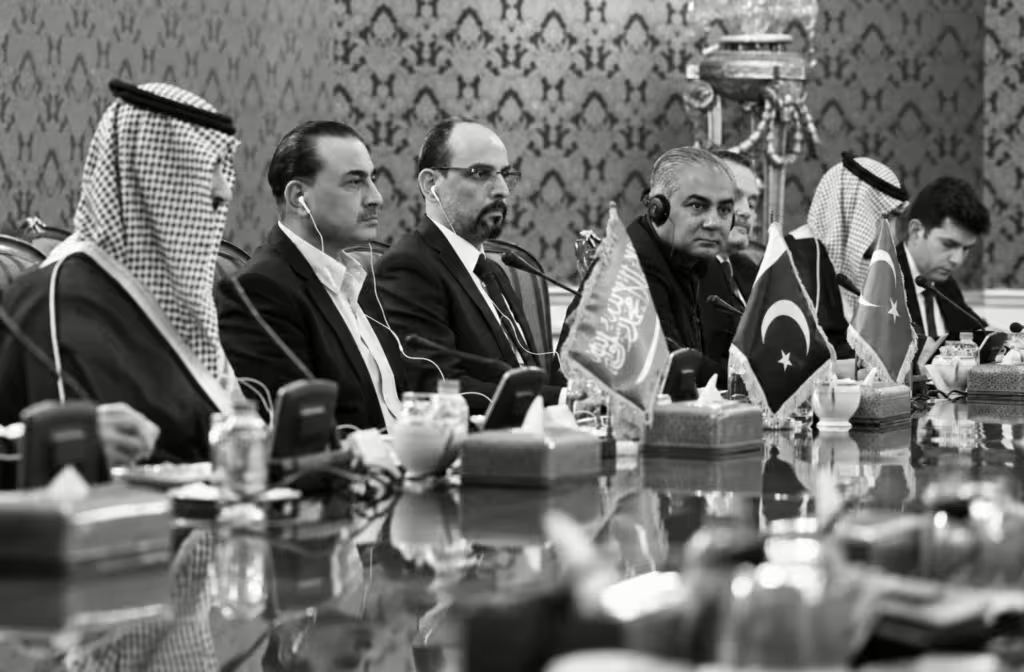
A four-way security meeting in Tehran brought together Iran, Saudi Arabia, Pakistan and Turkey on Monday, October 26, for talks on regional security and lowering tensions. Reuters reported the central proposal on the table was a regional non-aggression network. The outcomes of the session, and whether any understandings were reached, were not announced.
Details:
- Who was in the room: Mohsen Rezaei hosted the session, according to Reuters, with Saudi Defense Minister Khalid bin Salman, Pakistani army chief Asim Munir and Turkish intelligence chief Ibrahim Kalin attending. It is the first collective high-level contact of its kind between Tehran and this group of capitals in the current round of escalation.
- The security proposal: Reuters cited a Pakistani official saying the discussions covered a network of non-aggression commitments among the participating states. Iran’s foreign ministry framed the meeting as groundwork for regional security mechanisms rather than a one-off consultation, without detailing what those mechanisms would involve.
- The US-Iran track: The New York Times reported that Qatari mediators are working on a reciprocal package of concessions over a five-day window, pairing the reopening of the Strait of Hormuz with the lifting of the American blockade. No date was given for when the exchange would begin.
- The sticking point: Diplomats cited by the New York Times said the dispute centers on sequencing — the timing of when each side executes its commitments rather than the substance of the concessions themselves. The Tehran gathering was described as reinforcing the Qatari-Pakistani mediation effort already under way.
- The Yemen file: The Associated Press reported that the war in Yemen and Houthi attacks on Saudi Arabia were raised at the meeting. The talks coincided with announcements of exchanged military operations between the Houthis and the Saudi-led coalition, underscoring that the front remained active while delegations met.
- Tehran’s calculation: According to the New York Times, Iran is seeking regional security arrangements that reduce the Gulf’s reliance on the United States as the guarantor of maritime and territorial security. The report did not specify what role Tehran envisions for outside powers under such a framework.
- What was not said: No participating government published results from the session, named the agreements reached, or set a date for a follow-up round. The agenda items themselves — Hormuz, the blockade, Yemen — emerged through reporting rather than an official communique.
Background:
The meeting marks the first collective high-level contact between Iran and members of the Mecca defense agreement since the war widened to include Saudi Arabia and Yemen, putting rival security blocs at one table.
Between the lines:
Bloomberg’s Middle East and North Africa executive editor assessed that containing potential escalation in the Strait of Hormuz and the Gulf will likely take priority over resolving the confrontation with the Houthis. That reading fits the agenda as reported: Hormuz is tied directly to the five-day concession package under Qatari mediation, while Yemen was raised as the fighting continued.
What’s next
Watch for any official statement on outcomes, whether the non-aggression proposal becomes a formal negotiating track, and movement in the Qatari-Pakistani mediation on reopening Hormuz and lifting the US blockade.