Key Points
- Demonstrations against racism and fascism began in Orléans as the National Rally holds its congress.
- France is deploying 70,000 officers, with protests also expected in six other European countries.
- Union and left-wing leaders tied a deadly Trappes shooting to far-right rhetoric, a claim they attribute politically.
The latest:
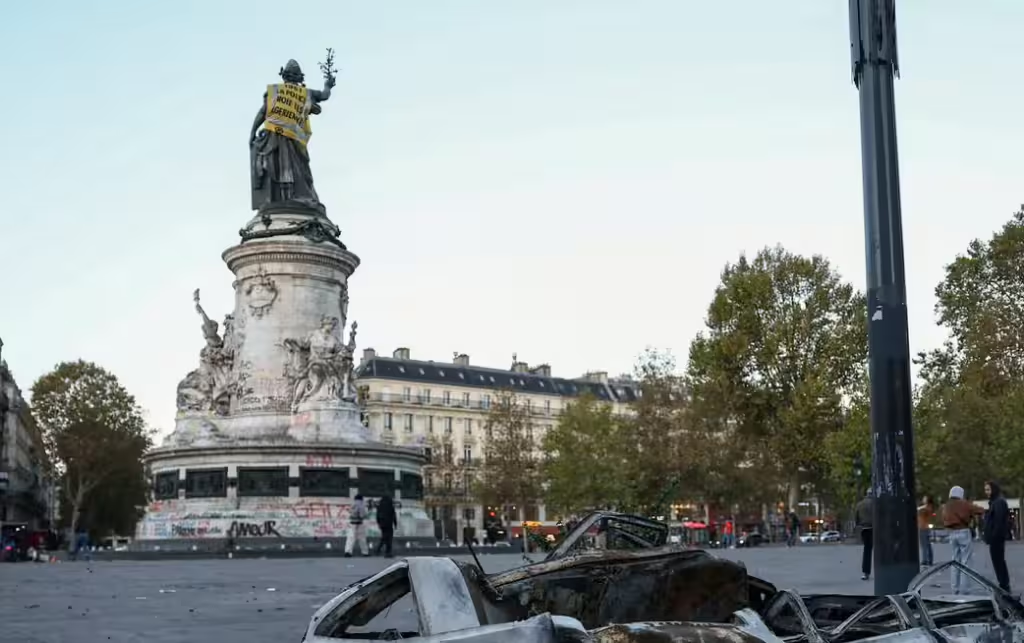
Protests opened across France against racism, fascism and imperialism, timed to the National Rally’s weekend congress and Marine Le Pen’s launch of her presidential campaign. France is deploying 70,000 officers nationwide, with shops, businesses and tourist sites shut. Rallies are also expected in Italy, Spain, Austria, Portugal, Albania and Ireland.
Details:
- The trigger: The demonstrations were called against racism, fascism and imperialism, and are being held as the National Rally stages its congress this weekend. The timing coincides with Le Pen formally launching her presidential campaign, placing the rallies directly opposite her party’s biggest political event of the season.
- The security footprint: Authorities are deploying 70,000 officers around the country. Shops, businesses and tourist sites have closed in anticipation of the marches. No breakdown was given of how those officers are distributed between Paris, Orléans and other protest sites.
- Beyond France: Protests are also expected in Italy, Spain, Austria, Portugal, Albania and Ireland, turning what began as a French mobilisation into a wider European one. Organisers of those parallel rallies, and their expected turnout, were not identified.
- Who showed up: Several of France’s left-wing political leaders appeared at the Orléans rallies protesting against Le Pen and her anti-immigrant party. Among them was Bally Bagayoko, mayor of Saint-Denis, who said it was important for him to come to Orléans to stand against racism and hate speech spread by the right.
- The Trappes shooting: Bagayoko referenced a drive-by shooting outside Paris on Friday morning, which the town’s mayor said appeared to target people of African origin. He argued there is a close link between that attack and hateful rhetoric from parties such as Le Pen’s.
- The union position: Sophie Binet, general secretary of the CGT union, opened her address to protesters by naming the Trappes attack. She offered support and condolences to the victims, their families and residents of the town before turning to its political context.
- The accusation: Binet said the violence “does not come from nowhere”, attributing it to speeches conveying racism, anti-Semitism and violence that she said come essentially from the far right. The claim is her political assessment; no investigative finding establishing a link was presented.
- The Socialist presence: Socialist party leader Olivier Faure was seen in the crowds, marching behind a banner reading all united against fascism. His attendance places the mainstream left alongside unions and local mayors in the same street mobilisation.
Background:
The National Rally, led by Marine Le Pen, is France’s main far-right force and campaigns on an anti-immigration platform. Its congress and her presidential campaign launch fall on the same weekend as the nationwide counter-demonstrations.
Between the lines:
The mobilisation fuses two distinct arguments into one street movement: opposition to Le Pen’s campaign, and the contention advanced by Bagayoko and Binet that far-right rhetoric produced the Trappes shooting. That second claim is political attribution by union and elected figures, not an established finding, and the shooting’s investigative status has not been set out by authorities.
What’s next
Watch the National Rally congress outcome and Le Pen’s campaign launch message, turnout figures from Orléans and other French cities, any official account of the Trappes shooting investigation, and whether the parallel rallies in six European countries materialise.