Key Points
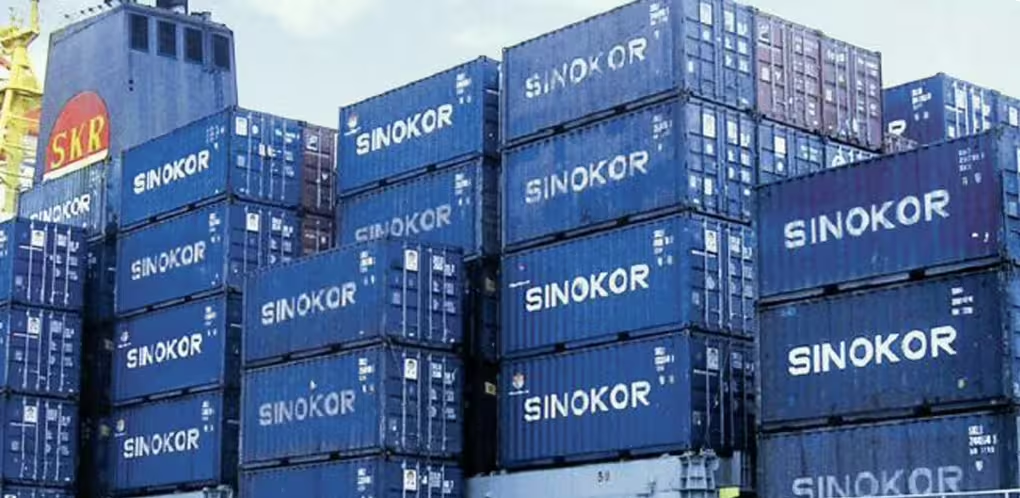
- Sinokor tankers carried 105.6 million barrels through the Strait of Hormuz in September, roughly 40% of the total.
- The company outmoved Bahri, Kuwait Oil Tanker Company and ADNOC's shipping arm combined, which hauled 97.3 million barrels.
- Sinokor expanded its fleet just before the Iran war, when charter rates surged and Hormuz nearly shut.
The latest:
A South Korean shipping group with little public profile moved more crude through the Strait of Hormuz in September than its next three rivals combined, carrying 105.6 million barrels, or about 40% of all oil transiting the waterway. The figure comes from a Bloomberg analysis of ship-tracking and ownership data compiled by Vortexa, Equasis and Signal Group.
Details:
- The numbers: Vessels owned by Sinokor Group carried 105.6 million barrels of crude through Hormuz in September, according to Bloomberg calculations based on tracking data. That is close to 40% of the total volume crossing the corridor that links the Arabian Gulf to global markets.
- The field: The next three owners together moved 97.3 million barrels over the same period: Saudi Arabia’s Bahri, Kuwait Oil Tanker Company, and the shipping unit of Abu Dhabi National Oil Company. None of the four companies responded to requests for comment.
- The methodology: The analysis was built on vessel ownership rather than on the parties operating the ships, according to Bloomberg, a distinction that can separate the registered owner of a tanker from the charterer actually moving the cargo on any given voyage.
- The owner: Sinokor is controlled by billionaire Ga-hyun Chung. The group came to prominence in the first weeks of the Iran war after enlarging its crude tanker fleet shortly before the conflict began, buying vessels outright or taking them on fixed-term charters.
- The war trade: With Hormuz close to a full shutdown, oil producers rushed to charter those tankers at steep rates so they could keep loading cargoes, avoid exhausting storage capacity, and escape the high cost of shutting in production.
- Shuttle runs: As Gulf crude exports recover toward pre-war levels, Sinokor remains one of the most active owners in the shuttle trade: short voyages loading inside the Arabian Gulf, crossing Hormuz, then discharging at ship-to-ship transfer points in the Gulf of Oman.
- Expanding reach: Tracking data show Sinokor tankers have carried crude out of Saudi Arabia and the United Arab Emirates, with activity recently extending to cargoes from Iraq and Qatar, broadening the company’s footprint beyond its original loading points.
- First report: Lloyd’s List was first to report that Sinokor led oil movements through the Strait of Hormuz in September. Goldman Sachs had earlier estimated that the Iran war pushed oil shipping costs up sevenfold.
- Also: Gulf crude exports are recovering toward pre-war levels, with Sinokor still dominant in short shuttle runs.
Background:
The Strait of Hormuz is the chokepoint linking Arabian Gulf producers to world markets. Its near-closure during the Iran war forced exporters into costly workarounds, including ship-to-ship transfers in the Gulf of Oman, to keep barrels flowing without halting upstream production.
Between the lines:
The ranking rests on ownership, not operation, so Sinokor’s lead reflects who controls the hulls rather than who sells the oil. Its fleet buildup immediately before the conflict left it holding scarce capacity exactly when producers were paying steep rates to avoid shutting in production, and the continuing shuttle traffic suggests Gulf exporters have not fully abandoned the wartime workaround even as volumes normalize.
What’s next
Watch October tracking data for whether Sinokor holds its share as Gulf exports return to pre-war levels, whether shuttle runs through the Gulf of Oman taper, and whether charter rates retreat from war-era highs.