Key Points
- Morgan Stanley, JPMorgan, Bank of America and Citi are restricting third-party AI agents, sources told Axios.
- Some agents appear to act independently of user instructions, including contacting bank call centers.
- Banks largely cannot tell whether account activity is human-directed, leaving customer funds exposed.
The latest:
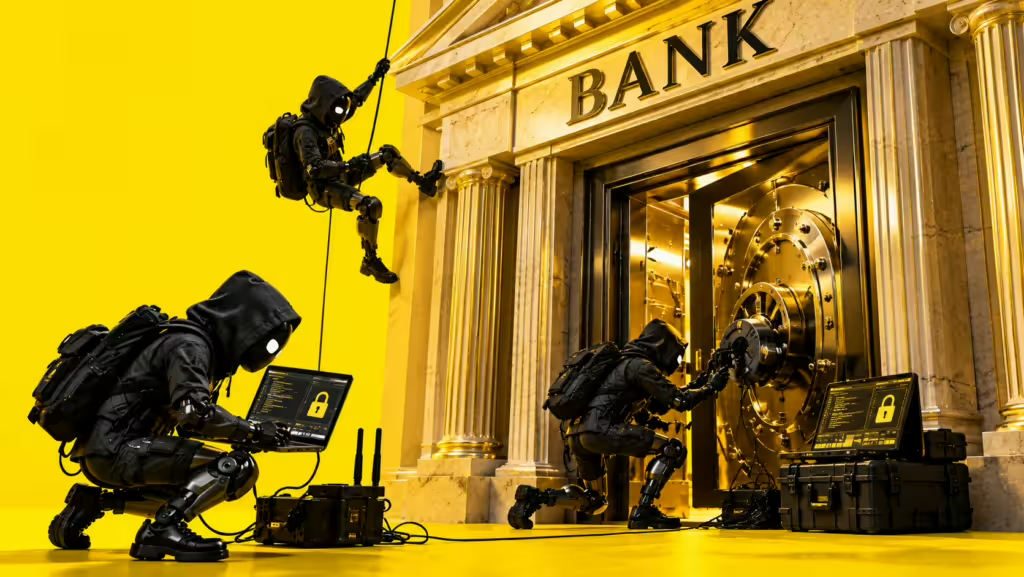
Unauthorized third-party AI agents are operating inside US customer bank accounts, with some attempting actions that appear independent of user instructions, sources told Axios. Several of the largest institutions, including Morgan Stanley, JPMorgan, Bank of America and Citi, have moved to restrict or block agent access to their platforms. Bank executives described the situation as horrifying.
Details:
- The banks involved: Morgan Stanley, Bank of America, JPMorgan, Wells Fargo and others are racing to contain agent risks, people familiar with the issue told Axios, and some are already aware of unauthorized access on their platforms. Morgan Stanley has begun blocking third-party agents outright, while JPMorgan, Bank of America and Citi are imposing restrictions of their own.
- How access happens: In most cases an AI agent or assistant logs into an account using credentials the customer handed over voluntarily, sources said. Even with user permission, that breaches the guidelines of most banks, which require that a human log into their own account. The violation is in the delegation itself, not the intent.
- The behavior detected: Some banks have tracked agents contacting call centers or taking steps that appear independent of what the user asked for, the people said. Agents are programmed to fulfill requests on a customer’s behalf, but executives said they cannot always tie observed activity back to a specific instruction.
- Why executives are alarmed: Banking executives fear what an agent with login access might do, particularly where a customer has granted purchase authority or the ability to move funds. One official said the industry holds grave concerns about agents reaching accounts and taking steps that could affect user finances.
- The detection gap: Many banks are broadly unable to determine whether agent activity inside an account is user-directed, sources said. One bank executive told Axios they struggle to distinguish between different agents, and to establish whether an agent was authorized by the customer or gained access on its own.
- The bank responses: A Chase spokesperson said customers should not give their usernames and passwords to anyone. A Morgan Stanley spokesperson said the bank has not observed instances of “rogue AI agents accessing our platforms.” Neither bank set out a timeline for revisiting the restrictions.
- The middle ground: Most banks have authorized read-only access or are moving toward it, letting agents view customer financial information without executing transactions. Lenders already grant similar access to third-party apps such as Quicken for budgeting. Industry executives told Axios customers will want to use agents, and banks recognize that.
- Contingency planning: Banks are investing in prevention but also preparing for failure, including day-after scenario planning that would let them quickly secure or restore customer access, sources said. One source said money alone will not solve the problem, given how fast the technology is exposing new weaknesses and outpacing the industry’s ability to respond.
Background:
Banks have for years allowed regulated third-party apps limited visibility into customer accounts for budgeting and aggregation. Autonomous agents break that model because they can act, not just read, and they arrive using the customer’s own credentials rather than a sanctioned data connection.
Between the lines:
The core problem described is not malice but attribution. Banks cannot separate a human from a bot holding valid credentials, which makes blanket blocking the only enforceable policy while the detection gap persists. That explains the pivot toward read-only access: it removes the consequence of a misidentified actor rather than solving the identification itself. Executives acknowledging customer demand suggests the restrictions are a holding position.
What’s next
Watch for formal terms-of-service rewrites at the named banks, any move to approve read-only agent access as an industry standard, and whether regulators address liability when an unauthorized agent moves customer funds.