Key Points
- US regulators authorized Globalstar to operate its next-generation C-3 satellite system nationwide, with launches set for 2027.
- Amazon agreed in April to buy Globalstar for $11.6 billion, a deal expected to close in 2027.
- The clearance hands Amazon a regulatory base to challenge Starlink in direct-to-device satellite connectivity.
The latest:
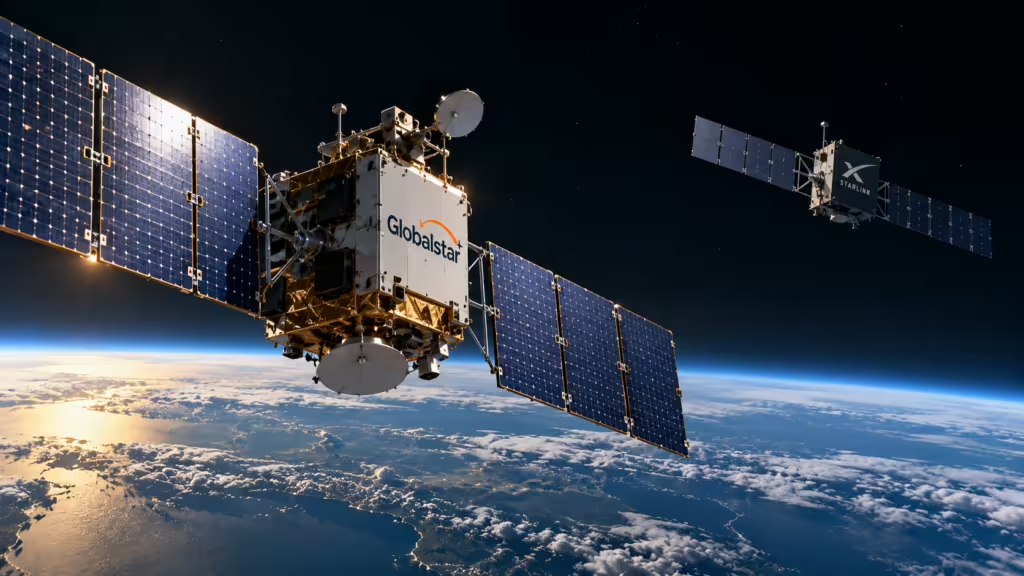
The US Federal Communications Commission has authorized Globalstar to operate its third-generation C-3 mobile satellite service across the United States, clearing the way for smartphones to connect directly to its satellites. Globalstar announced the approval on the 19th local time. The company said the clearance lets it communicate with hundreds of millions of US mobile devices once the constellation flies.
Details:
- The constellation: C-3 comprises 54 satellites in total — 48 in low Earth orbit plus six in-orbit spares — built by Canadian space company MDA Space, Globalstar said. The first launch is scheduled for 2027, meaning the network does not yet exist in orbit.
- What the approval covers: The authorization permits US operations only and does not mean satellites have launched or commercial service has begun. The FCC also cleared links between C-3 satellites and ground station antennas in Alaska, Hawaii, Nevada, Texas, Florida and Puerto Rico.
- The Amazon deal: Amazon agreed in April to acquire Globalstar for $11.6 billion, adding direct-to-device capability to its Amazon Leo satellite internet business. The transaction is expected to close in 2027 after regulatory approvals. Amazon is separately building its own D2D system, with deployment slated to begin in 2028.
- The Apple relationship: Apple has used Globalstar’s network for the satellite Emergency SOS feature launched with the iPhone 14. Apple provided $450 million through the US Advanced Manufacturing Fund in 2022 for related infrastructure, part of total committed investment reaching up to $1.5 billion.
- The 2024 terms: Apple agreed in 2024 to supply up to $1.1 billion in infrastructure prepayments for a next-generation satellite network and paid $400 million for a 20% stake in a special purpose entity holding those assets, according to Globalstar.
- Capacity split: Globalstar has allocated 85% of the capacity of its existing and new satellite networks to Apple’s satellite services, leaving 15% for its own direct satellite customers — a split that caps how much of the new constellation Amazon could redirect elsewhere.
- The CEO: Paul Jacobs, Globalstar’s chief executive, said the approval is “an important step forward in continuing to strengthen the capabilities of our LEO constellation.” Jacobs ran Qualcomm from 2005 to 2014 and took over Globalstar in 2023.
- Beyond satellites: Under Jacobs, Globalstar secured exclusive licenses to some technologies of XCOM, the wireless company he founded, and recruited its technical staff. The company has expanded into terrestrial LTE and 5G on Band 53/n53 frequencies and enterprise private networks.
- The rival: Starlink retains an overwhelming lead in satellite count and is extending coverage beyond terrestrial networks through carrier partnerships including T-Mobile. Amazon will not begin deploying its own direct-to-device satellites until 2028.
Background:
Direct-to-device services link ordinary smartphones to satellites without specialist hardware. Frequency rights and regulatory clearance are prerequisites: satellites cannot carry traffic without them, which is why the FCC decision precedes any hardware reaching orbit.
Between the lines:
Industry observers argue the balance could shift if executives who understand mobile ecosystems are paired with Apple’s installed base, countering Starlink’s numerical advantage. But the Apple tie is not an exclusive edge for Globalstar: once Amazon closes, the Apple services agreement moves into the Amazon Leo camp. Observers say execution decides it — deployment pace, link quality, device compatibility and commercialization timing.
What’s next
Two 2027 markers set the pace: the first C-3 launches and the expected close of Amazon’s acquisition after regulatory approvals. Amazon’s own direct-to-device satellite deployment is scheduled to start in 2028.