Key Points
- President Sheikh Mohamed received Emmanuel Macron in Abu Dhabi on Monday during the French leader's three-day Gulf tour.
- Macron is pursuing energy and defence agreements as France faces a cost-of-living crisis driven by high energy prices.
- The trip proceeds despite France's worst civil unrest in years, with more than 2,000 people arrested.
The latest:
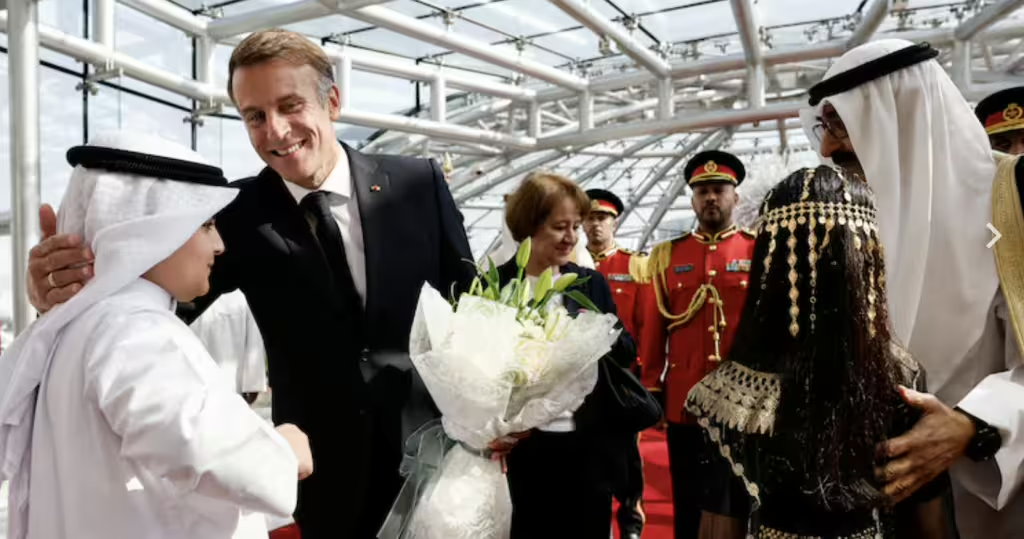
President Sheikh Mohamed received French President Emmanuel Macron in Abu Dhabi on Monday with an official reception ceremony, state news agency Wam reported. The visit is part of a three-day Gulf tour that began the same day in Kuwait and takes in Bahrain before ending in Qatar on Wednesday. Macron is seeking to deepen energy and defence ties as France contends with an energy-driven cost-of-living crisis.
Details:
- The reception: Wam reported that the ceremony was attended by Sheikh Khaled bin Mohamed, Crown Prince of Abu Dhabi, Sheikh Hamdan bin Mohamed, Deputy Chairman of the Presidential Court for Special Affairs, and Sheikh Mohammed bin Hamad, adviser to the UAE President, alongside several ministers and officials.
- The Kuwait leg: Macron held a one-and-a-half-hour one-on-one meeting with the Emir of Kuwait, Sheikh Meshal, after flying into Kuwait City. No statements were made there, but agreements focused on defence and artificial intelligence were signed at Bayan Palace in the leaders’ presence.
- The Airbus deal: Airbus executive vice-president for sales Benoit de Saint Exupery and Kuwait Investment Authority executive director Sheikh Saud Salem Abdulaziz Al Sabah signed a partnership that includes renewal of the Kuwait Airways fleet. The value of the agreement was not announced.
- The delegation: The chief executives of TotalEnergies and Engie are travelling with Macron, as is the president of Campus AI, a major artificial intelligence hub under construction near Paris that benefits from billions in UAE funding — a line-up matching the tour’s energy and technology focus.
- The French framing: An Elysee Palace source said Macron will continue efforts with regional leaders to promote a return to stability and freedom of navigation in the Strait of Hormuz, and that talks would cover securing and diversifying energy supplies and their transport routes to limit the crisis’s impact on French households.
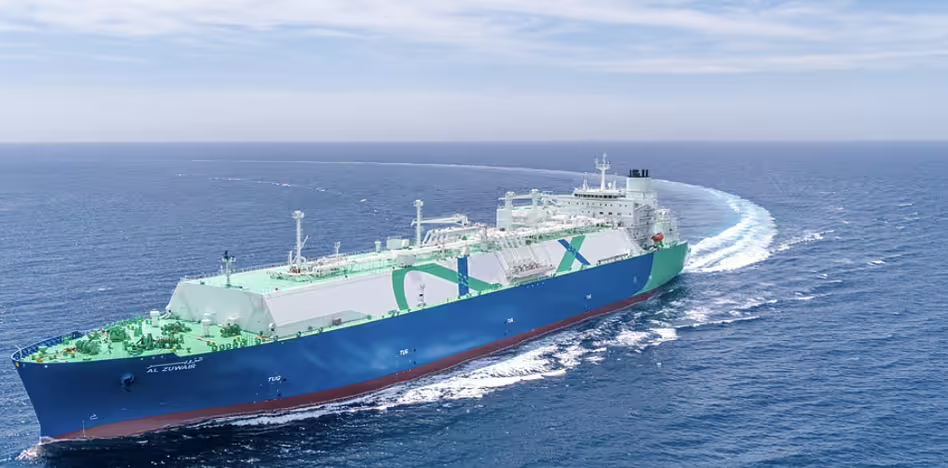
- The energy backdrop: The UAE, Kuwait, Bahrain and Qatar have all had energy sites attacked during the US-Iran war, which has curtailed oil exports through the Strait of Hormuz. With Yemen’s Houthi rebels pushing for control of the Bab Al Mandeb, there are fears the global energy crunch could worsen.
- The Hormuz coalition: The joint offer Macron made with the UK in April to launch an international maritime coalition defending shipping in the Strait of Hormuz is still awaiting a political agreement between the United States and Iran before it can proceed.
- The crisis at home: The tour is going ahead despite France’s worst civil unrest in years, with more than 2,000 people arrested for torching and ransacking property. In a statement on Sunday night, Macron said he felt anger and shame, and vowed that those responsible for looting and destruction would pay.
- The political clock: This is likely to be one of Macron’s last major Gulf trips before France’s presidential election in six months, at which he is ineligible to run. He addressed the nation hours before departing, promising the tour would help France secure energy supplies.
Background:
Macron has visited the UAE repeatedly as president: he met Sheikh Mohamed at the Zayed National Museum last December and spoke to French troops stationed in the country, attended Cop28 in Dubai in 2023, and the Louvre Abu Dhabi opening in 2017. His most recent regional trip was to Damascus in July.
Between the lines:
Diplomacy abroad offers Macron a stage to project leadership, but the timing cuts both ways. A tour built on energy supply and Airbus contracts is pitched directly at the cost-of-living grievance behind the unrest at home — yet it keeps a president with six months left in office outside France while 2,000 arrests are processed. Whether the deals cut through the anger is the open question.
What’s next
The tour continues to Bahrain before ending in Qatar on Wednesday. The French government is expected to put forward concrete proposals for young people this week, and the Hormuz maritime coalition remains contingent on a US-Iran political agreement.