Key Points
- Hardline Iranian politicians and analysts are openly urging Tehran to build nuclear weapons and quit the NPT.
- Ali Khamenei's fatwa banning atomic bombs lost its author when he was killed on February 28.
- His successor Mojtaba Khamenei's silence has opened space for a debate once treated as taboo.
The latest:
A once-forbidden argument is now being made in public in Tehran: that Iran must weaponise its enrichment programme and leave the Non-Proliferation Treaty. The Financial Times reported that hardline MPs, activists and analysts have pressed the case since the killing of supreme leader Ali Khamenei in a US-Israeli bombardment on February 28. Iran’s official position remains that its programme is peaceful.
Details:
- The fatwa: Two decades ago Ali Khamenei issued a religious prohibition against developing nuclear weapons, the foundation of Iran’s insistence that its atomic ambitions were civilian. Openly advocating a bomb long risked being read as a challenge to the supreme leader, the ultimate decision-making office in the system.
- The successor’s silence: Mojtaba Khamenei, the son who replaced his father, has been in hiding since the start of the war and has not said publicly whether he will uphold the fatwa. That silence, the Financial Times reported, created room for hawkish ideologues to argue their case openly.
- The religious argument: Political activist Davoud Modarresian argued Shia Islam is dynamic enough for rulings to evolve with circumstances, writing this month that nuclear weapons are now a necessity more important than bread. Hassan Ghashghavi of parliament’s National Security Committee said the new leader could issue a fresh ruling and nobody could stop him.
- A figure on the shift: One regime insider told the Financial Times that support inside the system for nuclear weapons had risen from almost zero to more than 50 per cent since Khamenei’s death. Advocates cite North Korea’s arsenal as proof that a bomb deters foreign intervention.
- The war: Dozens of leaders and senior officials were killed in a 40-day bombing campaign that halted under a fragile ceasefire in April. Donald Trump and Benjamin Netanyahu have repeatedly floated regime change, and Trump threatened to take Iran back to the stone ages.
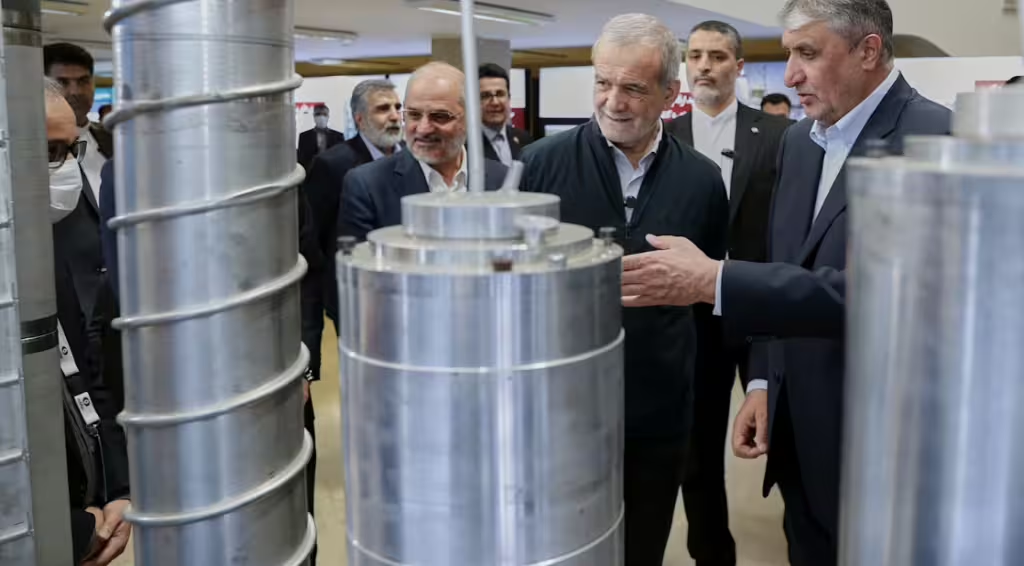
- The stockpile: Western powers are focused on roughly 440kg of uranium enriched to 60 per cent purity, a step below weapons grade and theoretically enough for about 10 weapons if enriched further. It is believed to lie beneath the rubble of bombed sites, and Iran has barred IAEA access since the June 2025 war.
- The sites: US strikes hit Natanz, Fordow and Isfahan during Israel’s 12-day war in June last year. Trump, who demands full dismantlement and transfer of the stockpile abroad, has also threatened the deeply buried Kolang Gazla facility, known as Pickaxe Mountain, in central Iran.
- The official line: Nuclear chief Mohammad Eslami said on Sunday that work toward 20,000 megawatts of nuclear-powered electricity had continued even under war. Two senior Iranian officials told the Financial Times that NPT withdrawal was not an immediate priority, while adding that the policy had not changed yet.
- The pushback: Senior reformist Hossein Marashi told local media that safeguarding Iran and the Islamic republic matters more than enrichment. Hamzeh Safavi, son of a military adviser to the supreme leader, has argued dirty bombs could deter just as effectively, a position that infuriates other hardliners.
- The assessments: US intelligence holds that Iran began weapons work decades ago and halted it in 2003, and former intelligence director Tulsi Gabbard told Congress last year the community assessed Tehran was not building a bomb. Enrichment surged after Trump exited the 2015 deal in 2018, making Iran a threshold state.
Between the lines:
Crisis Group’s Ali Vaez assessed the debate is serious and no longer taboo because the fatwa’s author is dead, but judged Tehran more likely to preserve its infrastructure and bargain it for economic or security concessions than race openly for a bomb. His reading turns on whether Iranian leaders conclude weaponisation would prevent the next attack or bring it forward.
What’s next
Watch whether Mojtaba Khamenei speaks publicly on the fatwa, whether Tehran files the three months’ NPT withdrawal notice required of all parties, and whether talks resume on diluting the 60 per cent stockpile.