Key Points
- Antwerp's Snijders and Rockoxhuis is showing 11 of Catharina van Hemessen's 19 known works until January 31.
- Van Hemessen signed her paintings, making her the first European woman painter whose work can be firmly identified.
- London's National Gallery follows in March with an exhibition devoted entirely to her.
The latest:
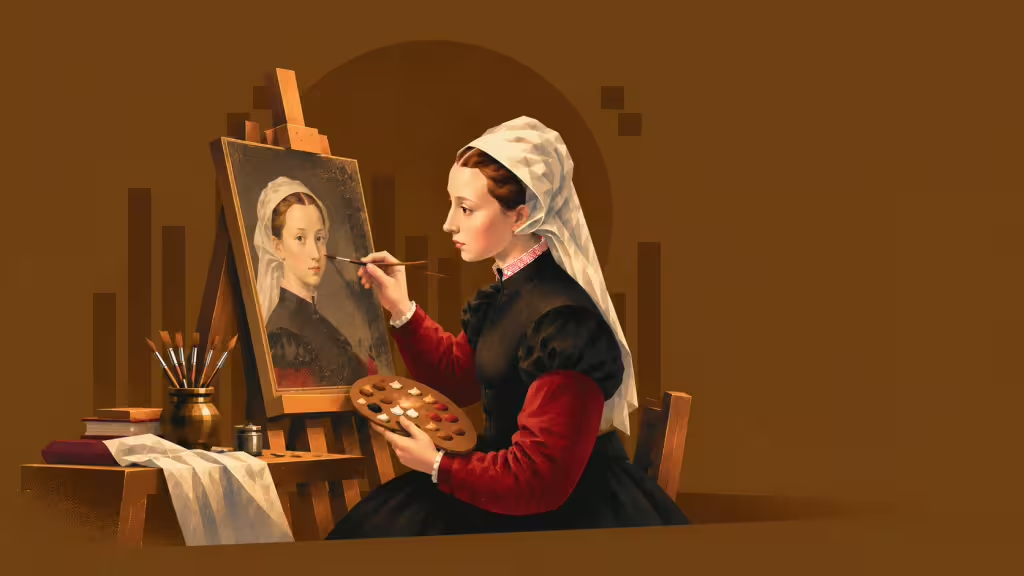
Catharina van Hemessen, the 16th-century Flemish painter long treated as a footnote to her father, has her first dedicated exhibition roughly 500 years after she signed a self-portrait that fixed her identity as an artist. The show, Van Hemessen and Her Father, runs at the Snijders and Rockoxhuis in Antwerp until January 31 and places her work alongside his.
Details:
- The exhibition: Van Hemessen and Her Father brings together 11 of the 19 works currently known to be hers: small-format portraits and religious scenes, hung with paintings by her father and teacher, Jan van Hemessen. The Antwerp museum has set the closing date at January 31.
- London next: Some of the works travel in March to the National Gallery in London for a show devoted entirely to Catharina. She is the earliest woman artist represented in the National Gallery’s collection, best known for small portraits of women painted between the 1540s and the 1550s.
- Why she counts as first: Van Hemessen is considered the first European woman painter whose output can be identified beyond dispute, because she signed it. Fourteen surviving paintings carry her signature, according to Christine Seidel, associate curator of Renaissance art at the National Gallery.
- The historical record: She is one of only four women named by the art historians Vasari and Guicciardini as working in 16th-century Antwerp, and the only one with a body of work attributable with certainty. Seidel said the legal and social position of women then left very few records of her life: a marriage document, scattered details from a 16th-century biography, and the signed paintings themselves.
- The father: Jan Sanders van Hemessen, who lived from 1500 to 1563, was a leading figure of the Antwerp Mannerist school and had studied Italian art. He is believed to have trained his daughter, and she may have worked inside his studio.
- The reattribution question: Seidel said technical examination and infrared imaging have produced mounting evidence that Catharina also contributed to paintings currently attributed to her father. No specific works have been formally reassigned.
- How she was erased: Caroline de Clippel, head of collections and research at Antwerp’s Royal Museum of Fine Arts, said van Hemessen was almost entirely excluded from art-historical writing. She attributes the neglect to what she calls patriarchal discourse, and began researching the painter in the 1990s for her master’s thesis.
- The reversal in reputation: An Italian historian in the 16th century praised her as a skilled painter of miniatures. In later centuries, historians called her work “weak” or naive, or passed over it altogether.
Background:
The 16th-century Antwerp art economy ran on family workshops, where a master’s name covered output produced collectively. That convention made unsigned contributions by daughters and apprentices effectively invisible, which is why van Hemessen’s decision to sign her own paintings carries unusual evidentiary weight today.
Between the lines:
The two shows reframe the question from recovery to accounting. If infrared imaging keeps pointing to Catharina’s hand inside works credited to Jan van Hemessen, the issue stops being one woman’s missing biography and becomes the reliability of attributions across the Antwerp workshop system. Her signatures gave her fourteen secure paintings; they may now also become the reference sample used to test what else she painted.
What’s next
The Antwerp exhibition closes January 31, and the National Gallery opens its Catharina van Hemessen show in March. Watch whether the technical findings cited by curators lead to any formal reattribution of works currently listed under her father’s name.