Key Points
- The second Public Art Abu Dhabi Biennial opens in Al Ain on October 23.
- Abu Dhabi's leg follows on November 15, with both running to February 15, 2027.
- It is the emirate's largest public-space art programme, staged outside museums and across four districts.
The latest:
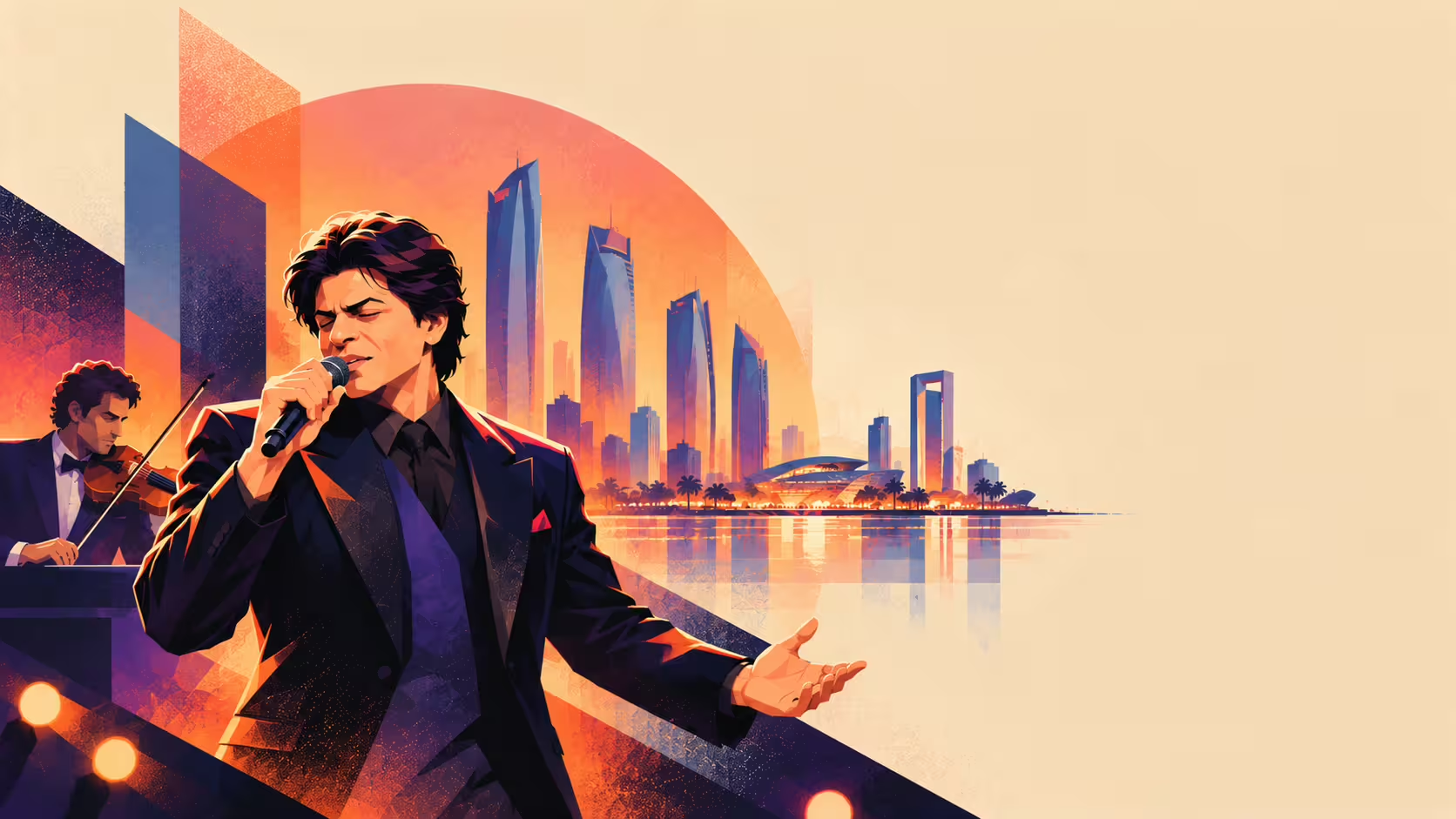
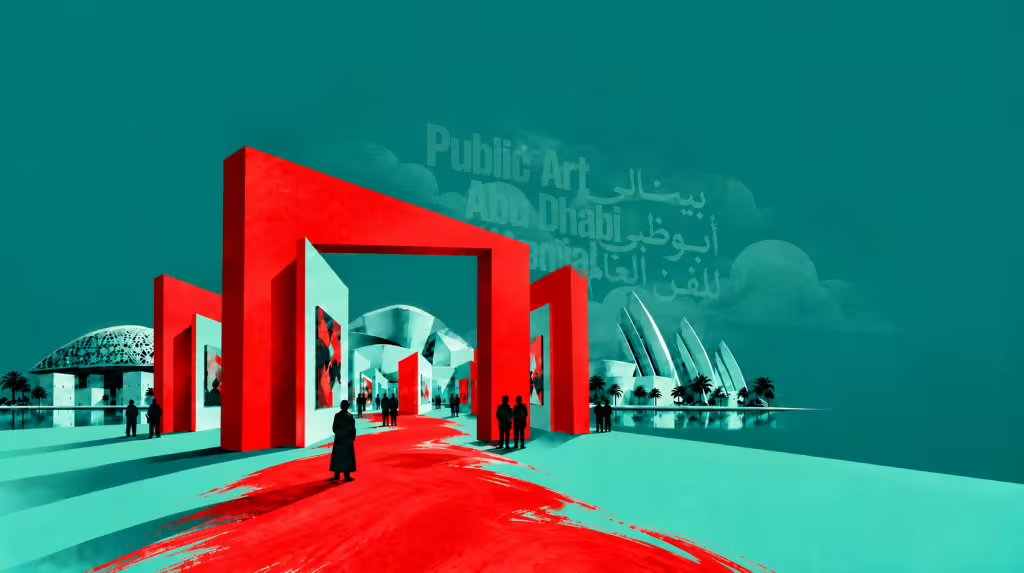
Twenty-one artists and collectives from the UAE and abroad will install works in public spaces across Abu Dhabi and Al Ain when the second Public Art Abu Dhabi Biennial opens on October 23. The Department of Culture and Tourism – Abu Dhabi is organising the exhibition, which runs until February 15, 2027 under the theme Home: A Glossary for a Communal Sense of Place.
Details:
- The dates: The biennial opens first in Al Ain on October 23, followed by Abu Dhabi on November 15, according to The National. Both legs then run concurrently until February 15, 2027, giving the exhibition a near four-month overlap across the two cities.
- The Abu Dhabi sites: Installations will be sited at Mina Zayed, known as MiZa, as well as Souq Al Mina, Hidd Al Saadiyat and the Saadiyat Cultural District. On Saadiyat, works will occupy the park that sits between Zayed National Museum and Louvre Abu Dhabi rather than any indoor gallery.
- Al Ain still open: The programme extends to selected locations across Al Ain, but the organisers have not yet named the specific sites. They have also not released which artworks will appear at which location in either city, leaving the geographic distribution of the line-up undisclosed for now.
- The UAE names: Emirati participants include Khalid Al Banna, Roudhah Al Mazrouei and Shama Al Hamed. They appear alongside an international roster that features Ibrahim Mahama, Laure Prouvost, Yinka Shonibare and Akram Zaatari, four artists with substantial international exhibition profiles.
- The wider roster: Also taking part are Asuncion Molinos Gordo, blaxTARLINES, Celeste Boursier-Mougenot, Elena del Rivero, Ivan Argote, Jean-Marie Appriou, Kapwani Kiwanga and Marinella Senatore. The list is completed by M’barek Bouhchichi, Mercedes Azpilicueta, Nari Ward, Reena Saini Kallat, Serge Attukwei Clottey and Vica Pacheco.
- The theme: Artistic director Elvira Dyangani Ose leads the edition under the theme Home: A Glossary for a Communal Sense of Place. The exhibition treats home as an evolving, shared human experience, examining how people’s relationships with places are shaped by community, memory and everyday encounters.
- The method: Artists are expected to respond directly to the settings where their works are placed, drawing on research and engaging with the communities around each site. That site-responsive approach distinguishes the commissions from works simply relocated into open spaces.
- What visitors get: The programme promises a mix of large-scale, interactive and multisensory installations exploring urban landscapes, material culture and civic participation. The works are designed to push visitors to engage with both the art and the surroundings it occupies.
- Still unannounced: Details of individual installations, visiting hours, ticketing arrangements and the accompanying public events programme have not yet been published, five days before the Al Ain opening.
Background:
The inaugural edition included Wael Al Awar’s Barzakh in 2024, a work that placed large-scale contemporary art into Abu Dhabi’s shared outdoor spaces rather than museum interiors.
Between the lines:
Placing works in the park between Zayed National Museum and Louvre Abu Dhabi, and in the working district of Mina Zayed, puts the biennial in spaces residents already cross daily. Combined with the brief for artists to research and engage surrounding communities, the edition is built around footfall that museum ticketing does not capture.
What’s next
The Al Ain opening on October 23, the Abu Dhabi launch on November 15, and the pending announcements on Al Ain sites, installation locations, visiting hours, ticketing and the events programme.