The latest:
Egypt will provide Saudi Arabia with every form of support needed to defend its security, territory and the Islamic holy sites, the Egyptian presidency announced Sunday after a National Defence Council meeting chaired by President Abdel Fattah al-Sisi. Parliament was convening the same day in emergency session to vote on authorising the armed forces to intervene if Riyadh asks.
Details:
- The decision: The presidency said in a statement that the National Defence Council agreed to extend all necessary and possible forms of support to Saudi Arabia to defend its security and stability, safeguard its resources and the integrity of its territory, and protect the Islamic holy sites. The statement did not specify what form that support would take.
- Who was in the room: The Council session was chaired by Sisi and attended by the parliament speaker, the prime minister and the army commander, according to the presidency. The meeting was convened to review regional developments and what the statement described as a dangerous escalation, particularly the attacks on Saudi Arabia.
- The parliamentary track: Sisi called Saturday for an emergency session of the House of Representatives to authorise him to order any intervention Saudi Arabia requests. The chamber was set to meet at midday Sunday to discuss regional developments and Egypt’s position on protecting Saudi security and stability.
- Sisi’s framing: The president said Egypt would carry out any measure to protect and defend Saudi Arabia in line with the directives of King Salman and Crown Prince Mohammed bin Salman. He stressed Cairo is not seeking war or attacking any party and is acting defensively, and that any move requires parliament’s approval.
- What triggered it: Houthi forces have in recent days struck Riyadh International Airport and oil facilities belonging to Aramco, Reuters reported. They have also fought Saudi-backed, internationally recognised Yemeni government forces following the collapse of a truce in Yemen.
- The diplomatic half: Alongside the military pledge, the Council decided to continue and intensify political and diplomatic efforts in coordination with concerned regional and international parties, aimed at lowering escalation across the region and settling its crises peacefully.
- The relationship: Egypt and Saudi Arabia are bound by a close strategic and economic partnership. Saudi Arabia and other Gulf states supplied Egypt with billions of dollars in aid, central bank deposits and investments after the removal of Islamist President Mohamed Mursi in 2013, according to Reuters.
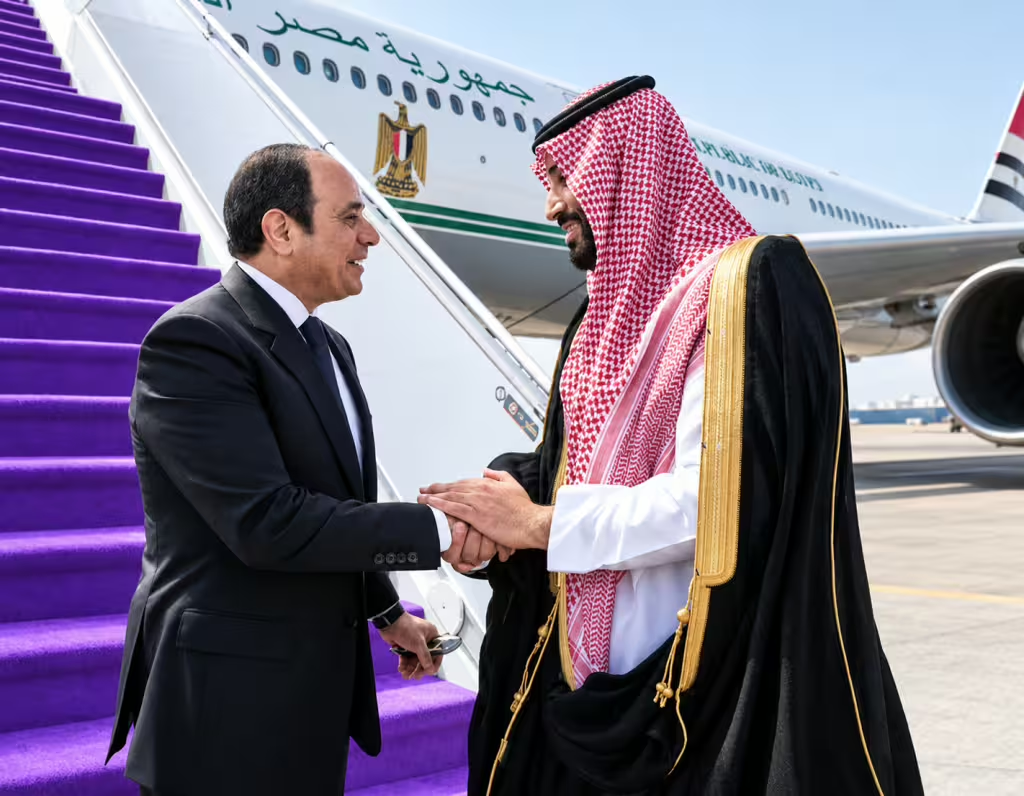
- Recent contact: Crown Prince Mohammed bin Salman visited Egypt to meet Sisi on 15 September, after fighting resumed in Yemen.
- The precedent: Egypt previously joined the Saudi-led coalition that intervened in 2015 to back the Yemeni government against the Houthis, but played only a limited role in that campaign, Reuters reported.
Background:
The Houthis, aligned with Iran, have fought the Saudi-backed Yemeni government since the coalition intervened in 2015. The latest attacks on Saudi territory followed the breakdown of a truce in Yemen.
Between the lines:
The pledge is deliberately wide and deliberately conditional. The Council committed to all possible support without naming troops, aircraft or timelines, while Sisi tied any action to a Saudi request and a parliamentary vote. Cairo’s record in the 2015 coalition, where its role stayed limited, sets a precedent for commitment without deep combat exposure. The parallel diplomatic track points the same way.
What’s next
The parliamentary vote on authorising the armed forces is the immediate signal, followed by whether Riyadh formally requests Egyptian intervention and what capabilities Cairo names if it does.