Key Points
- Vance warned Iranian control of the Strait of Hormuz would sharply raise American gasoline prices.
- He said Washington seeks a final, decisive Iranian commitment not to rebuild its nuclear program.
- The remarks frame the Iran confrontation as an economic argument aimed at American drivers.
The latest:
Gasoline prices paid by American drivers would climb sharply if the United States pulled out of the Middle East and left Iran in control of shipping through the Strait of Hormuz, Vice President JD Vance said. He predicted prices would fall once the conflict with Tehran ends, and defended the administration’s economic record and its Iran strategy as policies whose payoff arrives later.
Details:
- The warning: Vance said a U.S. withdrawal from the region, combined with Iranian control over navigation through Hormuz, would translate directly into higher pump prices at home. He did not specify how large an increase he expected, nor over what period.
- The forecast: The vice president predicted gasoline prices would come down as soon as the conflict with Tehran is over, tying relief for American consumers to the end of the confrontation rather than to any separate energy measure.
- The demand on Tehran: Vance said the Trump administration is seeking a “final and decisive commitment” from Iran not to rebuild its nuclear program. He did not describe what mechanism would verify such a commitment or what Washington would offer in return.
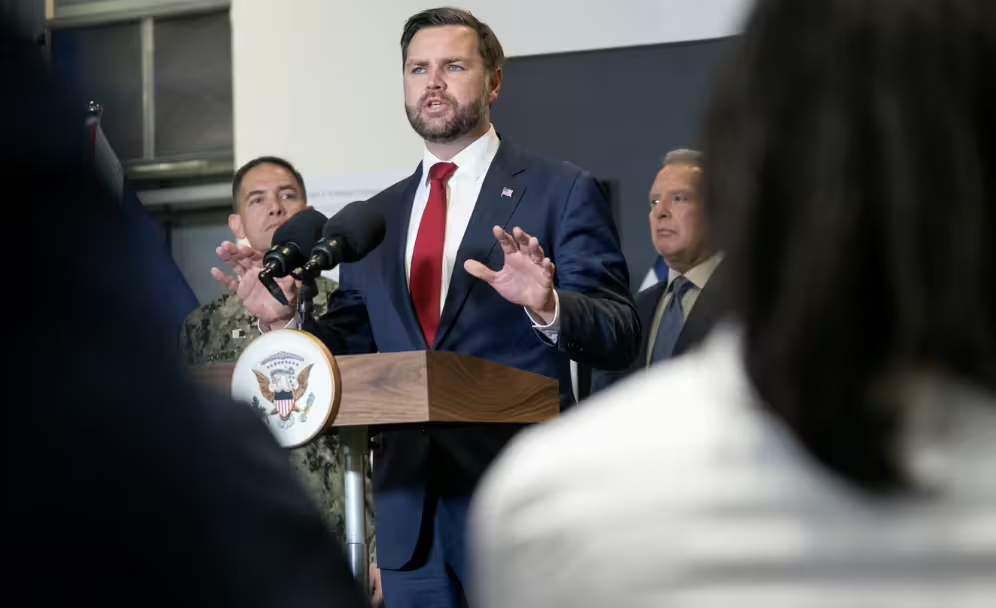
- The setting: The remarks came during an hour-long town hall hosted by CBS News, a format that put Vance before a live audience rather than a press conference, and allowed him to argue the administration’s case at length.
- The economic defense: Alongside the Iran file, Vance defended the administration’s economic policies, arguing that their positive results will show up in the future. He offered no timeline for when Americans should expect to see them.
- The linkage: By tying Hormuz to the price Americans pay at the pump, Vance folded a national security argument into a cost-of-living one, the issue that has dominated domestic political debate.
- What was left open: Vance did not define what the end of the conflict with Iran would look like, nor whether the U.S. military posture in the region is tied to a fixed timetable.
Background:
The Strait of Hormuz is the chokepoint through which a large share of seaborne oil moves, which is why disruptions there feed quickly into global crude and fuel prices.
Between the lines:
The argument is built for a domestic audience rather than a diplomatic one. Vance presents staying in the Middle East as the cheaper option for American households, and makes the end of the conflict the trigger for lower prices — a framing that pairs the demand for a decisive Iranian nuclear commitment with a consumer benefit voters can measure at the pump.
What’s next
Watch for whether Washington spells out what a final Iranian commitment would require, and whether pump prices move as the confrontation with Tehran develops.