Key Points
- Trump said he will not use nuclear weapons against Iran and does not expect ground deployments
- He claimed full US control of the Strait of Hormuz and predicted the war ends soon
- He conceded he may have gone too far in killing Iranian leaders, complicating any negotiation
The latest:
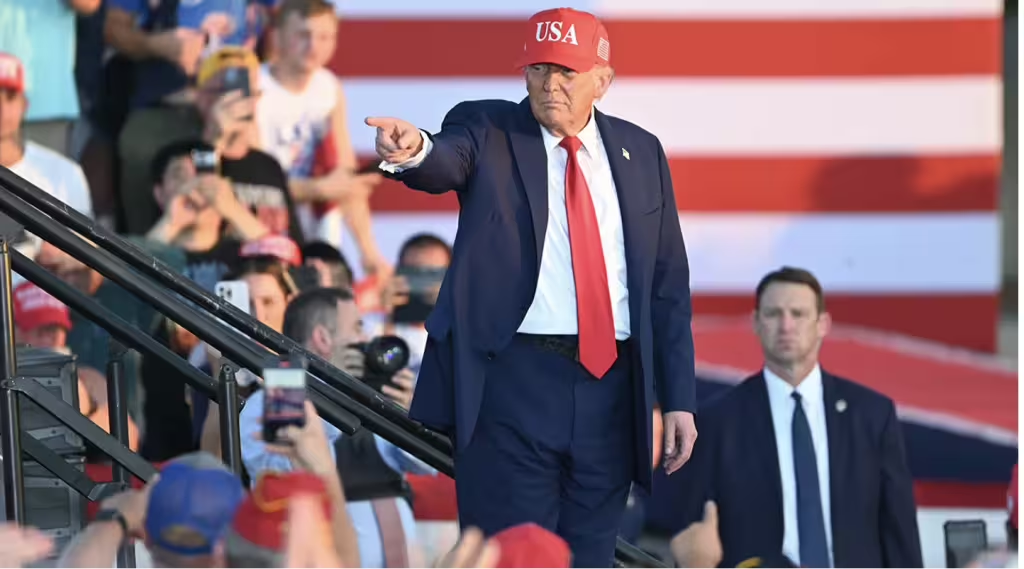
President Donald Trump said he will not use nuclear weapons against Iran and does not expect to send ground forces there, though he stopped short of ruling the option out entirely. Speaking to Newsmax on Thursday, he repeated that Washington now holds the Strait of Hormuz and that the war with Tehran would end soon, Reuters reported.
Details:
- The ground option: Trump said he does not anticipate deploying US ground troops inside Iran, but he declined to close the door on it definitively, according to Reuters. He offered no timeline or conditions under which that calculation would change, and did not describe what the current American military posture involves beyond naval operations.
- Hormuz claim: Trump said Wednesday that the United States has full control of the Strait of Hormuz and that the war will end very soon. He added that the US is now drawing more oil through the strait than before the fighting began, and said the US Navy had imposed a blockade codenamed the Steel Wall.
- The admission: Trump acknowledged he may have gone further than necessary in targeting Iranian leaders, pointing to Washington’s difficulty identifying who in Tehran it can negotiate with. He described a chain in which first-tier leaders were eliminated, then a second tier, then a third, half of whom are also gone.
- The justification: The president again framed the war as necessary to stop Iran from obtaining a nuclear weapon, claiming Tehran had been two weeks away. He said an Iranian bomb would have threatened the Middle East, Europe and the United States.
- Energy and markets: Trump said he had expected gasoline prices to rise more sharply once operations began, and that his administration proceeded despite the stock market trading at record levels. He noted prices had earlier fallen to between 1.85 and 1.95 dollars a gallon, and predicted another decline once the war ends.
- The Netanyahu talks: Axios reported Tuesday, citing US and Israeli officials and an informed source, that Trump discussed with Prime Minister Benjamin Netanyahu last week the possibility of a new large-scale military operation against Iran ahead of the Israeli and American elections.
- Israeli concern: According to that report, Netanyahu raised concern over Israeli intelligence indicating, per an Israeli source, that Iran has taken steps to rebuild its nuclear program. The talks preceded Trump’s announcement that he would not launch fresh strikes before the US midterm elections in November.
- How it started: The United States and Israel launched a broad military campaign against Iran on February 28, striking military and nuclear sites and Iranian commanders. Supreme Leader Ali Khamenei was killed, and the confrontation later settled into intermittent military operations alongside political and economic escalation.
Between the lines:
Trump’s own account points to a strategic cost: by his telling, three successive layers of Iranian leadership have been eliminated, leaving Washington without an identifiable counterpart. That sits awkwardly beside his prediction of a swift end to the war, which would normally require someone in Tehran empowered to agree to it.
What’s next
Watch the November US midterms, the date Trump set as his own limit on new strikes, and whether the Israeli intelligence assessment on Iran’s nuclear reconstruction produces a joint operation.