The latest:
A cruise missile strike on the passenger terminal at Riyadh’s King Khalid International Airport killed at least 13 people and wounded more than 300, the deadliest attack on the kingdom in over a decade. Days of Houthi drone and missile launches also set a multi-storey Aramco building ablaze in Dhahran and forced organizers of a global investment forum to offer remote attendance.
Details:
- The strategy: Saudi, Iranian and regional sources told Reuters the Houthis are targeting infrastructure and investment events to pressure Crown Prince Mohammed bin Salman on Yemen, and to push President Donald Trump toward easing the US economic blockade on Iran. Any relief for Tehran would strengthen its support for the group.
- The demands: Two Saudi and three regional sources familiar with Riyadh’s thinking listed the Houthi conditions: ending Saudi military operations, lifting restrictions on Yemeni ports and airports, regular flights to Iran, resumed salary payments, war reparations, and an end to Saudi backing for the recognized Yemeni government.
- Tehran’s position: A senior Iranian official said the attacks fit a wider strategy by Iran and its allies to reshape the regional balance of power by targeting energy infrastructure and shipping lanes. He said Riyadh can no longer rely on American protection and must negotiate, and the strikes will not stop unless Saudi restrictions are lifted.
- The denial: The Houthis have previously denied acting on Iranian instructions, saying they have no connection to Iran or any other party and develop their weapons themselves. A UN Security Council report found the group now manufactures some weapons and has diversified supply away from Iran’s Revolutionary Guard.
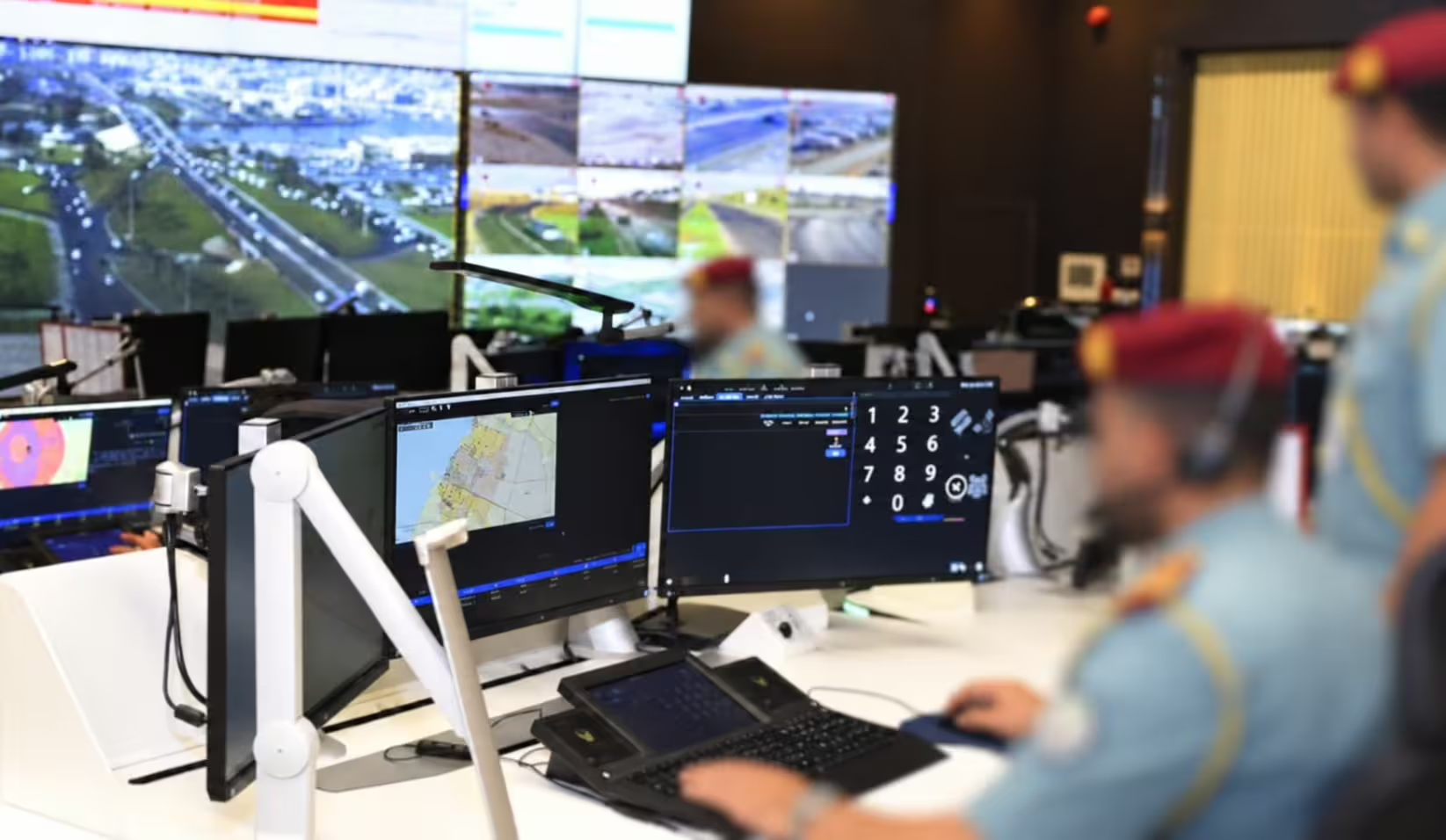
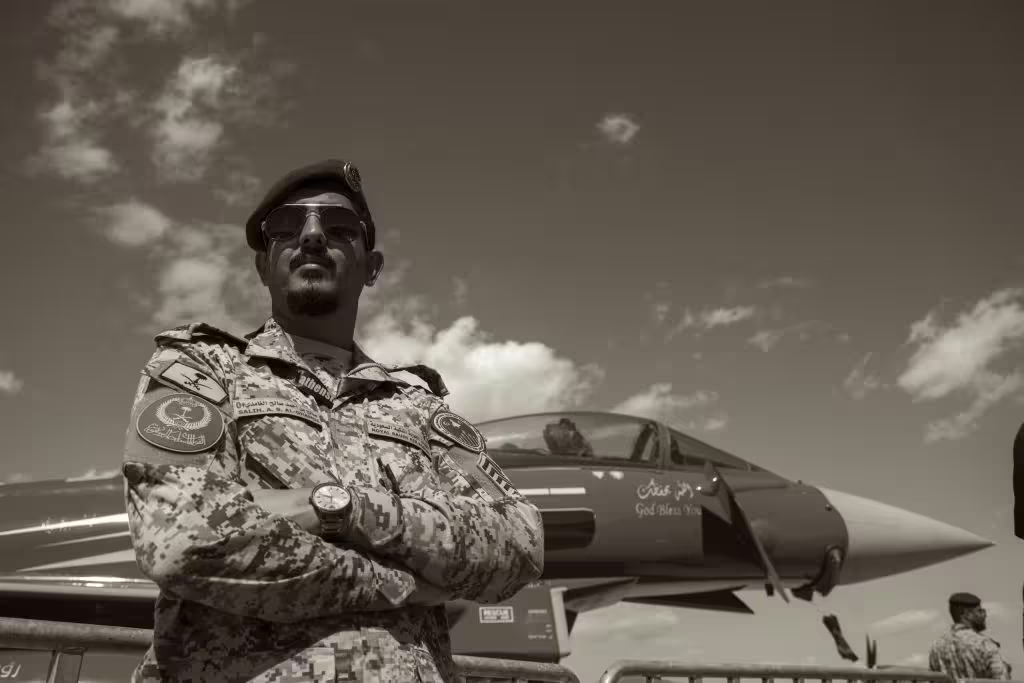
- The defense gap: Saudi Arabia ranks among the world’s top 10 arms spenders with a military budget above 82 billion dollars, according to the Stockholm International Peace Research Institute. Analysts say its air defenses were built facing east toward Iran and Iraq, leaving the southwest exposed to low-flying Yemeni drones and cruise missiles.
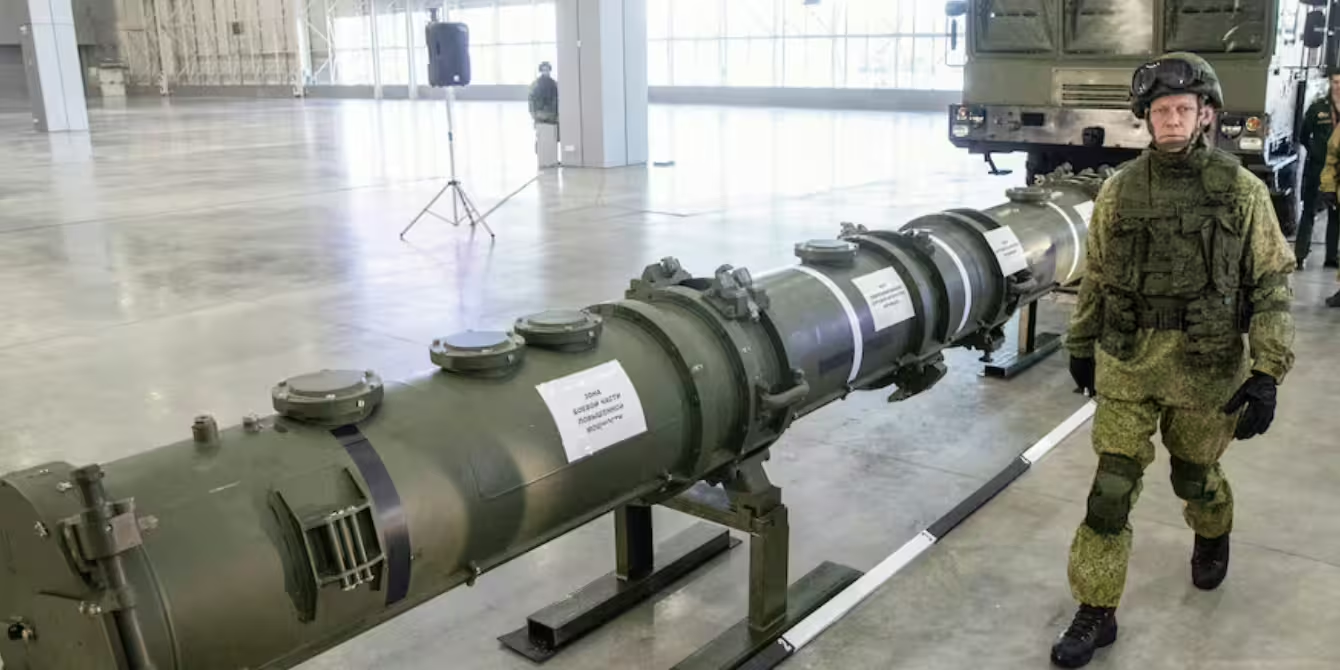
- The cost math: Washington has sold at least 730 Patriot interceptors since 2020, State Department figures show. Analysts said firing an interceptor costing more than 3 million dollars at a drone priced between 15,000 and 25,000 dollars is like swatting a mosquito with a hammer, with global stocks already strained by Ukraine.
- The structural problem: The armed forces remain split between a regular army of roughly 250,000 and a National Guard of about 125,000 recruited from loyalist tribes. Analysts said princes dominate both branches and rigid top-down command stifles field initiative, while high-tech maintenance still depends largely on Western contractors.
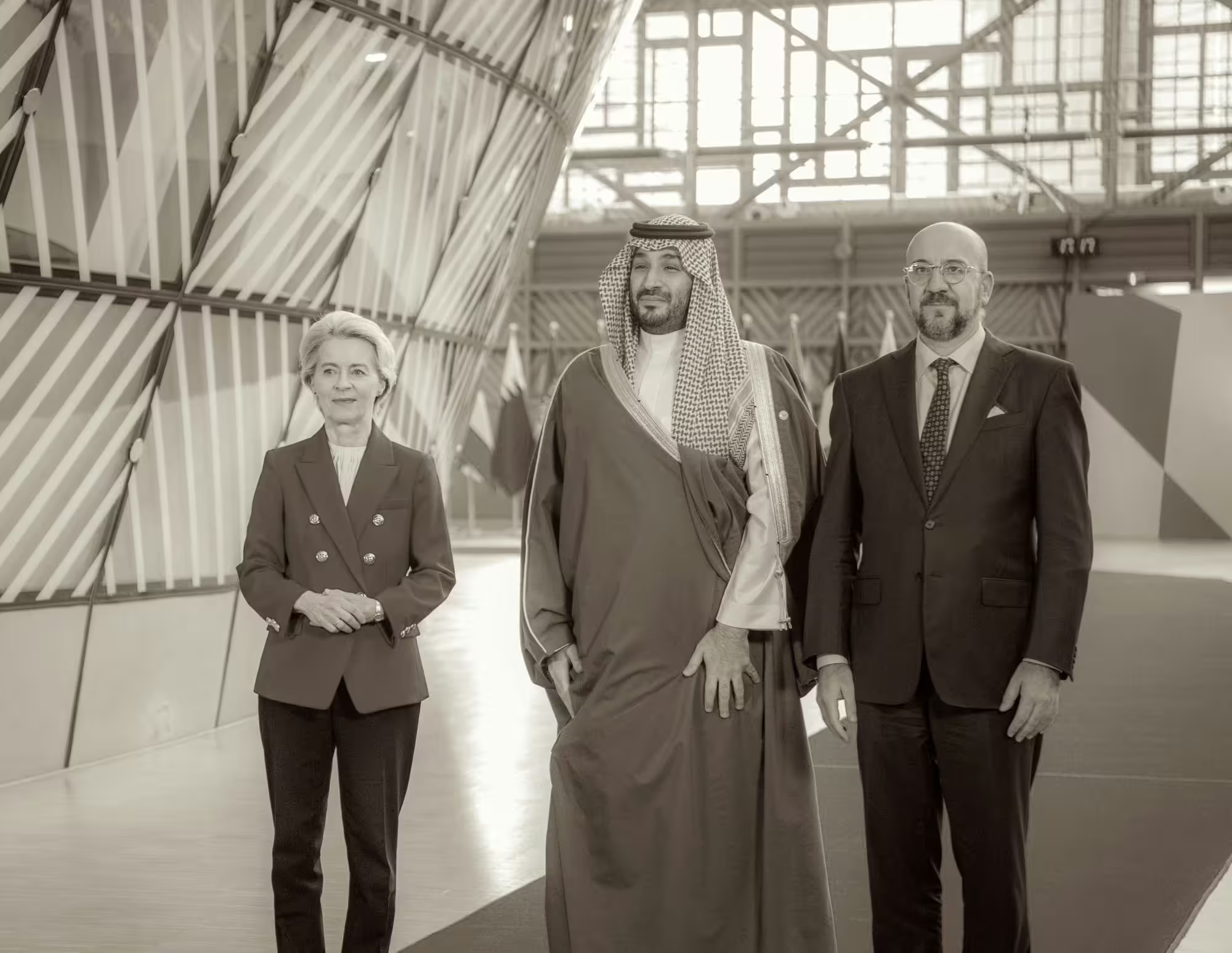
- Washington’s reluctance: Sources told Reuters last month that the crown prince asked Trump for help as the campaign began, but the president declined US strikes and offered targeting and intelligence support instead. Trump later said he was weighing action while appearing to defer any response until after the midterm elections.
- The Saudi response: Energy Minister Prince Abdulaziz bin Salman said at a Riyadh conference shortly after the airport attack that recent weeks had been serious and the kingdom’s response must match that seriousness. Riyadh has also turned to a joint defense pact signed with Pakistan and Turkey in August.
- The broken track: Analyst Farea al-Muslimi traced the crisis to the collapse of the Saudi-backed 2023 peace roadmap, which offered the Houthis political legitimacy and reconstruction funding, with Riyadh helping finance public-sector salaries. The Red Sea conflict derailed it as the group drew closer to Tehran.
Background:
Riyadh intervened in Yemen in 2015 after the Houthis seized Sanaa, with then-defense minister Mohammed bin Salman predicting victory within weeks. The war ground on until a 2022 UN-brokered ceasefire. Houthi strikes on Aramco facilities in 2019 briefly disrupted about 5% of global oil supply.
Between the lines:
Former US negotiator Aaron David Miller argued the Houthi advantage lies in asymmetry of stakes: Saudi infrastructure is far more valuable than theirs, so they lose far less. That imbalance explains why military pressure alone may not deliver a result, and why Gulf Research Center head Abdulaziz Sager says Saudi leaders now see force as their only option. Michael Knights of Horizon Engage said Iran, squeezed after the February 28 war, is raising costs on Washington by hitting its partners.
What’s next
Watch whether Trump authorizes strikes after the US midterm elections, whether Pakistan and Turkey activate the August defense pact, and whether Houthi interference with Saudi oil shipments through Bab al-Mandab widens.