The latest:
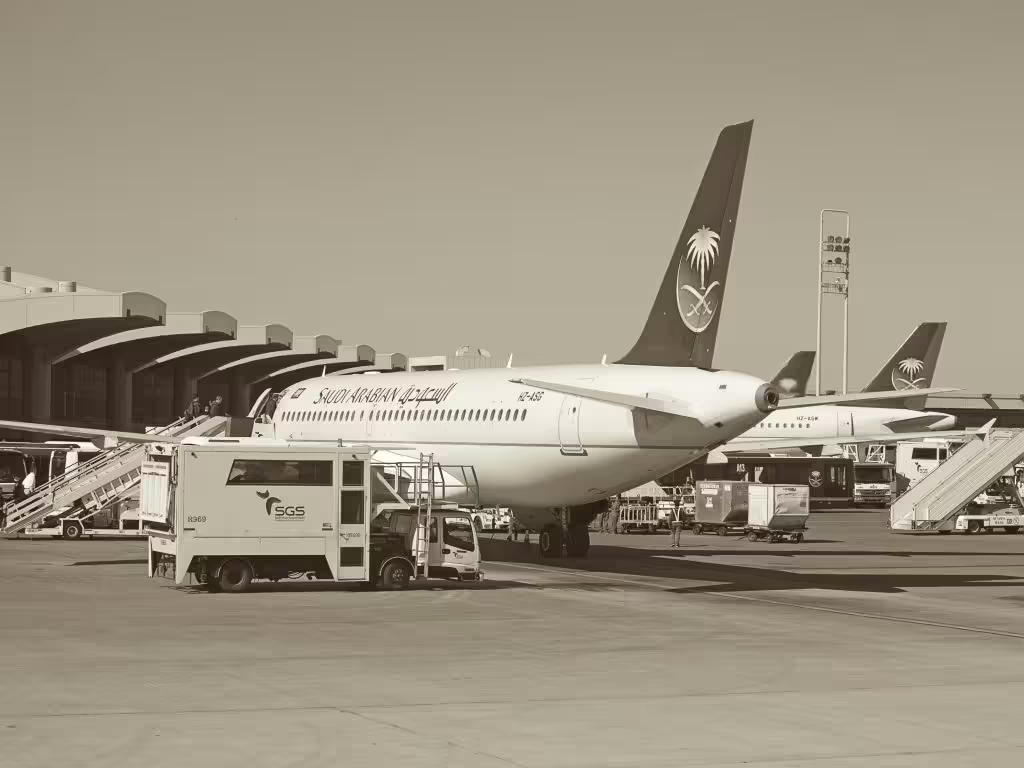
At least 12 people were killed and 309 wounded when a missile struck the passenger terminal at Riyadh’s King Khalid International Airport on Saturday, Saudi civil aviation authorities said, forcing a temporary shutdown of operations. The Saudi-led coalition blamed the Iran-backed Houthis and called the strike a war crime, vowing a firm response. Among the dead was one American citizen.
Details:
- The casualties: The Saudi General Authority of Civil Aviation said early Sunday the dead included four Saudis, two Bangladeshis, and one citizen each from the United States, Jordan, Palestine, Syria, Sudan and Egypt. Some of the 309 wounded were in critical condition across several hospitals.
- No warning: The attack came without any alert from Saudi Arabia’s early-warning system, according to Reuters. A regional official, speaking anonymously because he was not authorized to brief media, said the missile hit the complex housing terminals 3 and 4, used for domestic flights. The coalition said the airport holds no military facilities.
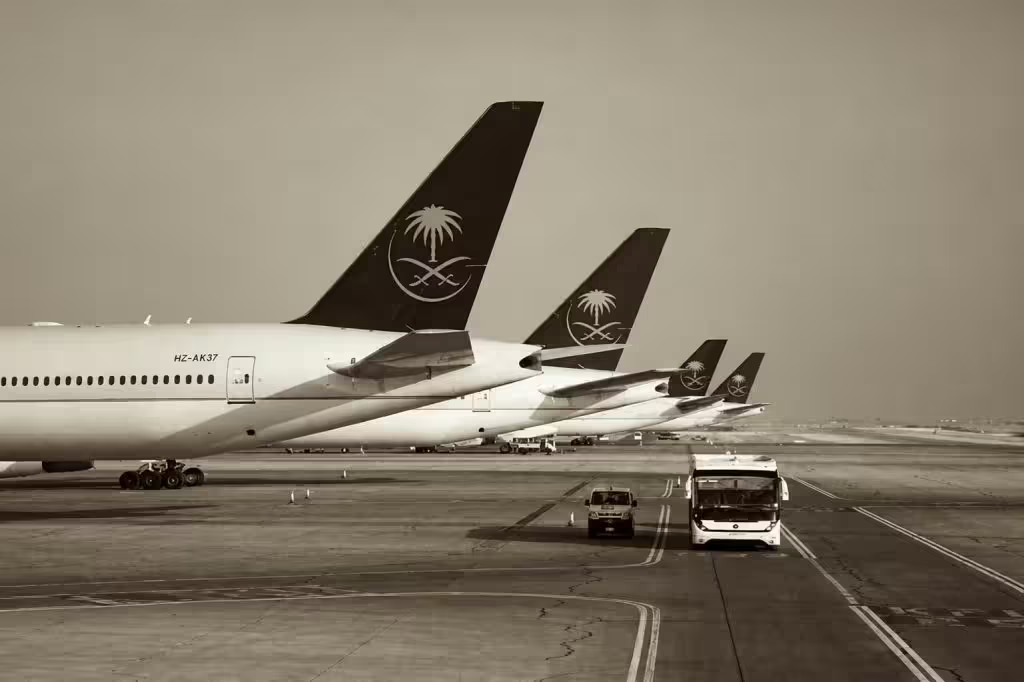
- The third this week: Two earlier attacks on the same airport killed four people, including a pilot, Saudi authorities said. Two regional officials told the Associated Press that Thursday’s strikes damaged three planes. The national carrier said one of its aircraft was hit on the ground with no passengers aboard.
- Houthi claim: Mohammed al-Bukhaiti, a senior Houthi official, said the group carried out Saturday’s attack in retaliation for Saudi strikes, including those on civilian infrastructure in Yemen. The group’s media chief wrote on X that the Houthis had “shut down Riyadh International Airport.”
- Washington weighs in: Asked outside the White House whether the United States would join the Saudi air campaign, President Trump said he had just learned of the attack and a decision would come quickly, calling what happened unacceptable. He said he intended to speak with Crown Prince Mohammed bin Salman. Secretary of State Marco Rubio condemned the strikes and confirmed the American death.
- The air campaign: Saudi Arabia and the Yemeni government say they have carried out hundreds of raids on Houthi-held areas. Anis al-Asbahi, spokesman for the Houthi-run health ministry, said the strikes killed 91 people in Yemen since September 3, most of them women and children. Reuters said it could not independently confirm those claims.
- Defense gaps: Regional officials told the Associated Press last month that Saudi Arabia is running short of interceptor missiles and has asked France, Britain, Pakistan and Egypt to deploy air-defense support. One official said US stockpiles had also been drawn down during the war with Iran. American assistance included intelligence sharing, targeting and planning for the latest offensive.
- Aviation fallout: Flightradar24 data showed all Riyadh-bound flights diverted or cancelled Saturday. Air India, flydubai, the Lufthansa group and Pakistan International Airlines had already suspended service to Saudi airports. The EU Aviation Safety Agency widened its airspace guidance, warning that missile, drone and interception activity raises the risk of civilian aircraft being misidentified.
- The summits: Riyadh is due to host the World Energy Council’s energy conference starting Sunday and the Future Investment Initiative later this month, chaired by Prince Mohammed. Organizers said before Saturday’s strike that both would proceed as planned, offering participants coordinated Saudia flights, and have announced no change to the FII agenda.
Background:
Saudi Arabia entered Yemen’s war in 2015 after the Houthis seized Sanaa. Hundreds of thousands died before a 2022 truce froze the conflict. That calm ended in July, when the Houthis accused Riyadh of shelling Sanaa airport, and collapsed fully last weekend with a new Saudi-backed ground offensive.
Between the lines:
Three strikes on the same airport in one week, with no early-warning alert, point to a defensive gap the interceptor shortage described by regional officials would explain. The timing is also political: the attacks land days before the energy conference and weeks before the investment summit Prince Mohammed chairs, targeting the travel-hub image rather than oil infrastructure.
What’s next
The World Energy Council conference opens Sunday in Riyadh. Watch for Trump’s promised decision on joining the strikes, his call with Prince Mohammed, the coalition’s threatened response, and whether Future Investment Initiative organizers alter the agenda.