Key Points
- Houthi drones and missiles have hit Saudi cities, killing at least three people this week, according to Riyadh.
- Saudi Arabia broke with the UAE last year, then faced a Houthi offensive after the truce collapsed in July.
- Analysts say Riyadh lacks US backing, unified Yemeni allies and any clear exit from the war.
The latest:
Houthi forces struck several Saudi airports this week, killing at least three people including a Saudi pilot, Saudi Arabia said. The strikes follow a Houthi offensive down Yemen’s coast and attacks on Saudi oil facilities that disrupted crude supplies. Riyadh has answered with hundreds of airstrikes and a new campaign backing its Yemeni partners, named Yemen’s Dawn.
Details:
- The trigger: The four-year truce collapsed in July after Iran sent a commercial plane to carry a Houthi delegation to Ayatollah Ali Khamenei’s funeral, defying a Saudi air blockade. Riyadh struck Sanaa airport to stop the landing, and the Houthis declared the truce dead and announced a naval blockade on Saudi ships.
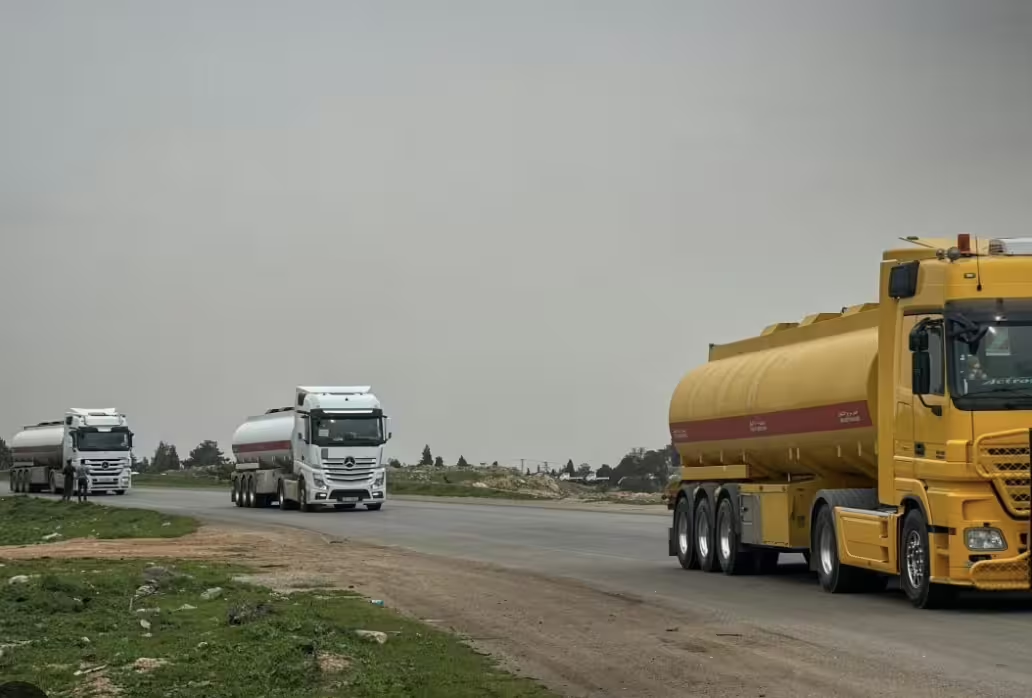
- The offensive: The group advanced rapidly down Yemen’s coast, seizing strategic territory at the Bab al-Mandeb Strait in what CNN described as the largest escalation since 2022. It also hit Saudi oil facilities and pipelines, cutting crude supplies and pushing prices sharply higher.
- The UAE rupture: Saudi warplanes struck a shipment of military vehicles sent to Yemen by the UAE last year, shattering a decade-old alliance. Abu Dhabi withdrew its forces, and Riyadh launched a rare media campaign accusing its neighbor of fueling instability in Sudan and Yemen.
- The vacuum: A southern Yemeni official who asked not to be named told CNN that no proper transition followed the Emirati exit. “The Emiratis’ command and control was very efficient, and the Saudis did not replace this efficiency,” the official said, adding thousands of fighters were left disoriented.
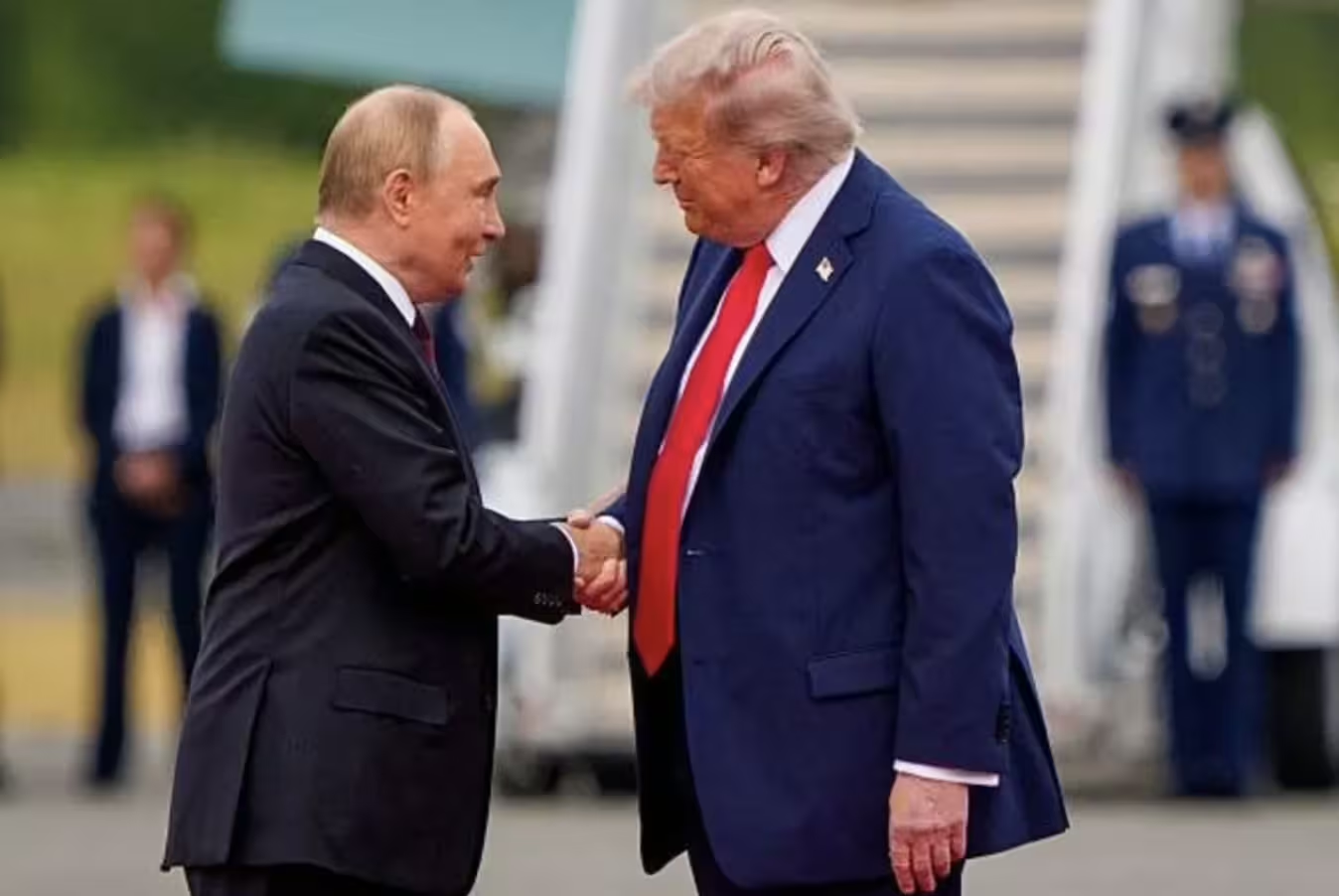
- The Trump factor: Prince Mohammed bin Salman spoke twice with President Donald Trump last month urging strikes on the Houthis, sources told CNN at the time, but Trump declined. Washington instead met the group in Oman to protect its own ceasefire, with the Houthis saying their war is with Saudi Arabia alone.
- Expert assessment: Ahmed Nagi of the International Crisis Group said Riyadh failed to prepare for the offensive and lacked coordination with Yemeni forces inherited from the UAE. Lost territory, he said, created morale problems among allies now facing more advanced Houthi weaponry.
- The new backers: France agreed to deploy defense assets including military personnel, Britain said it would send a refueling aircraft, and more than 100 American advisers are providing intelligence and targeting support under a new joint forces command. Saudi Arabia, Turkey and Pakistan agreed Monday to activate collective deterrence measures.
- Economic cost: Attacks on oil infrastructure have cut exports and major projects have been canceled. Film festivals, award shows and concerts were suspended this year, and the kingdom’s flagship financial conference, expected to draw global business leaders at the end of October, is under pressure.
- No endgame: Hisham Al Omeisy of the European Institute of Peace told CNN that factions must unify command centers and resolve internal disputes, warning territorial gains mean nothing if the Saudi-backed government cannot hold the areas it takes.
Background:
Saudi Arabia has tried for 11 years to contain the Yemen conflict through force and diplomacy, first fighting the Iran-allied Houthis, then opening peace talks with them and restoring relations with Tehran. A US and Israeli war on Iran, which killed Khamenei, upended that track.
Between the lines:
Three bets went wrong at once, by the analysts’ account: that pushing the UAE out would consolidate Riyadh’s command in Yemen, that Washington would respond if the kingdom were attacked, and that the Houthis would stay out of Iran’s fight. Former US ambassador Michael Ratney said the Saudis built their military worldview around partnering with the US and now feel exposed.
What’s next
Watch whether the kingdom’s financial conference proceeds at the end of October, whether Yemen’s Dawn holds captured territory, and whether the Oman channel between Washington and the Houthis survives further strikes on Saudi soil.