Key Points
- Moqtada Al Sadr is pressing to curb armed factions and keep Iraq out of regional wars, experts say.
- US-led coalition troops left on September 30; a disarmament deadline slipped to June next year.
- The campaign positions the cleric as a statesman and kingmaker before any contest over Najaf's succession.
The latest:
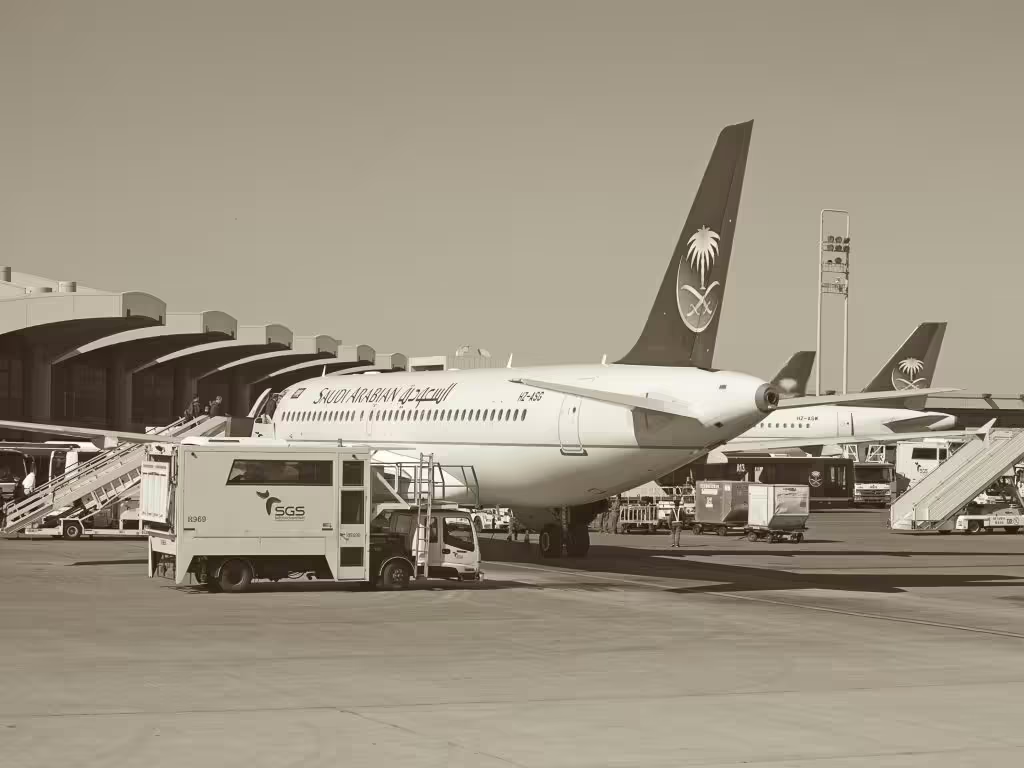
The departure of US-led coalition forces on September 30 has stripped Iraq’s armed factions of a central argument for keeping their weapons, and Moqtada Al Sadr is moving into that gap. Experts and officials told The National the Shiite cleric is reinforcing a nationalist platform built on keeping Baghdad out of regional conflicts, limiting Iranian influence and restoring the state’s monopoly on force.
Details:
- The deadline: Armed groups were expected to disarm by the September 30 withdrawal date, according to The National, but that deadline has since been pushed to June next year. No mechanism for enforcing the new date has been announced, and the question of why factions still operate outside state control remains open.
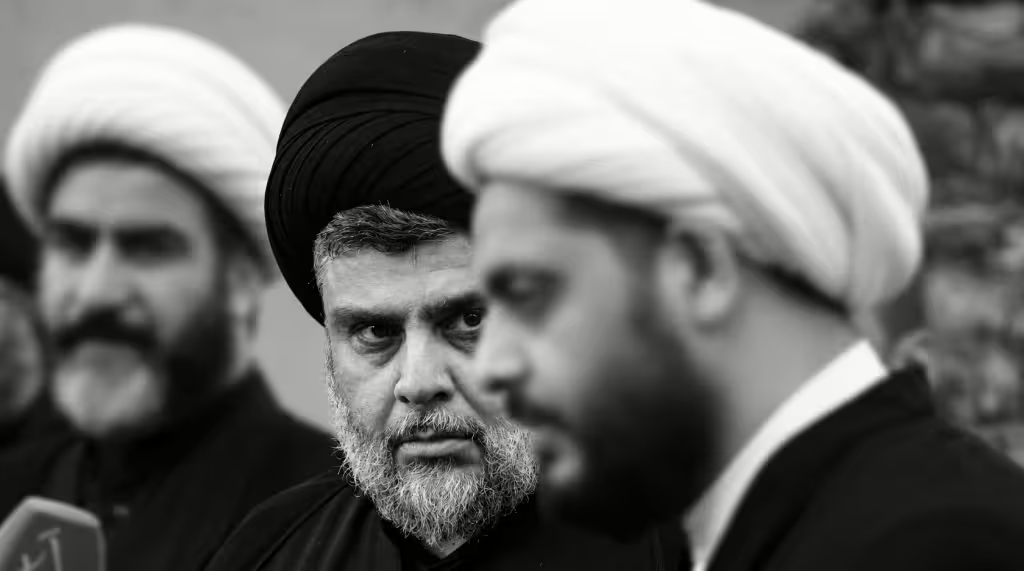
- The rebranding: Al Sadr fought American troops during the occupation and commanded a militia with millions of followers. Over the past decade he has recast himself as a nationalist and anti-corruption campaigner, emerging as a political kingmaker while his movement, the Sadrists, stepped back from mainstream politics.
- The loyalty problem: Renad Mansour, director of the Iraq Initiative at Chatham House, told The National that Al Sadr has long advocated dissolving factions operating outside state control. But absorbing fighters into government institutions does not settle where their loyalties sit, Mansour said, or whether an informal chain of command survives.
- The clerical angle: Mansour said Al Sadr’s vision merges religious and political authority, holding that clerics should be active in politics rather than confined to religious affairs. He assessed that the cleric is charting a role bridging both branches of Iraqi public life.
- The regional read: Bente Scheller of the Heinrich-Boll-Stiftung in Berlin told The National that proxies are the method of choice in the region, and that Tehran deploys them in its own interest, often colliding with the national interests of host countries. A statesmanlike posture, she assessed, could take Iraq out of the line of fire.
- The aide’s framing: Dhia Al Assadi, a former Iraqi minister and adviser to Al Sadr, said the cleric has consistently urged others to sacrifice political or material gains to stabilise Iraq. His outlook abroad, Al Assadi said, rests on mutual respect, co-operation and shared interests.
- On Washington: Al Assadi said the region could benefit if American policymakers adopted a new approach and learnt from past mistakes, pointing to Al Sadr’s call for a new chapter in US-Iraqi ties. Optimism would be limited, he added, if Washington kept pursuing narrow interests at the expense of regional stability.
- The long game: Marsin Al Shammary, assistant professor of political science at Boston College, told The National that Al Sadr foresees a political future for himself and does not want to undermine it by appearing anti-state. She cited his “remarkable ability to mobilise and demobilise his followers”.
- The Najaf track: Al Shammary said Al Sadr has been making overtures towards Najaf, home to Iraq’s senior Shiite clerics, and may seek closeness with the eventual successor to Ayatollah Ali Al Sistani. Both sides, she said, agree on limiting Iranian influence over that succession.
Background:
Najaf was the site of a 2004 rebellion against US forces by militias loyal to Al Sadr. Members of his Saraya Al Salam attended a ceremony in Samarra in June marking their integration into Iraqi security forces. Sadrist posters urged a boycott of the November 2025 parliamentary elections.
Between the lines:
The withdrawal removed the justification factions used for their arsenals, handing Al Sadr an opening his rivals did not choose. The Samarra integration shows the model he is backing, and Mansour’s caution applies directly: fighters inside state institutions may still answer to an informal chain. How his own forces disarm will test whether the statesman framing holds.
What’s next
The June disarmament deadline is the next hard marker, along with any move by Washington on a new framework for US-Iraqi ties and signals from Najaf over the Sistani succession.