
Key Points
- Brent rose to $102.5 a barrel, Nymex traded at $90 Thursday.
- The Atlantic cited two officials on strike options deliverable before US midterms.
- A Gulf storm shut 510,000 barrels daily, tightening an already strained market.
The latest:
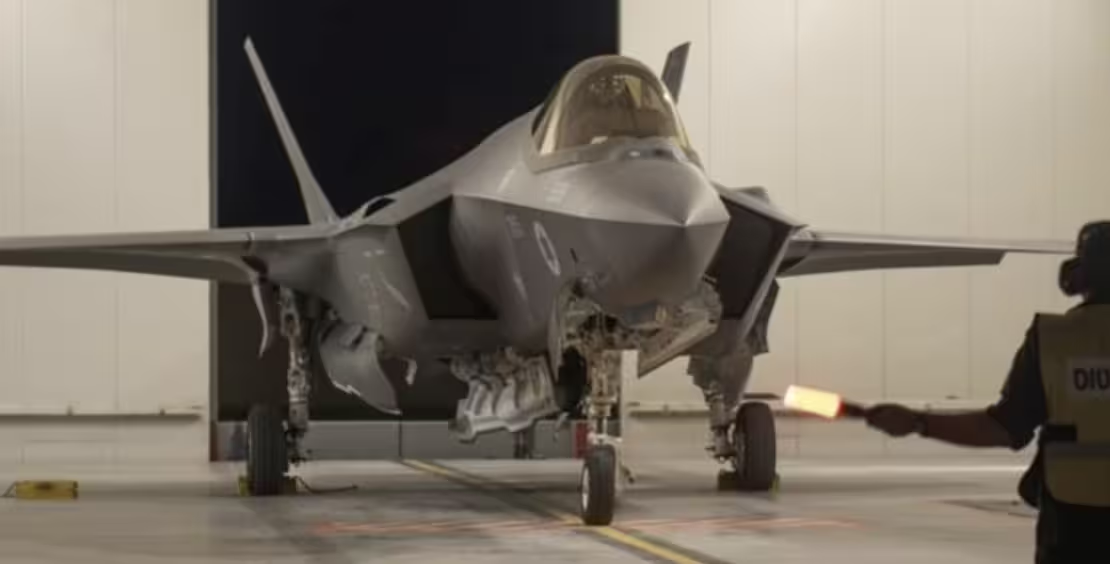
Crude climbed 2% on Thursday, with Brent reaching $102.5 a barrel and Nymex trading at $90, after a report that the White House asked the Pentagon to prepare options for striking Iran. The Atlantic, citing two officials, said the options could be executed before next month’s midterm elections. A tropical storm simultaneously knocked out a quarter of US Gulf output.
Details:
- The report: The Atlantic said the scale of any strikes, their targets, and whether the administration proceeds at all remain under discussion. It added that a limited operation could be followed by larger moves after the midterms. The magazine based its account on two officials it did not name.
- Why it surprised: The account cuts against a widely held assumption that President Donald Trump would defer any escalation with Tehran until after the elections next month. The timing question — before or after the vote — is what moved the market, more than the prospect of military action itself.
- Supply shock: Producers in the US Gulf shut in more than 510,000 barrels a day of crude, roughly a quarter of regional supply, ahead of tropical storm Isaias, according to the Bureau of Ocean Energy Management. Forecasters expect the system to strengthen into a Category 2 hurricane in coming days.
- Shipping attacks: Middle East export volumes have picked up in recent weeks, but attacks on vessels have risen alongside them. Recent incidents included a strike on a water tanker off Qatar, with reports of casualties.
- The Hormuz figure: Washington said 20 million barrels of crude were flowing through the Strait of Hormuz, in a social media post that gave no time frame. That matches pre-conflict daily volumes, though it sits above estimates offered by some industry executives at a conference this week.
- Analyst view: Sol Kavonic, senior energy analyst at MST Marquee, said “Middle East flows have recovered, but tight product supply, logistics costs and the rising risk of Iranian escalation keep prices elevated.”
- Yemen escalation: Iran-backed Houthis struck two airports in Saudi Arabia, killing three people. The Saudi-led coalition said it destroyed 82 targets in Saada, Hodeidah, Jawf and Marib in response, as the group fights government forces inside Yemen.
- Freight costs: Regional risk, vessel strikes and demand for crude from more distant loading points have driven a historic surge in shipping rates. Chartering a very large crude carrier to move US oil to Asia now costs $77 million, up from an average of $9.2 million last year.
- US balances: Official data showed total US crude and product exports hit their highest level since May last week, returning to a seasonal record and underlining strong foreign demand. Crude inventories fell 3.2 million barrels.
Background:
Crude has risen sharply this year as the US-Iran conflict disrupted exports, drained energy inventories and fed an acceleration in global inflation.
Between the lines:
Two separate shocks are stacked in one session. The storm outage is finite and priced as such; the Atlantic report is not, because it collapses the election-timing assumption traders had been leaning on. The $77 million charter rate shows how much of today’s price sits in logistics rather than barrels — a cost that persists even if Hormuz flows hold near the 20 million-barrel level Washington cited.
What’s next
Watch whether Isaias strengthens to Category 2 and how quickly Gulf output restarts, any administration response to the Atlantic report, and further Houthi strikes on Saudi targets before the midterms.