1- A UPS employee missed a warning email, routing F-35 stealth parts through Hong Kong, a person briefed said.
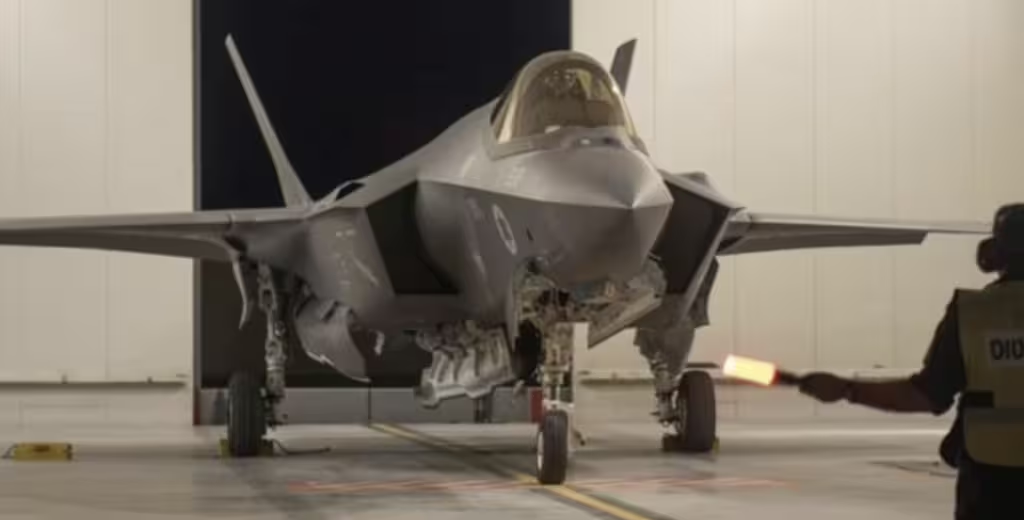
2- The canopy and weapons-bay door, coated in radar-absorbing material, were en route to the US in late May.
3- China has targeted the F-35 for years; the Pentagon and State Department are both investigating.
The latest:
A cockpit canopy and weapons-bay door from the F-35, both coated in radar-absorbing material, reached China after a United Parcel Service employee missed an email warning against routing the shipment through Hong Kong, according to a person briefed on the incident. Pentagon officials laid out the previously unreported sequence on Sept. 29 to House committee staff.
Details:
• The warning: The email came from freight forwarder DSV, working for Lockheed Martin, and stated the parts could not transit certain countries under the International Traffic in Arms Regulations, the person briefed said. ITAR is designed in part to keep sensitive US weapons technology away from American adversaries.
• How it went wrong: The shipment was meant to reach San Francisco via South Korea and Taiwan, both US defense partners, the person said. It left Australia late and was mistakenly rerouted through Hong Kong to speed delivery. The DSV email may have been sent through a different IT system than the one the UPS agent used.
• The cargo: Both components carried radar-absorbing coating that enhances stealth performance, and were being shipped to the US in late May for possible repair or disposal, according to people familiar with the incident.
• The briefing: Erica Plath, deputy assistant secretary of defense for logistics, told congressional staff a team she assembled was taking steps to prevent a repeat, the person familiar said. A compliance official from the State Department’s Directorate of Defense Trade Controls, which is investigating the diversion, also attended.
• The expert view: Diana Maurer, who oversees F-35 support reviews at the Government Accountability Office, called the loss a big deal and assessed that Chinese specialists would move quickly to reverse engineer the canopy and work out how to counter it with their own capabilities.
• Lockheed’s position: The company, which manages much of the global spare parts pool sustaining the jet for the US and 19 other nations, said last month that its logistics decisions are not made unilaterally and that it selects carriers aligned with government rules. Presented with the new details, Lockheed said it had nothing to add or correct.
• Pentagon distance: The Defense Department has publicly rejected responsibility for the errant shipment and described the parts as unserviceable. US Transportation Command said it was not involved in the transportation or coordination of the shipment. The Pentagon declined to detail specific preventive steps.
• Congress reacts: Senator Mark Warner, ranking Democrat on the intelligence committee, demanded the Pentagon briefing. Chairman Tom Cotton has called for a supply chain review. Senator Kevin Cramer, who chairs the Armed Services panel investigating the case, asked whether China had planned all along to intercept the shipment.
• Corporate silence: DSV spokesman Stephan Ghisler-Solvang and UPS spokesman Malcolm Berkley declined to comment. UPS does not break out revenue by sector, though it has highlighted a strategic push into business lines that could include aerospace and defense.
• Market reaction: UPS shares turned negative after Bloomberg reported the misstep on Wednesday, falling less than 1% as of 3:32 pm in New York.
Background:
The F-35 is the most expensive US weapons program in history, and China has for years targeted the aircraft through espionage. Bloomberg first reported last month that sensitive parts had been diverted to Hong Kong, where they remain held.
Between the lines:
The account points to a gap between regulation and execution: the ITAR warning was issued as required, but may have traveled through an IT system the handling agent never saw. That framing shifts the failure from policy to interoperability, and helps explain why lawmakers are demanding a full supply chain review rather than action against a single carrier.
What’s next
The State Department’s Directorate of Defense Trade Controls investigation and the Pentagon review remain open. Cramer’s Armed Services panel is examining the case, and Cotton’s demanded supply chain review has not yet been scheduled.