Key Points
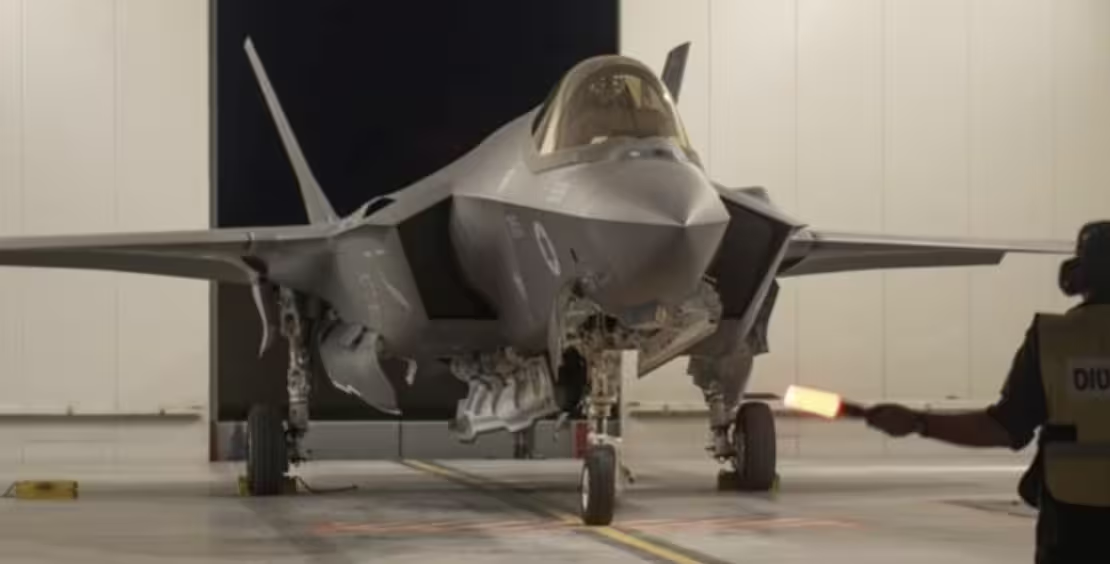
- U.S. Central Command was told to complete preparations for potentially resuming major combat operations in Iran.
- Trump has made no final decision, while nuclear negotiations remain stalled pending Iran’s response to a U.S. counterproposal.
- Renewed war could hit energy and nuclear sites, lift oil prices and reshape U.S. and Israeli election campaigns.
The latest
The Pentagon instructed U.S. Central Command several days ago to complete preparations for a possible resumption of major combat operations in Iran, though the order set no strike date and President Donald Trump has made no final decision. U.S. and Israeli sources said action could come before the U.S. midterm elections, potentially ahead of Israeli elections one week earlier. Any renewed campaign is expected to involve extensive bombing of Iranian energy, infrastructure and nuclear targets.
Details
- Military options: A Pentagon official said the department’s role is to develop and present military options to the president. A White House official said Trump retains all options at any time, arguing that U.S. control of the Strait of Hormuz and Iran’s collapsing economy leave Washington in a strong position.
- Camp David talks: Trump’s national security team met for several hours Friday at Camp David to discuss the war and other issues. An Israeli official said part of the session covered possible renewed combat in Iran. Secretary of State Marco Rubio later described the meeting as “long-term” foreign policy planning.
- Diplomatic deadlock: U.S.-Iran negotiations have made no progress. Qatari mediators remain awaiting Tehran’s response to a U.S. counterproposal demanding nuclear concessions. A second Israeli official assessed that pre-election action was unlikely but could not be ruled out, with the chances rising significantly after the midterms.
- Leader contacts: Trump spoke Wednesday with Israeli Prime Minister Benjamin Netanyahu, their second call in days after limited contact for weeks. A U.S. official said they discussed remembrance and respect for victims of the October 7 massacre. The conversation followed Netanyahu’s meeting with his national security team on Iran; Netanyahu also spoke with Rubio on Monday.
- Joint operations: If operations resume, the United States and Israel would most likely act in tandem, with the Israeli military participating. Two Israeli officials said Iran’s leadership, having endured two surprise attacks, could strike first to avoid a third. They described the regime as desperate and paranoid.
- Retaliation risks: Renewed war within three to four weeks could push oil prices higher. Iran would likely retaliate by firing hundreds of ballistic missiles at Israel, exposing both countries’ election calendars to the immediate economic and security consequences of any decision to resume combat.
Between the lines
The calendar links military risk to two election campaigns. A conflict-driven oil-price increase could weigh on the U.S. midterms, while escalation or emergency conditions in Israel could benefit Netanyahu politically and limit his opponents’ room to attack him during the campaign’s closing stretch.
What’s next
Qatari mediators are awaiting Iran’s response to the U.S. counterproposal, while Trump’s decision remains the decisive trigger for military action. The immediate indicators are whether Tehran answers the nuclear demands and whether Washington moves from preparations to an order before the U.S. midterms.