Key Points
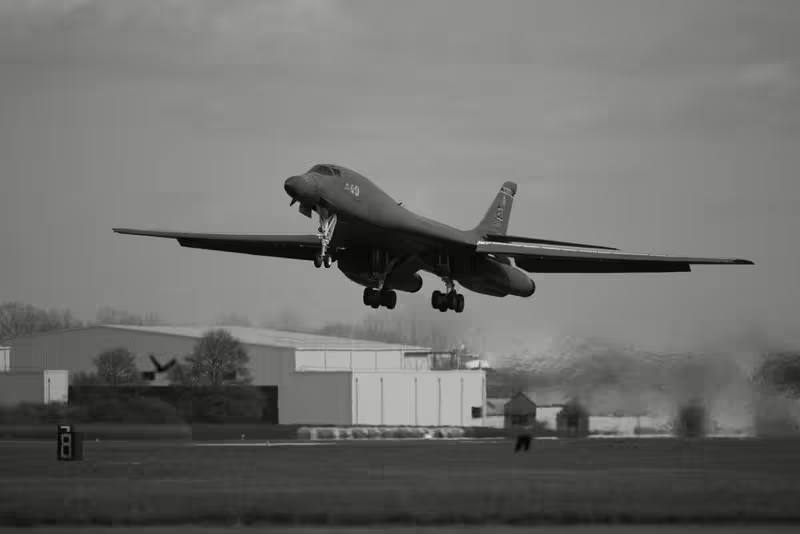
- All 12 B-1 bombers left RAF Fairford after intelligence indicated a potential drone attack.
- Officials said drones could be smuggled near the base and launched from vehicles against aircraft and personnel.
- The withdrawal extends security concerns from the Iran conflict to a key US military hub in Europe.
The latest
The United States has removed all 12 B-1 bombers from RAF Fairford in southern England after intelligence indicated a potential large-scale Iranian drone attack against the base, aircraft and American personnel. The rapid withdrawal followed a perceived increase in the threat over the weekend, while President Donald Trump said a “specific threat” linked to Iran influenced the move and confirmed Washington had anticipated possible danger.
Details
- Emergency departure: Some bombers and crews had already taken off for the United States while tanker aircraft required for the long-range flight were still being prepared. Officials described the pace as highly unusual for strategic aircraft at a major allied base outside an active combat zone. Several B-1s had arrived only days earlier for a routine rotation.
- Suspected attack plan: The suspected operation could have involved drones smuggled near Fairford and launched from vehicles, potentially damaging aircraft and killing US personnel. Officials said the concept may have drawn partly from Ukraine’s June 2025 Operation Spiderweb, which used drones launched from mobile platforms close to Russian military airfields.
- Administration positions: Trump said the bombers were not moved to Fairford “by accident,” adding: “We had an idea that there might be a threat, and why would I leave them there?” Asked about those behind it, he said: “They would be linked to Iran.” Vice President JD Vance said the administration was being “extremely cautious.” Secretary of State Marco Rubio said he could not confirm a direct connection between the suspected plot and the redeployment.
- British security response: British authorities arrested five people last week on suspicion of preparing terrorist acts and explosives-related offences near Fairford. British officials said the base remained safe and declined to discuss US intelligence or military decisions. Fairford is a principal European location capable of supporting US long-range bomber deployments and other American strategic aircraft.
- Wider conflict: At a campaign rally in Grand Island, Nebraska, Trump called higher fuel prices a temporary and “small price to pay” for safety. He said the war would end “very soon” and was “essentially almost over with,” as the military took precautions to protect personnel and aircraft thousands of kilometres from the Middle East.
Background
Officials connected the latest information to a warning received roughly three weeks earlier that Fairford could face an Iran-supported attack. Removing the B-1s reduces the US bomber presence at Fairford but does not eliminate long-range strike options from American bases or other forward locations.
What’s next
The immediate indicators are whether the bombers return to Fairford, whether British authorities announce further action after the five arrests, and whether Washington changes force-protection measures at European bases.