Key Points
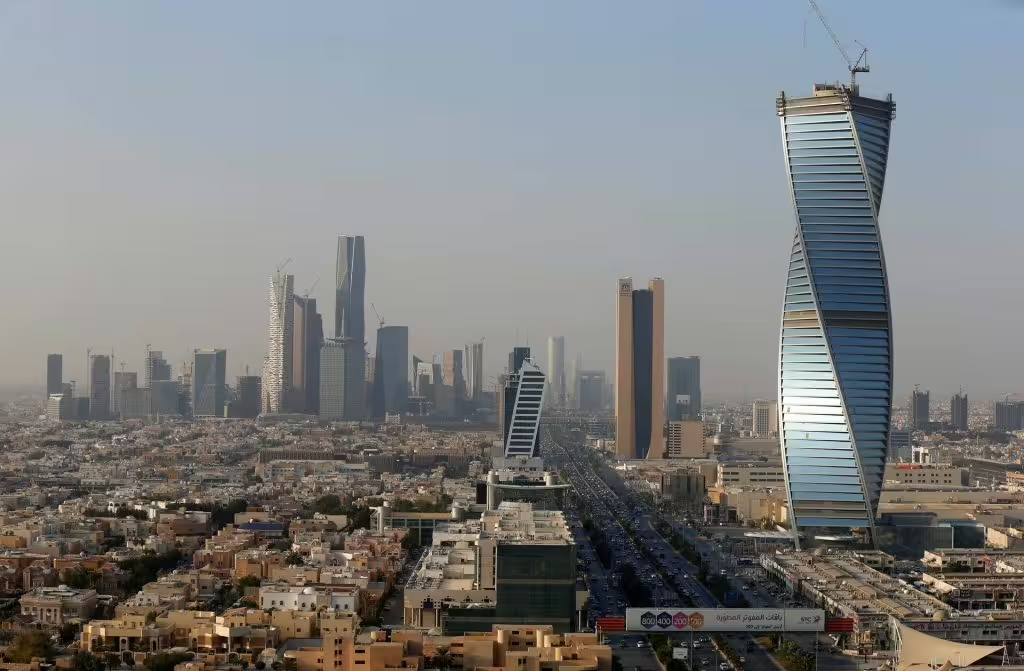
- Saudi Arabia’s September PMI rose to 55.3, marking its strongest non-oil expansion since February.
- The UAE held at 55.3, while Dubai’s index reached a 2026 high of 54.5.
- Stronger demand supports diversification, but supply disruptions and rising costs continue to pressure businesses.
The latest
Saudi Arabia and the UAE sustained non-oil private-sector growth in September as business activity recovered from the mid-year disruption caused by the regional war with Iran. Saudi momentum accelerated on stronger domestic orders, while the UAE recorded sharper output and export growth. The readings show both economies absorbing shocks to trade, transport and energy infrastructure while advancing strategies aimed at reducing dependence on hydrocarbons.
Details
- Saudi demand: Riyad Bank’s Saudi PMI increased from 53.8 in August, remaining above the 50 threshold separating expansion from contraction. The rise marked a sixth consecutive month of improving business conditions. New orders grew at the fastest pace since February, supported by higher customer numbers and spending, even as output growth moderated. Chief economist Naif Alghaith described the acceleration as demand-driven.
- Foreign orders: New business from overseas customers declined for a seventh consecutive month. Companies also reported conflict-linked supply-chain disruption that occasionally delayed deliveries, leaving the recovery uneven despite the rebound in domestic demand. Overall order growth moved closer to the survey’s long-term average after the slowdown in the middle of 2026.
- UAE exports: S&P Global’s UAE PMI was unchanged from August. Output posted its fastest monthly growth since February, and export orders rose for a third month at their strongest rate since November 2024. Total new orders grew significantly, though more slowly than the seven-month high recorded in August.
- Dubai momentum: Dubai’s index advanced from 54.1 in August as production expanded at its strongest pace of the year. Overseas orders recorded their best growth in two years, and employment increased, although businesses continued to carry a substantial backlog of unfinished work.
- Price pressures: UAE companies raised selling prices at the fastest rate since May 2011 amid higher input costs. Dubai businesses reported their highest producer-price inflation since January 2014. S&P Global senior economist David Owen said firms were using the period of elevated input costs to improve margins.
- Conflict exposure: Attacks during the conflict affected Gulf transport routes, energy infrastructure and regional trade. Tourism, leisure, retail, aviation and real estate were exposed to the impact on civilian infrastructure and energy facilities, while risks around the Strait of Hormuz continued to weigh on commercial shipping.
Background
Saudi Arabia’s diversification drive is supported by domestic consumption, infrastructure investment, government spending and Public Investment Fund projects. The UAE draws strength from its role as a regional centre for trade, finance, aviation, logistics, tourism and technology. These broader economic bases helped non-oil sectors keep expanding despite weaker Saudi external demand and rising costs for UAE businesses.
What’s next
Upcoming monthly PMI readings will indicate whether Saudi foreign orders reverse their seven-month decline and whether UAE export growth can offset elevated transport and input costs. Oil-market volatility and shipping constraints will remain key price indicators for businesses.