Key Points
- The Omani co-pilot allegedly admitted seeking airline employment to attack a flight bound for Tel Aviv.
- Passengers and crew restrained him after he attacked the captain with an emergency crash axe.
- Passengers may seek up to $210,000 each for documented harm under the Montreal Convention.
The latest
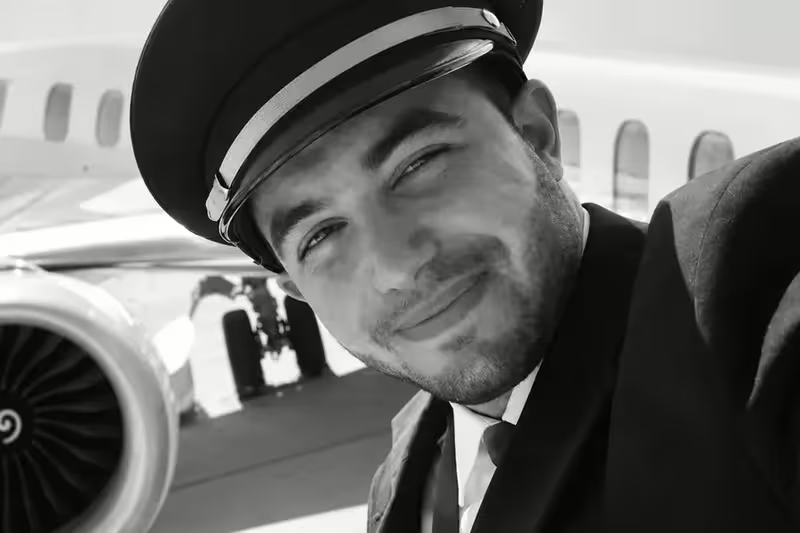
Israeli officials familiar with the investigation said the Omani co-pilot Hamam al-Hammami accused of attacking Flydubai Flight FZ1073’s captain had planned the attack before joining the airline. The co-pilot allegedly admitted to UAE interrogators that he had sought employment with every airline: “I checked which ones flew to Tel Aviv. That is why I chose Fly Dubai. I had planned the attack even before being hired.” A third source briefed on the UAE investigation said he intended to crash the aircraft into Ben Gurion Airport. The allegations have not been publicly confirmed by UAE or Israeli authorities, while Flydubai has not disclosed investigative details.
Details
- Attack aboard: The incident occurred last Wednesday during the Dubai-to-Tel Aviv flight. The UAE prosecutor general said the co-pilot attacked the captain with an emergency crash axe in a “terrorist attack.” Passengers and crew restrained him before the aircraft diverted and landed in Tabuk, Saudi Arabia.
- Earlier plan: The co-pilot had previously operated a Flydubai flight to Tel Aviv and considered hijacking and crashing that aircraft, but abandoned the plan. A source said he was believed to know someone aboard that flight, while the circumstances remain under investigation.
- Compensation route: Israeli aviation-law experts cited by Globes said passengers could seek up to 151,880 Special Drawing Rights, roughly $210,000, under Article 21 of the Montreal Convention. The figure is a maximum liability threshold rather than an automatic payout, with compensation determined by each passenger’s proven injuries and losses.
- Trauma claims: Potential claims could cover medically documented post-traumatic stress disorder, severe anxiety, sleep disorders or other clinically significant psychological harm linked to the incident, even without physical injury. Psychiatric assessments, treatment records and evidence of continuing symptoms could therefore become central to individual proceedings.
- Israeli venue: Lawyers said Israeli passengers could potentially sue in Israel because Tel Aviv was the scheduled destination. Foreign airlines operating in Israel must maintain mechanisms for serving legal documents, while ticketing arrangements could bring another carrier or entity into proceedings.
- Security scrutiny: Opposition politicians have called for Transportation Minister Miri Regev to resign or be dismissed. Haaretz and Channel 12 reported that the Shin Bet had warned about foreign-flight oversight and recommended changes. The ministry rejected responsibility, arguing that it cannot independently conduct comprehensive background checks on foreign pilots.
Background
The Montreal Convention governs airline liability on international flights and imposes a two-year limitation period. Israeli jurisprudence has considered whether hijacking qualifies as an aviation “accident” and whether psychological harm is compensable. Claims arising from the 1976 Entebbe hijacking were rejected after being filed beyond the deadline.
What’s next
Passengers considering Montreal Convention claims have two years to file. Investigators’ conclusions about motive may also determine whether Israel recognizes the incident as a hostile action, enabling eligible victims to seek treatment, rehabilitation and National Insurance benefits.