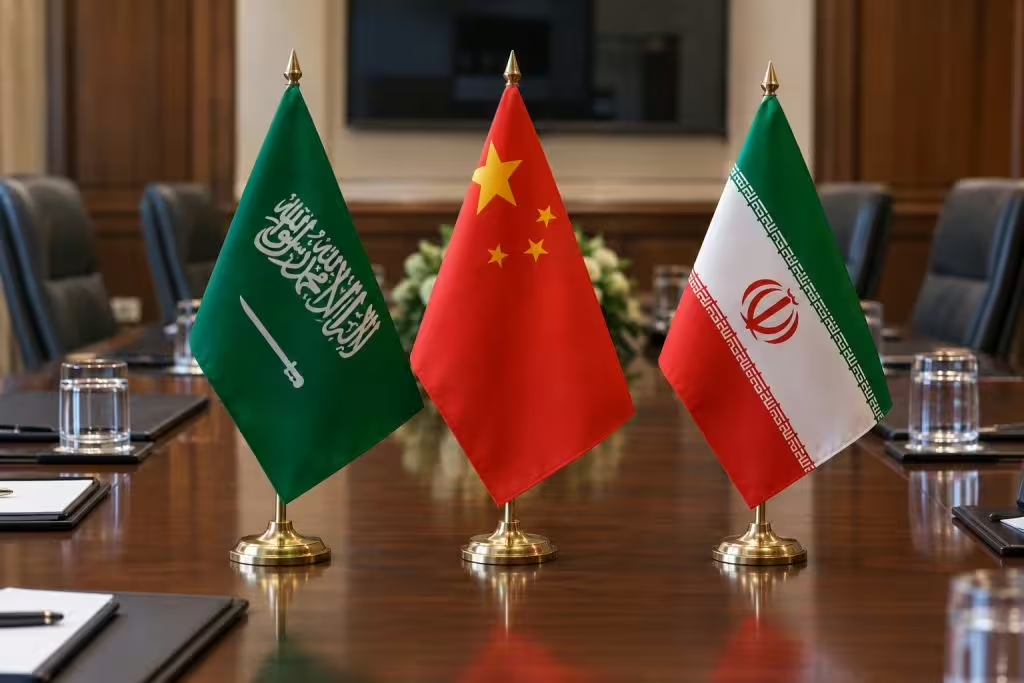
The latest:
Beijing has privately asked Tehran to help rein in Yemen’s Houthis, three Iranian sources briefed on the discussions told Reuters, following a Saudi appeal to China after the group’s rapid offensive last week. Publicly, China has called for restraint, dialogue and safe navigation. Privately, the sources said, the message went further: use your influence over the Houthis to keep the war off the energy routes China depends on.
Details:
- The Saudi appeal: The sources said Riyadh turned to China for help after the Houthis advanced quickly along the Red Sea coast and around the Bab al-Mandab strait, movements that left Saudi oil exports and shipping more exposed. The Saudi government media office did not immediately respond to Reuters’ request for comment.
- Tehran’s answer: According to the sources, Iran replied that regional stability depends on ending what it described as the American-Israeli war on Iran. It remains unclear whether Tehran will act on the concerns Beijing raised, the three sources said. Iran’s foreign ministry did not immediately respond to Reuters.
- No threats attached: The three Iranian sources said Chinese officials issued no explicit threats and gave no indication Beijing would seek to pressure Tehran economically if it failed to use its leverage with the Houthis. The sources, who spoke on condition of anonymity, did not say how the message was delivered.
- The Araqchi question: The sources did not specify whether the request was conveyed during Iranian Foreign Minister Abbas Araqchi’s visit to China on Wednesday. Beijing’s public line has been confined to calls for de-escalation and the restoration of safe shipping through the Red Sea.
- Beijing’s statement: Asked to comment, China’s foreign ministry said Beijing does not want regional tensions to spread to Yemen and the Red Sea, and that rising instability serves no party’s interest. It said sovereignty must be respected, vital civilian facilities must not be targeted, and disputes should be settled through dialogue.
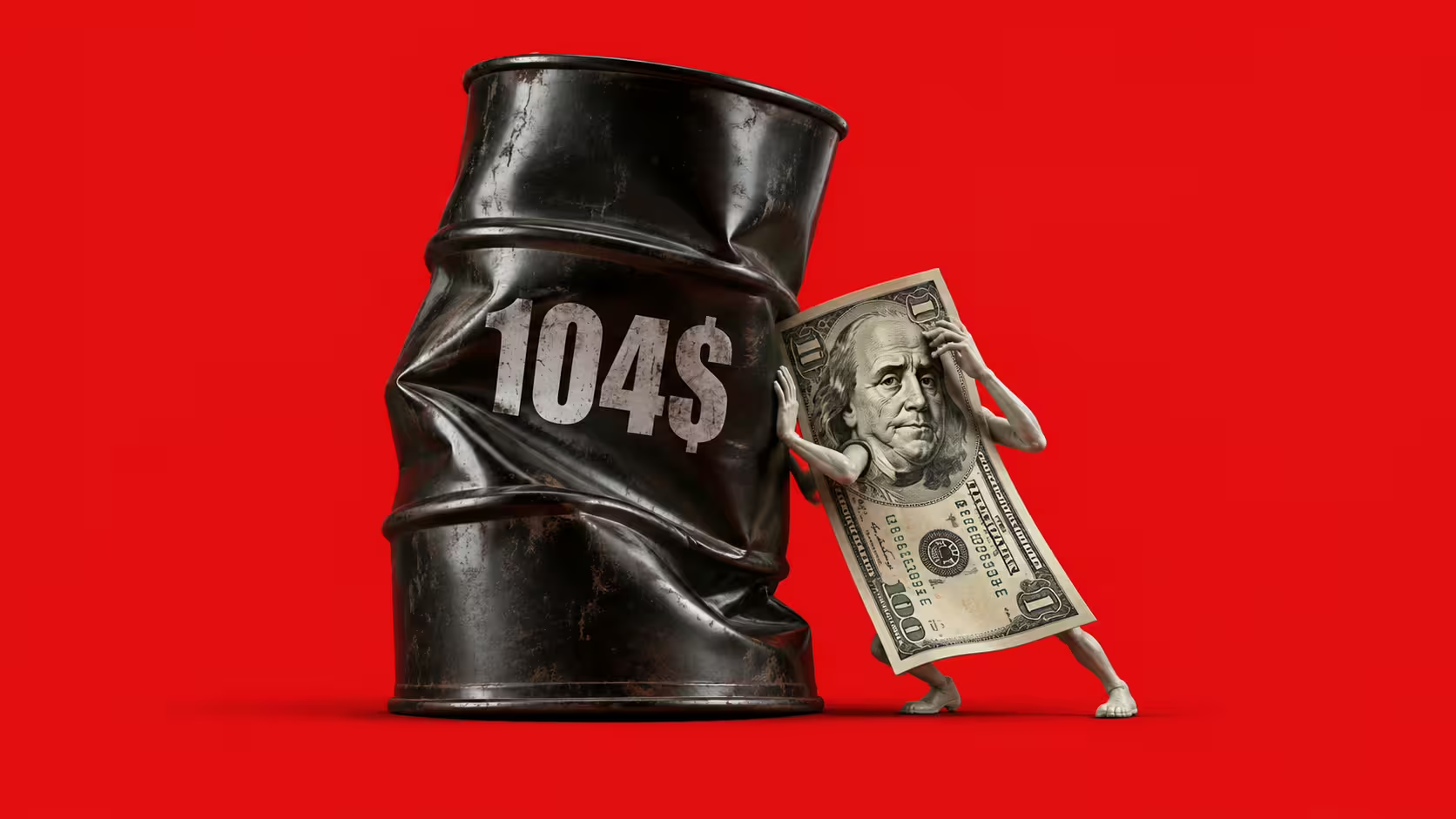
- The energy math: China has been Iran’s largest trading partner for more than a decade and remains the main buyer of its crude. Chinese purchases accounted for more than 80% of Iran’s seaborne oil exports in 2025, averaging 1.4 million barrels per day, according to commodities data firm Kpler.
- Two chokepoints: With the Strait of Hormuz effectively shut after Iran moved to close it, continued Houthi attacks on ships or Red Sea ports would disrupt the Middle East’s two principal oil export corridors simultaneously. One source said Iran and its allies are squeezing both ends of the network, and that “China depends on both.”
- The wider stakes: Roughly half of China’s oil imports come from the Middle East, while trade between China and Gulf Cooperation Council states runs at about $300 billion a year, said Alex Vatanka of the Middle East Institute in Washington. Beijing may resist U.S. pressure on Tehran, he said, but its regional interests extend well beyond Iran.
- The limits: Critics inside Iran have complained that Chinese non-oil trade and investment has stayed modest since the two countries signed a 25-year cooperation pact in 2021, especially compared with Beijing’s investment commitments in the Arab Gulf states. Two Iranian sources said Beijing’s interests are only one of several competing priorities shaping Iranian decisions.
- Western read: A senior Western diplomat in the region assessed that Beijing is one of the few capitals still able to press Iran over the Houthis, and said Tehran and Beijing need each other, with China wanting Hormuz reopened and Red Sea navigation secured.
Background:
The Houthis emerged in the 1990s in opposition to Saudi Sunni religious influence in Yemen and are armed, trained and funded by Iran, according to Iranian sources and Western states, forming part of Tehran’s anti-Western axis of resistance. China brokered the 2023 deal restoring Saudi-Iranian ties.
Between the lines:
Beijing’s leverage is real but untested: it buys over 80% of Iran’s seaborne crude, yet the sources say it attached no threat to its request. Vatanka’s point cuts both ways — Iranian disruption eventually damages the one power Tehran leans on financially. Analysts say the decisive test is whether China is willing to impose consequences, and the clearest proof would be using that oil leverage.
What’s next
Watch whether Tehran signals any shift on the Houthis after Araqchi’s China visit, whether attacks on Red Sea shipping and ports continue, and whether Beijing moves beyond appeals to concrete pressure on Iranian oil flows.