Key Points
- Saudi Arabia identified about 110 million tonnes of uranium-bearing ore and rare earths at Jabal Sayid.
- The deposit aligns mining, nuclear power and advanced manufacturing with the kingdom’s diversification drive.
- Commercial value hinges on grade, recoverability, processing costs and Saudi industrial capacity.
The latest
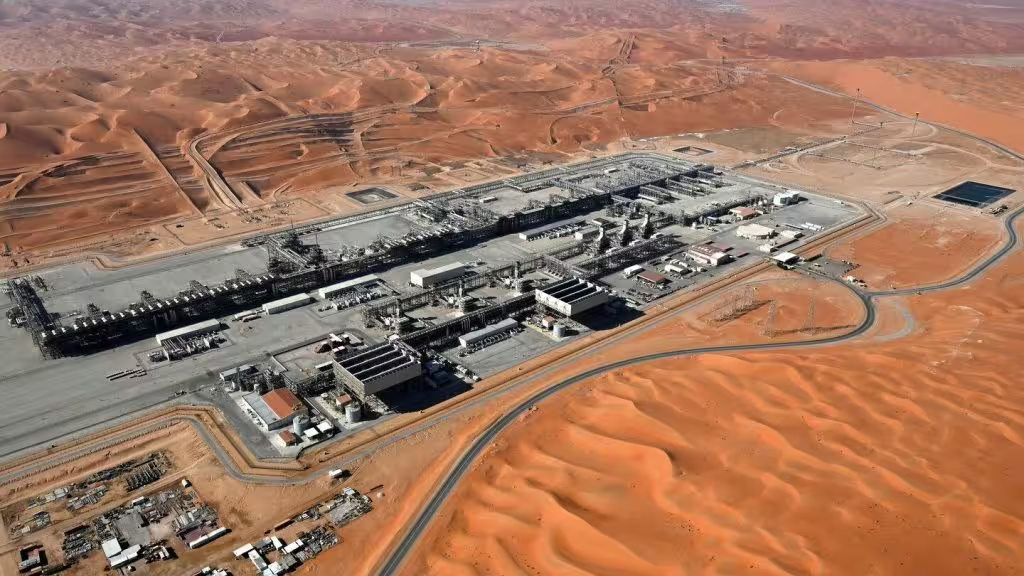
Saudi Arabia’s announcement of around 110 million tonnes of ore containing uranium, alongside high concentrations of heavy rare earth elements, places the Jabal Sayid project at the centre of its effort to build a non-oil economic pillar. The Madinah-region discovery could support mining, processing and advanced manufacturing while strengthening the domestic supply base for Riyadh’s planned civilian nuclear programme. Prince Abdulaziz bin Salman announced the findings at the International Atomic Energy Agency’s General Conference in Vienna.
Details
- Resource economics: The 110 million-tonne figure describes ore rather than usable nuclear fuel. Its commercial value will depend on uranium concentration, recoverability, processing costs and further geological assessment. Saudi authorities also described Jabal Sayid as potentially one of the most significant rare earth resource sites under development globally.
- Diversification payoff: Under Vision 2030, mining is being developed to generate investment, industrial activity and export revenue beyond hydrocarbons. Heavy rare earths are used in electronics, permanent magnets, advanced industrial equipment and clean-energy technologies, giving the deposit potential relevance beyond nuclear power. Domestic processing would allow more value to remain inside Saudi Arabia rather than limiting the project to extraction.
- Industrial buildout: State-owned miner Ma’aden has partnered with US-based MP Materials to develop rare earth separation and processing capabilities, as well as associated uranium production. The partnership links Saudi resources with American technology, investment and industrial expertise, supporting Riyadh’s aim of creating integrated mineral supply chains and downstream capacity.
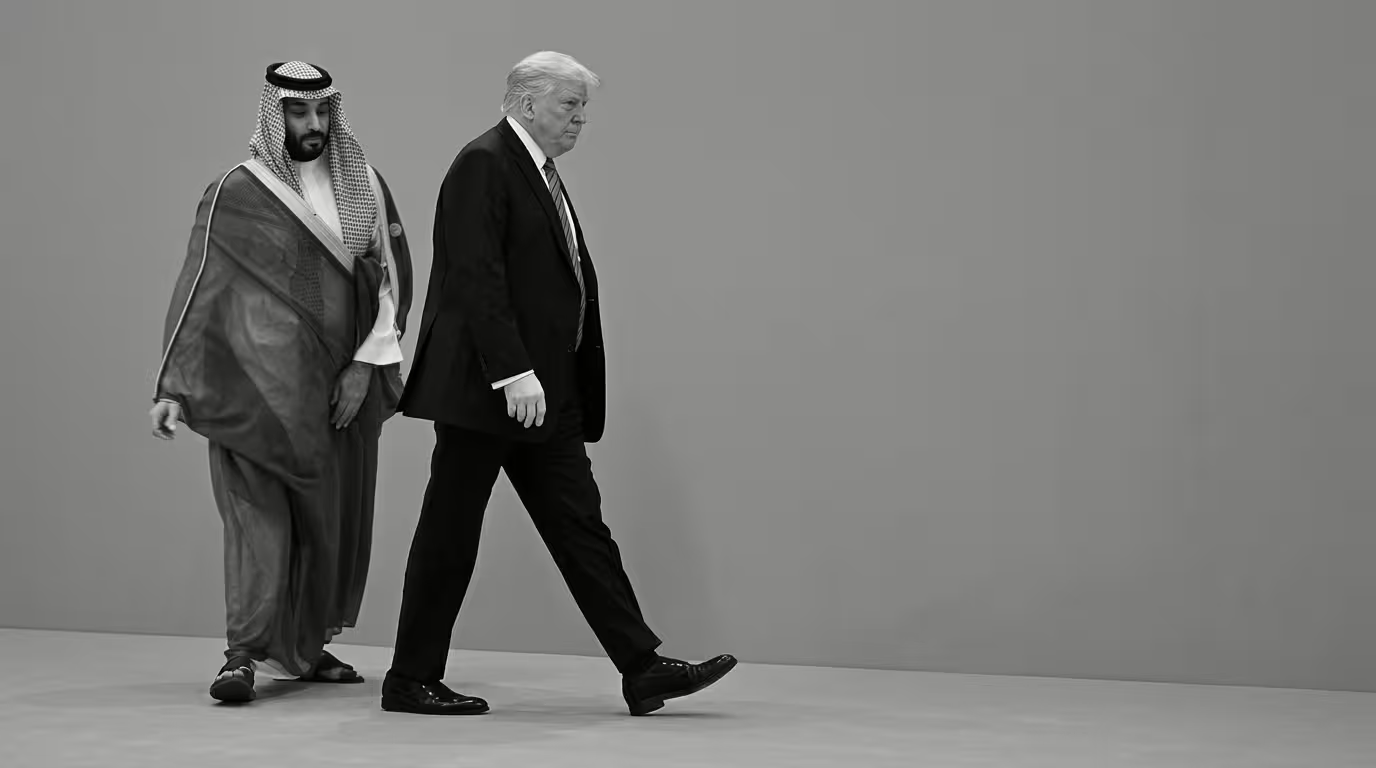
- Nuclear market: The find comes less than two months after the United States and Saudi Arabia signed a Section 123 civil nuclear cooperation agreement and bilateral safeguards agreement. Washington presented the arrangement as the foundation for a decades-long, multibillion-dollar partnership that could expand US companies’ access to Saudi reactor and nuclear infrastructure contracts.
- Fuel-cycle ambition: Saudi Arabia wants domestic uranium resources to serve its future nuclear fuel cycle, including uranium concentrates and potentially low-enriched uranium. That could reduce long-term reliance on external suppliers and provide another layer of strategic autonomy. Enrichment remains central to negotiations with Washington because the technology can serve civilian reactors or produce higher-enriched material.
- US-Saudi exchange: The emerging model combines Saudi access to strategic raw materials with US processing technology, capital and technical expertise. It also connects the kingdom to global efforts to secure critical-mineral supplies for technology, energy and defence industries, while giving American vendors a route into a growing nuclear market.
Background
For decades, Saudi economic influence rested primarily on oil. Vision 2030 broadens that base across mining, renewable energy, hydrogen, artificial intelligence infrastructure and nuclear power, with mineral processing intended to create investment, industrial activity and exports alongside extraction.
What’s next
The next indicator will be results from further geological assessment at Jabal Sayid, particularly ore grades, recoverability and processing costs, followed by decisions on extraction and industrial infrastructure.