The latest:
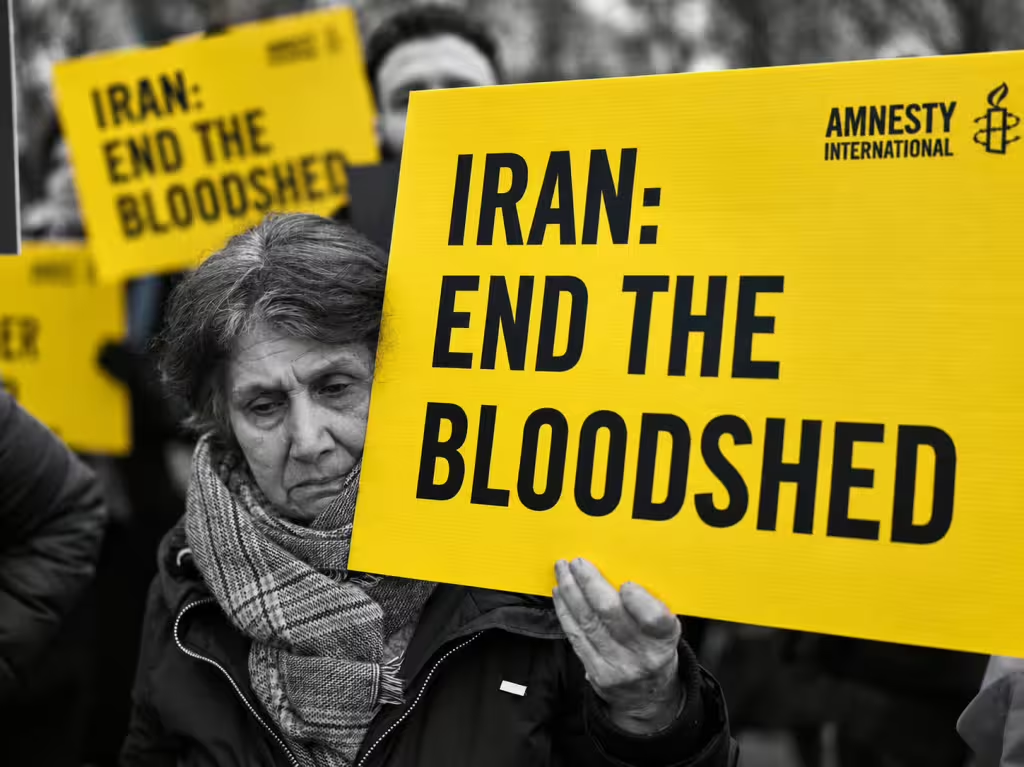
A 1,000-page Amnesty International investigation released Wednesday says senior Iranian officials directed, enabled and later covered up a systematic campaign of killing, torture and sexual violence to crush the 2022 Woman, Life, Freedom uprising. The group says those acts amount to crimes against humanity and named 87 officials it wants investigated under command-responsibility principles.
Details:
- The evidence base: Amnesty said its findings rest on interviews with 270 witnesses, analysis of more than 2,000 videos, and leaked official Iranian government documents. It said it shared its conclusions and the list of named officials with Iran’s leadership before publication and received no response.
- The named officials: Those listed for criminal investigation include Supreme Leader Ali Khamenei, killed on 28 February 2026 in military strikes, and former armed forces chief of staff Mohammad Bagheri, who died on 13 June 2025. Also named are Ahmad Vahidi, interior minister during the crackdown, his security deputy Majid Mirahmadi, Tehran IRGC commander Hassan Hassanzadeh, and deputy Tehran prosecutor Mohammad Shahriari.
- Amnesty’s framing: Secretary General Agnes Callamard said street-level operatives worked within a coordinated chain of command linking them to officials who directed and facilitated the crimes, adding that an international mechanism must be created “before another protest massacre.” She rejected any attempt to use Iranian victims’ suffering to justify unlawful attacks harming civilians.
- The death toll: Amnesty documented 377 protest-related deaths, including 56 children. Iranian authorities acknowledged 202 and, according to the report, falsely attributed most to rioters or armed terrorists. Of 326 deaths recorded during protest dispersal or in military zones, 178 occurred in the first two weeks.
- The written orders: According to the investigation, the armed forces general staff issued written instructions on 21 September 2022 ordering security units nationwide to respond firmly and severely. IRGC intelligence had issued an 18 September decision assigning surveillance of athletes and political figures, while the intelligence ministry tracked actors, artists and opposition movements.
- The early cover-up: Minutes of closed security meetings show that within 48 hours of Mahsa Amini’s death in custody on 16 September 2022, officials focused on controlling the public narrative and suppressing online protest. Security chiefs discussed how to obtain statements from Amini’s father supporting the official account of her death.
- Weapons and injuries: Amnesty said security forces used assault rifles, machine guns and shotguns loaded with metal pellets at close range. Kinetic-impact munitions caused severe long-term physical injuries and loss of sight among survivors.
- Ethnic minorities: Baluch and Kurdish protesters and bystanders accounted for 62% of all deaths recorded during protest dispersal, far above their weight in Iran’s population. Operational guidelines detailed deployment of Basij militia units and motorcycle patrols of up to 40 vehicles per battalion to hold urban streets.
- Judicial obstruction: Internal judicial correspondence classified formal rape complaints against IRGC members as top secret and instructed staff to gradually close files without naming security agencies. Where lower courts convicted security personnel of murder, higher authorities overturned verdicts, reclassified killings as unintentional, or reduced sentences.
- The anniversary: Security forces deployed across western Iranian cities Wednesday as shopkeepers shut businesses for the fourth anniversary, according to videos sent to Iran International. Kurdpa reported authorities released water from the Cheragh-Veis dam for a third year to flood roads to Amini’s grave in Saqqez.
Background:
Amini, 22, was detained by Tehran’s morality police on 13 September 2022 over hijab rules and died three days later. Her funeral in Saqqez triggered months of nationwide protests, the gravest challenge to the Islamic Republic in decades.
Between the lines:
Amnesty’s central warning is causal: it argues impunity for 2022 directly enabled later mass atrocities, and says this year’s crackdown carried the same signatures on a wider scale. The evidence it cites for continuity — written escalation orders, surveillance directives and reversed murder convictions — describes a system rather than isolated excess, which is why its remedy is an external mechanism rather than domestic accountability.
What’s next
Watch whether the UN General Assembly acts on Amnesty’s call for an independent criminal justice mechanism, and whether Iranian authorities respond publicly to the 87 names after declining to reply before publication.