The latest:
Two episodes reenacting the October 7 attack have pushed Fauda’s fifth season into Netflix’s top ten in 43 countries within a day of release, with viewers from Italy to India describing sleepless nights and scenes they cannot unsee. Episodes seven and eight, built around the Hamas-led assault, hold a 9.3 rating on IMDb.
Details:
- The reach: Within one day of the season landing on Netflix, Fauda entered the platform’s ten most-watched shows in 43 countries, widening the debate over how the series handled October 7. Episodes seven and eight, which centre on the attack itself, drew the sharpest viewer attention and a 9.3 IMDb score.
- The cast’s own loss: Brazilian cartoonist Luciano Peres wrote that what the actors reenacted was not a distant tragedy but an event that struck their country, friends and families. Actor Idan Amedi was seriously wounded fighting in Gaza, and production team member Matan Meir was killed during the war.
- A scene that cut close: Peres singled out actor Yaakov Zada Daniel, who plays the operative Eli, entering his home in a kibbutz attacked on October 7, arguing the scene carried added weight because of how closely it tracked the reality the production team had lived.
- Drama versus footage: Peres wrote that the world had already seen dozens of real clips documenting the attack, some filmed by the perpetrators themselves, which made a dramatic reenactment especially harsh. In his reading, the series does not only remind viewers of events but carries them into the terror victims experienced.
- The viewer reaction: One Italian viewer said he could barely keep his eyes open through the episodes. An Indian influencer said she went through sleepless nights after episode eight and could not stop thinking about the scenes, questioning how anyone could still back Hamas after watching.
- The Israeli read: Influencer Lee Malach said her feeds filled with comments from Dutch and German followers who appeared shocked by the two episodes. She described the reactions as showing strong support for Israel, while noting the discussion exposed how little many viewers knew about the attack.
- Too restrained: An Indian user wrote that, against criticism accusing the season of going too far, the treatment was noticeably measured, and that what reached the screen was only a limited glimpse of atrocities that included killings, abductions, sexual violence, torture and the targeting of civilians.
- Left out: Other users said the series skipped the harshest details, including the killing and abduction of children and families, leaving individual stories outside the drama. Among them: Kfir Bibas, nine months old when taken with his four-year-old brother Ariel, both later announced killed in captivity.
- The doubts: One viewer said the season may help people grasp the scale of the atrocities, while doubting a drama alone can shift anyone’s position. A British viewer said the scenes would stay lodged in her memory; a Texas follower called the two episodes unforgettable.
- Too heavy to watch: One follower said he was among the show’s biggest fans and a supporter of Israel, but lacked the courage to watch the fifth season at all, a measure of the psychological weight the episodes left on part of the audience.
Background:
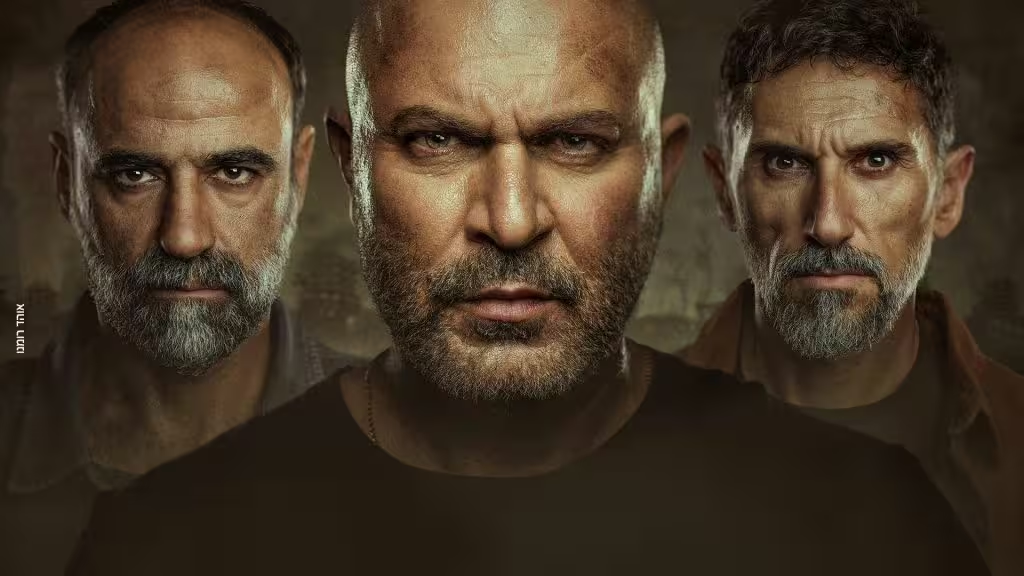
Fauda follows an Israeli undercover unit and built its audience over four earlier seasons. The fifth is the first to dramatize October 7 directly, placing a real, recent event inside a format viewers had consumed as fiction.
Between the lines:
The argument running through the reactions is not about craft but about limits. Supporters see a series bringing foreign audiences closer to what happened, pointing to shocked Dutch and German viewers who knew little before. Critics, including users who listed abductions and killings of children as absent, hold that reenactment cannot carry the real scale — a gap sharpened by the fact that the cast reenacted losses their own colleagues suffered.
What’s next
Watch whether the season holds its place in Netflix’s top-ten rankings beyond the opening week, and whether the platform or the production responds to the criticism over what the episodes left out.