
Key Points
- Anwar Gargash said the UAE is developing alternative energy and trade corridors to avoid Iranian disruption.
- Iran struck the UAE with missiles and attacked its tankers in the Strait of Hormuz.
- Gulf states are weighing self-reliance as US-Iran talks stall over Hormuz.
The latest:
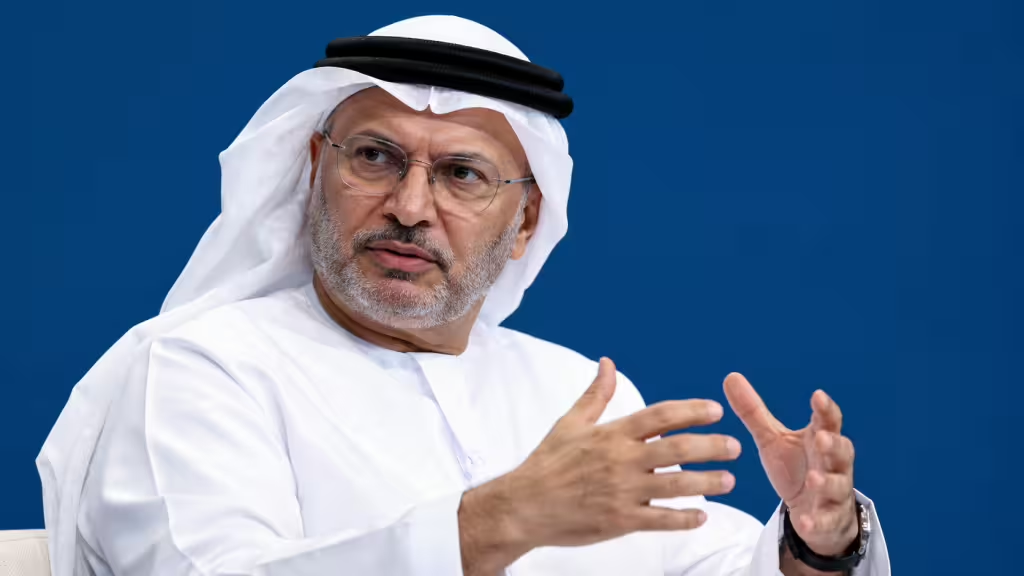
The UAE is expanding port capacity on its eastern coast and developing pipelines and railways as alternative corridors so its energy and trade flows are not held hostage by the US-Iran war, presidential adviser Anwar Gargash said Monday. He told the Hedayah-hosted Hedaya forum in Abu Dhabi that even if ties with Tehran eventually recover, rebuilding trust after the attacks could take decades.
Details:
- The routes: Gargash said Abu Dhabi has widened port capacity along its eastern seaboard, outside the Strait of Hormuz chokepoint, and built out pipeline and rail links as substitute corridors for energy and commercial cargo. He did not set out a timeline or capacity figures for the projects.
- The trigger: The push follows Iranian missile strikes on the UAE and attacks on Emirati tankers in the Strait of Hormuz, according to Gargash, who framed the infrastructure drive as insurance against exports being held hostage to the war between Washington and Tehran.
- Gulf criticism: Gargash criticised Arab Gulf states for failing to produce a coordinated response toward Iran despite sharing the same threat perceptions, a rare public rebuke of collective Gulf policy delivered at a forum in the UAE capital.
- Qatar’s position: Foreign ministry spokesperson Majed Al Ansari told the same forum that Gulf states should not rely solely on their strategic partnership with Washington for their security, arguing that security self-sufficiency is the only way forward for the region.
- On Washington: Gargash agreed the US partnership remains essential but said six months of conflict had exposed the weight of national capabilities, adding: “When we depend entirely on others, we cannot always assume that will be their priority.”
- The core issue: Both officials said the Strait of Hormuz remains the central knot in the US-Iran negotiations, which are being mediated by Qatar and Pakistan. Iran maintains the strait belongs to it and Oman, a position Gulf states broadly reject.
- Red line: Freedom of navigation is neither a concession to be granted nor a principle to be renegotiated under pressure, Gargash said, insisting any durable settlement must carry credible guarantees against future Iranian attacks on Gulf states.
- Diplomatic track: An initial truce reached in June has collapsed, with efforts to revive the peace process visibly stalled. Neither official named a date for the next round of talks or set out what the guarantees they are seeking would look like in practice.
- Also: Trust with Tehran could take decades to rebuild, Gargash said.
Background:
The Strait of Hormuz is the outlet for a large share of Gulf crude exports. Iranian strikes on the UAE and on Emirati tankers moved the war from a US-Iran confrontation into a direct threat to Gulf shipping and energy revenue.
Between the lines:
Two threads run through both officials’ remarks: infrastructure that routes around Hormuz, and security that routes around exclusive dependence on Washington. Gargash’s complaint about the absence of a coordinated Gulf response, set beside Al Ansari’s call for self-sufficiency, points to hedging under way before any settlement is reached rather than after one.
What’s next
Watch the Qatari-Pakistani mediation track for a resumed round after June’s collapsed truce, whether Hormuz sovereignty is addressed in any text, and whether Gulf states move toward the coordinated response Gargash said is missing.