Key Points
- Gulf residents are making contingency plans as signals point to possible renewed US strikes on Iran after Tuesday.
- The US-Israeli war on Iran, which killed Ali Khamenei in February, entered its eighth month in stalemate.
- Quiet diplomacy is underway in Qatar, but both sides say they will not cross their own red lines.
The latest:
Residents across Gulf Arab states are scanning for signals of renewed war as the US-Iran conflict enters its eighth month without a diplomatic or military breakthrough, CNN reported. President Donald Trump has said Washington will not attack Iran before Tuesday’s midterm elections, while declining to say what follows. Iran’s leadership has answered with threats of strikes without geographical limits.
Details:
- The trigger: Trump wrote on social media this month that the United States will not be attacking Iran at any time prior to the midterm elections, CNN reported. He neither ruled out nor confirmed that strikes would resume afterwards, and that ambiguity is driving much of the regional anxiety, residents told the network.
- The war so far: The conflict began in February when the US and Israel struck Iran, killing Supreme Leader Ali Khamenei, per CNN. Eight months on, neither side has advanced diplomatically nor broken the impasse, with mediation continuing but a breakthrough dependent on one side breaching its own red lines.
- Tehran’s signaling: Iranian commanders have intensified public claims over the past month that Iran has built large stockpiles of new weapons. A senior Tehran security official told CNN that Iran would target infrastructure beyond oil facilities, including AI, and warned any resumption would be a long war of surprises.
- The supreme leader: Supreme Leader Mojtaba Khamenei ordered on Saturday a response without geographical limitations to any new threat, CNN reported. The network described the order as an apparent effort to present a leader who has yet to appear in public as actively involved in military preparations.
- The diplomacy: Vice President JD Vance sent a letter to Iran’s top security official Mohsen Rezaei, which Tehran is reviewing, according to Iranian media. Trump has claimed the letter concerned an Iranian request for medical supplies. Iranian officials were in Qatar for talks Saturday, a Qatari official said, with no US delegation present.
- Washington’s position: Secretary of State Marco Rubio declined to say whether 48 hours of talks had produced progress, saying the administration is open to a diplomatic solution that does not endanger national security, particularly on Iran’s nuclear program. Asked about a time frame before military action resumes, Rubio said he did not know of one.
- A softer signal: Tom Barrack, US ambassador to Turkey and special envoy to Syria and Iraq, told CNN he expects “dramatic steps” within two weeks and that the sides are close to agreeing a time out. He said it remains a matter of trust and who moves first.
- Iran’s terms: Parliamentary speaker Mohammad Bagher Ghalibaf, leading negotiations with Washington, said the carrot-and-stick approach has no effect and progress requires agreement on Iran’s seven conditions. Iranian officials said they are open to diplomacy but distrust talks, citing past strikes during negotiations.
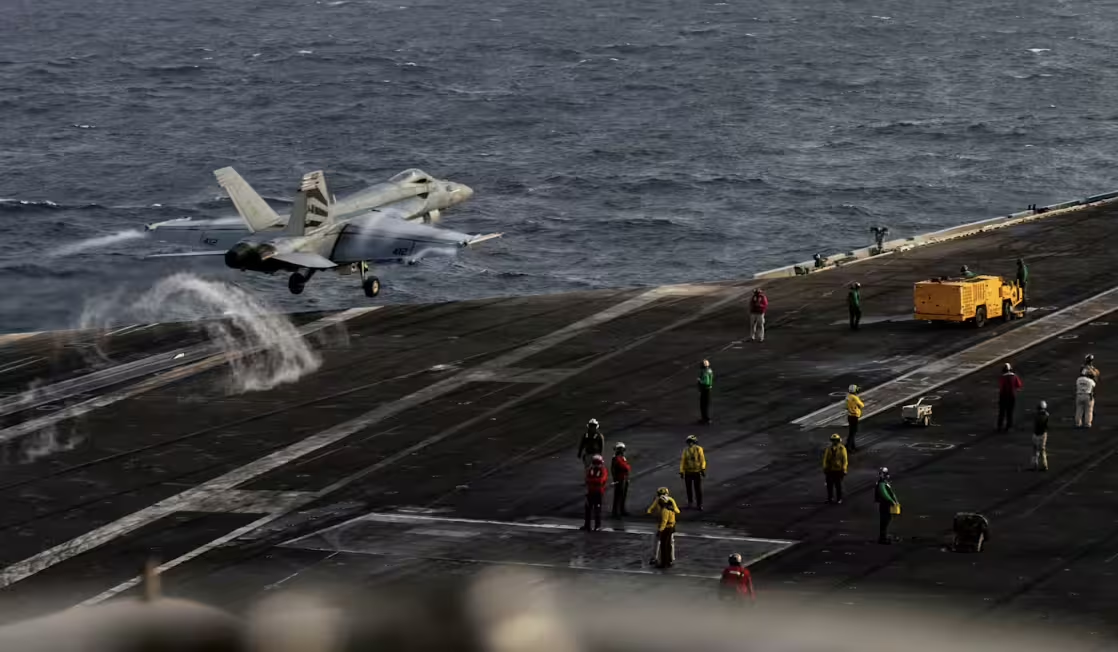
- On the ground: Families of US diplomats have begun discreetly leaving the region, with departures surfacing only as children said goodbye to classmates. In Saudi Arabia, offices moved to remote work and events were canceled after intensified Houthi strikes. Thousands of US troops are being sent to the region, the Associated Press reported.
- Business impact: Two US oil firms canceled executive attendance at a major Abu Dhabi oil conference citing security concerns, Reuters reported. Organizer DMG told Reuters the event proceeds next week with more than 120 American exhibiting companies and nearly 240,000 expected attendees.
Background:
Iran responded to the February strikes with unprecedented ballistic missile and drone barrages on Arab cities, disrupting schools, travel and business and causing multiple casualties. Bahrain and Qatar were among the hardest hit, ending decades of relative stability for foreign workers in the Gulf.
Between the lines:
Hasan Alhasan of the International Institute for Strategic Studies told CNN that Washington has actively fed regional anxiety by signaling imminent escalation, and that pressure tactics are now hard to distinguish from genuine signals. The gap between Barrack’s talk of a time out and Rubio’s refusal to name a time frame leaves residents reading troop movements and diplomatic departures as their own indicators.
What’s next
Tuesday’s midterm elections remove the one deadline Trump has publicly committed to. Israeli coalition talks begin in earnest next week with Netanyahu still in office, and the Abu Dhabi oil conference opens the same week.